
99%Monthly availability target on the airport walkways below
Asset monitoring / Conveyors & escalators
Keep material and people moving.
Watch the drive from the MCC.
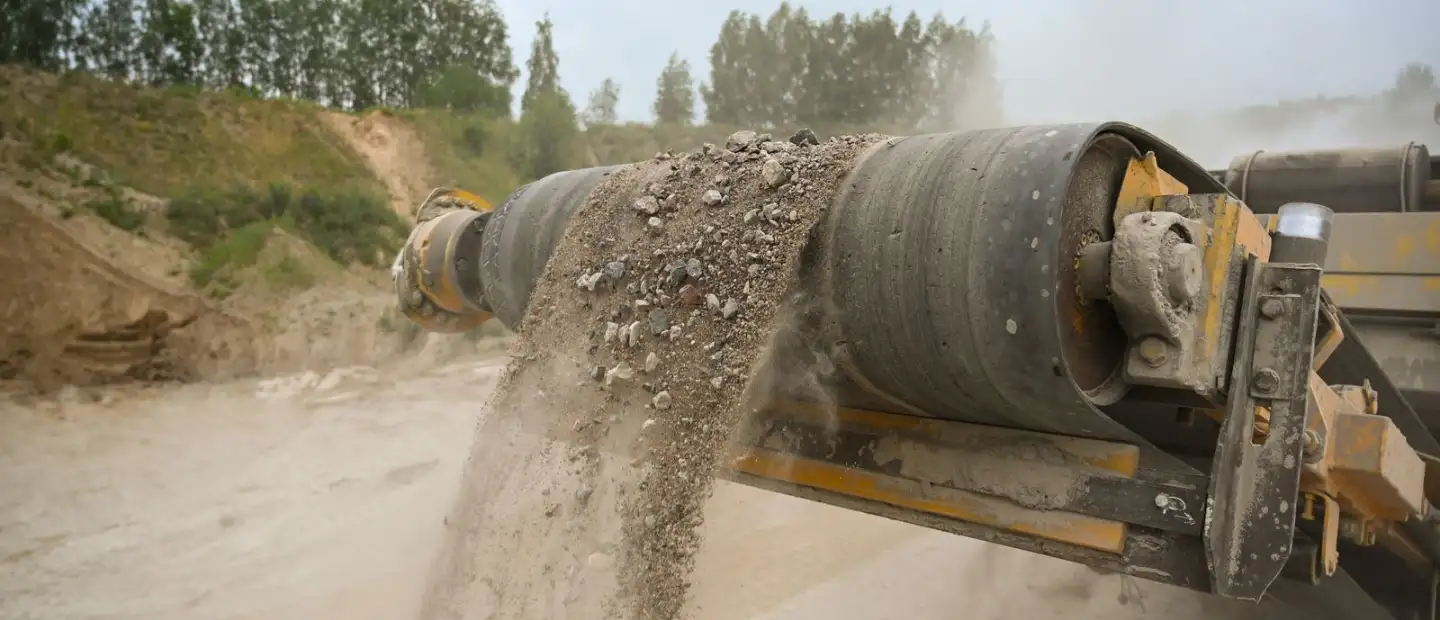
Conveyors, escalators and moving walkways run long hours with availability targets. Artesis follows their motors, gearboxes, chains and belts from the electrical panel — and spots process and usage problems along the way.
4 escalatorsMonitored online in a metro pilot
0 sensors on the driveCurrent and voltage measured in the MCC
01 / The challenge
Long runs.
Tight availability targets.
Escalators and walkways in airports and metros face regulatory availability targets; conveyors in mines and plants feed the whole process. Their drives sit in pits, trusses and tail ends that are awkward to reach.
Chain, gearbox and belt problems develop slowly, then stop the line. Because the drive motor carries the whole load, its current reflects mechanical condition, load changes and even how the equipment is being used.
Connect at the drive’s control cabinet
e-MCM uses the existing current and voltage signals. Nothing is mounted in the truss, pit or along the belt.
Learn normal operation
Baselines reflect real passenger or material load, including idle and night-time running.
Act before the next stoppage
Findings flag chain, gearbox, alignment and electrical problems — plus unexpected stops and unnecessary running.
02 / Featured case · Metro
An escalator alarm with
a cause beneath the station.
DOCUMENTED FIELD CASETODAY’S ARTESIS VIEW / POWER SPECTRAL DENSITY
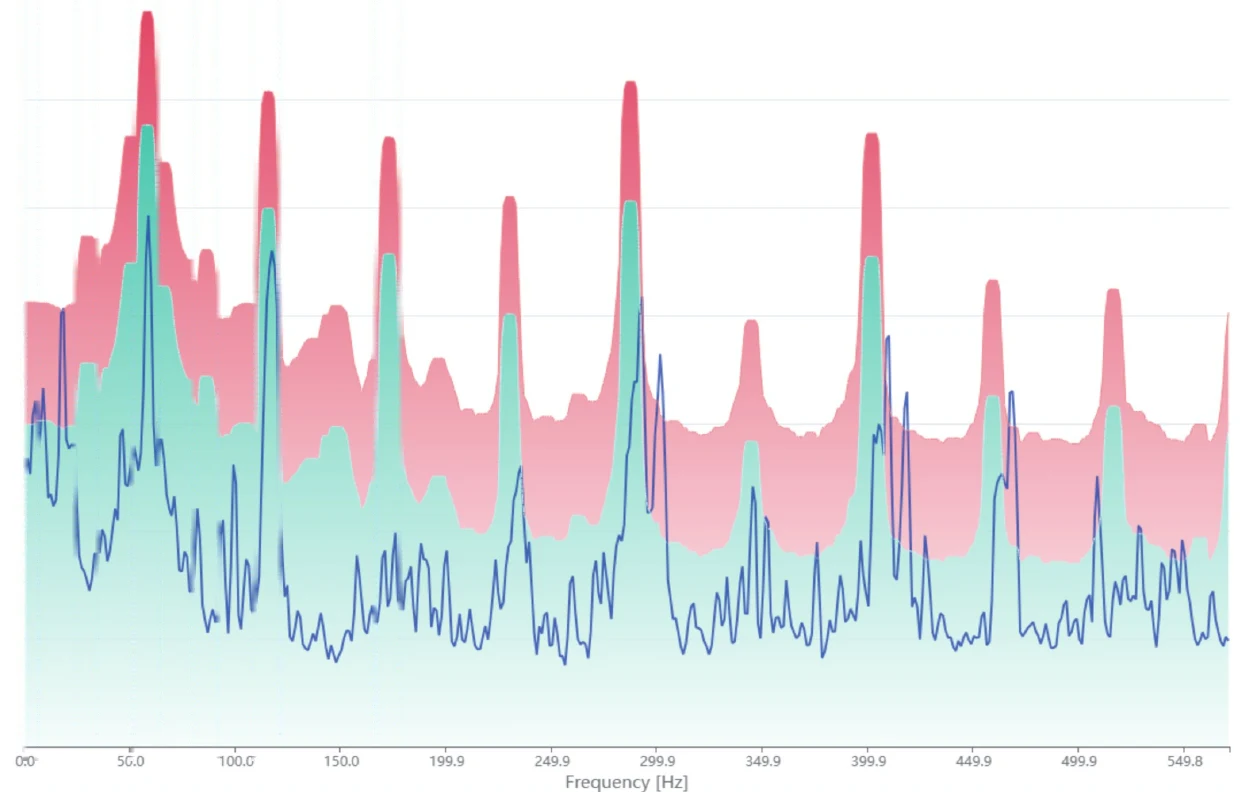
In the current software, the spectrum is judged against learned normal and high envelopes, fault domain by fault domain. Screen from a 2026 report on another asset. Select to open full size.
TODAY’S ARTESIS VIEW / AI ANALYSIS FINDING

The AI analysis report now names foundation looseness automatically, with the spectral evidence behind it. From another asset.
0
Faults in the escalator itself
The spectral pattern matched a tunnel boring machine’s cutters working a few metres below the escalator.
Not a failing escalator — a tunnel being bored.
1,500 σPeak parameter deviation
17:00Daily onset
DailyRepeat pattern
The alarmOn a metro escalator, one parameter suddenly rose to about 1,500 standard deviations above normal. By the next morning everything was back to normal — then it happened again, several days in a row.
The analysisThe spectrum showed a pattern typical of foundation vibration. The rise started around 17:00 each day.
The causeA new rail tunnel was being bored only metres below the escalator. The machine started late in the day, and the passing of its cutters shook the escalator foundations.
- 1Parameter spikes every evening
- 2Foundation-related pattern
- 3Traced to tunnelling below
Source: Artesis metro escalator case study. Visuals are current Artesis AMTPro and AI report views from another asset, shown for reference. Operator and project names withheld.
03 / More field cases
Chains, scrapers
and escalators left running.
3 SECTORS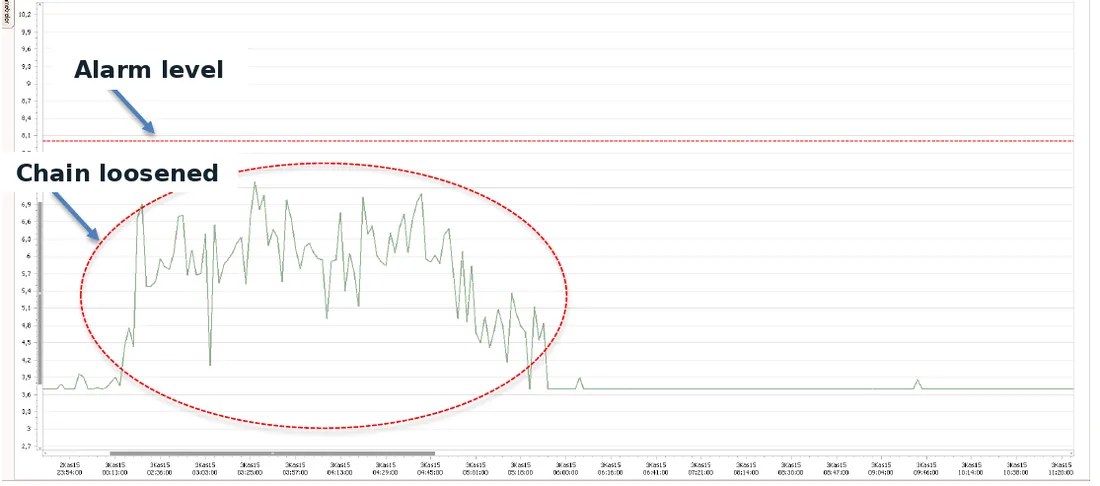
A loosened chain, seen in the current
In a joint test with the escalator maintainer, the drive chain was deliberately loosened at night. From 00:15 the transmission-element parameter rose as expected — visible in the trend while staying below the alarm level for the short test.
- Test
- Controlled chain loosening
- Outcome
- Chain slack visible in the trend
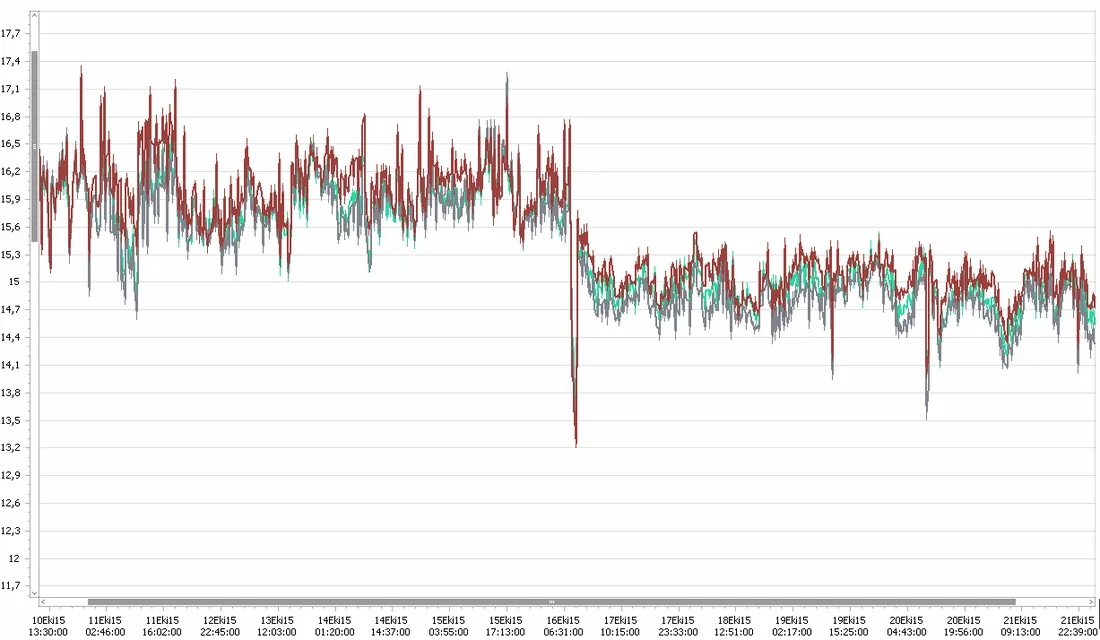
A worn belt scraper, found by the load
Artesis saw the load on a conveyor drive fall. Maintenance found the belt scraper worn and no longer pressing with enough force — a process problem found from the motor current.
- Signal
- Load level vs baseline
- Outcome
- Scraper replaced
Long-standing misalignment, finally found
At a major international airport, walkways and escalators must run at least 99% of the time, every month. Beyond early warnings, MCM units uncovered long-standing problems — including motor control issues and shaft misalignment — so they could be corrected to reduce wear and future downtime.
- Target
- ≥99% availability per month
- Outcome
- Misalignment corrected
Unauthorised stops and a stair that never slept
Online monitoring of four metro escalators showed one standing still for much of the day, and another running continuously — even when it should have stopped at night — wasting about 50 kWh a day.
- Found
- Unexpected stops, 24/7 running
- Energy
- ≈ 50 kWh / day wasted
Three more escalators, three findings
Spot tests from the MCC on three further escalators found a transmission-element fault (action within 3 months), a combined transmission and stator fault, and a stator fault (each within 6 months).
Cases are individual outcomes from Artesis field deployments between 2008 and 2016. All visuals are from Artesis software. Operator names are withheld.
04 / What we detect
Fault modes, signals
and evidence strength.
Evidence strength reflects how reliably a condition produces an observable electrical pattern in typical conveyor and escalator installations — not a guarantee of detection.
| Condition | What changes in the signal | Evidence | Field case |
|---|---|---|---|
| Drive train · mechanical | |||
| Chain slack and wear | Transmission-element parameter | Good | Metro chain test |
| Gearbox and transmission | Transmission-element indicator | Good | Metro AMTPro tests |
| Shaft misalignment | Alignment-related pattern | Good | Airport walkways |
| Foundation and structure | Foundation and structure-related pattern | Good | Metro escalator → |
| Motor · electrical | |||
| Stator windings | Current imbalance well above voltage imbalance | Strong | Metro AMTPro tests |
| Motor controls and supply | Per-phase RMS, voltage imbalance, harmonics | Strong | Airport walkways |
| Rotor bars | Rotor-related pattern in the current spectrum | Strong | — |
| Process · usage | |||
| Belt scraper and load changes | Load level versus learned baseline | Good | Mining conveyor |
| Unexpected stops, 24/7 running | Run/stop pattern and energy use | Strong | Metro escalators |
05 / Outside the envelope
Where electrical signatures are weaker.
We state the limits up front, so monitoring is set up where it adds most and paired with the right complementary checks.
Very long conveyors
Idler and roller faults far from the drive may not change the drive load enough to be seen.
Belt splices and tracking
Splice damage and belt tracking are better covered by belt inspection systems.
Handrails and steps
Handrail drive and step issues show only if they affect the main drive load.
Multi-drive conveyors
Each drive is monitored separately; load sharing needs care in the baseline.
Observed patterns are interpreted by qualified personnel; they guide investigation rather than replace it. AMTPro spot tests need near-constant speed (±1% frequency) during capture.
06 / How you deploy it
Continuous where it matters.
Portable everywhere else.
Online · permanently installed
e-MCM
- Critical escalators, walkways and main conveyors
- 24/7 learning, trending and alarms
- Supports VFD applications
- Results in OmniSight across sites
Portable · route-based
AMTPro
- Route checks across stations and auxiliary conveyors
- Spot tests from the MCC in minutes
- Automatic condition report per test
- Energy impact estimate in every report
Artesis Insight explains the finding.
Artesis Insight turns spectra and trends into plain-language explanations and next steps. Your team does not need to be an ESA specialist to act on a result.
Illustrative maintenance guidance
Check the drive chain.
A rising transmission-element parameter on an escalator suggests chain slack or wear. Check chain tension and sprocket condition at the next maintenance window.
After action
Confirm the parameter returns to its learned level after adjustment.
Example wording only; not a live alarm or a reproduced AI report.
07 / Applications
Wherever material or people move.
Belt conveyorsChain and apron conveyorsEscalatorsMoving walkwaysBaggage handling drivesStacker and reclaimer drives
Do we need anything in the escalator pit or truss?
No. Everything is measured in the drive’s control cabinet.
Can you see chain problems?
Yes. In a controlled test, deliberately loosening an escalator drive chain showed up clearly in the transmission-element trend.
Does passenger load cause false alarms?
Artesis learns the normal load pattern, including peaks and idle running, before judging changes.
Can monitoring help with availability targets?
Yes. The airport case used MCM units as part of its strategy to meet a 99% monthly availability target.
What information is needed to start?
Motor nameplate data, drive arrangement, typical duty cycle, starter or drive type and the measurement points in the cabinet.
Related assets
Other equipment we monitor.
Bring your conveyors and escalators into view.
Tell us about your drives and availability targets. We’ll suggest where to start.










 White Papers
 Case Study
 Documents
 Webinars
 Events
 ROI Calculator
 FAQ
FAQ