
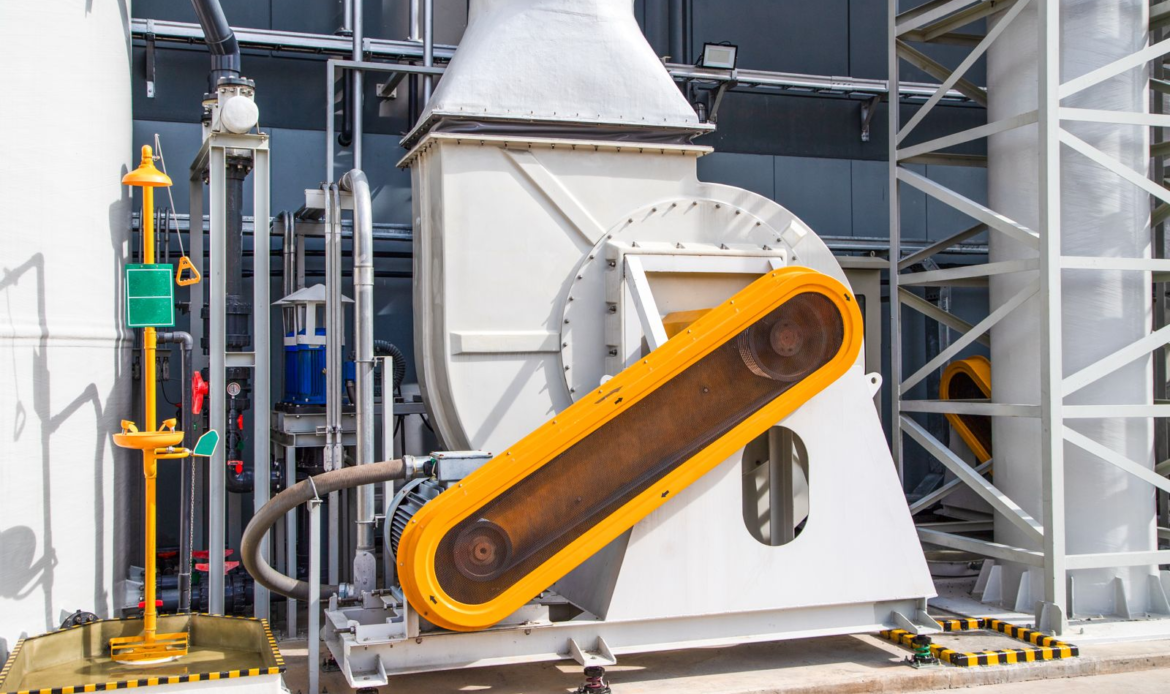
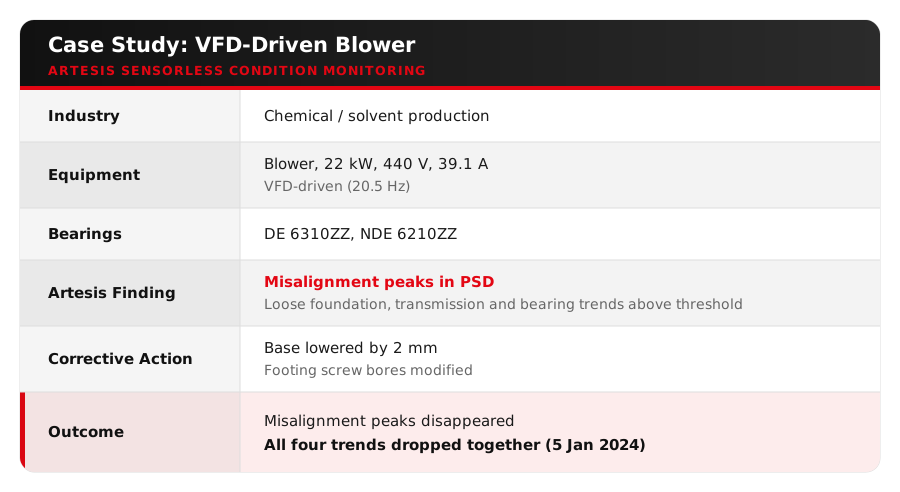
The blower at the solvent plant had become everyone’s least favourite machine. It was a 22 kW, 440 V motor running at 1760 rpm and driving a 12-blade blower through a VFD set to about 20.5 Hz. Nothing had failed yet, but the Artesis e-MCM screen for it looked like a Christmas tree. Loose foundation, misalignment, transmission and bearing were all rising, and several had crossed their thresholds.
“Four problems on one machine,” the reliability engineer said at the morning meeting. “Where do we even start?”
The power spectral density (PSD) answered that. Among all the raised bars, the clearest signature was misalignment: strong peaks at the positions linked to shaft misalignment relative to the line frequency. The team decided to deal with that first.
The fix: two millimetres
The alignment check showed the motor was sitting high. The team lowered the base by 2 mm and modified the footing screw bore holes so the motor could be positioned correctly and held there. It was a small, unglamorous job.
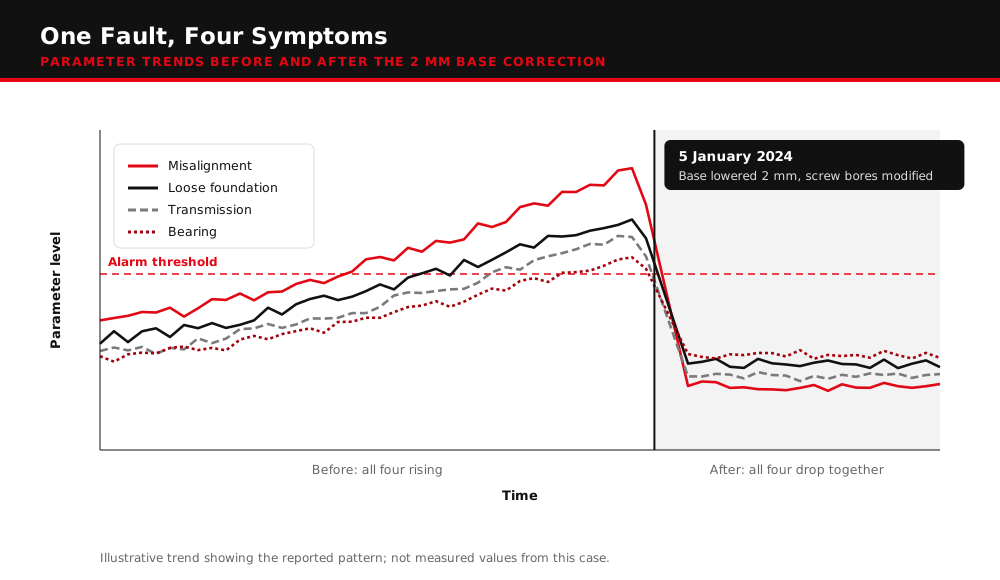
The result was dramatic. On 5 January 2024 the misalignment peaks disappeared from the spectrum. More interesting was what happened to the other three parameters: loose foundation, transmission and bearing all fell sharply at the same time. The team had not been dealing with four faults. It had been one fault with four symptoms.
Unbalance vs. misalignment: related but different
These two faults are often grouped together because both create forces at running speed, but they have different causes and fixes.
Unbalance means the mass centre of a rotor does not coincide with its axis of rotation. Typical causes:
- Material build-up or erosion on fan blades and impellers
- Missing or shifted balance weights
- Debris lodged in an impeller
- Thermal bowing of the shaft
Misalignment means the centrelines of the motor and driven shaft are not collinear. It can be:
- Parallel (offset): the shafts are parallel but shifted
- Angular: the shafts meet at an angle
- Usually a mix of both
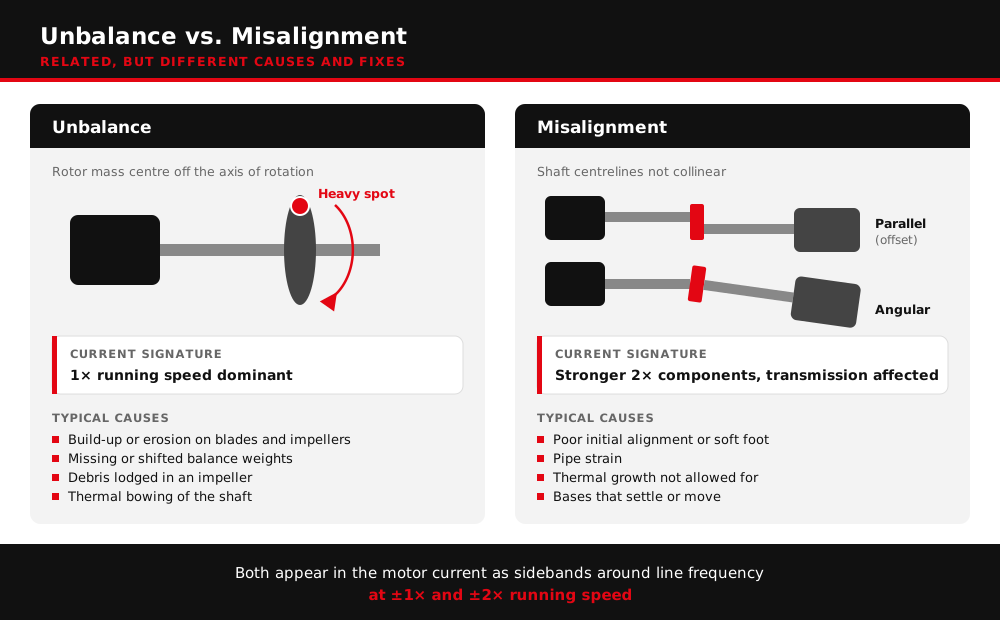
Typical causes are poor initial alignment, soft foot, pipe strain, thermal growth that was never allowed for, and bases that settle or move.
How it shows up in the motor current
Both faults modulate the motor load at the rotational frequency (1×) and its multiples. In the current spectrum they appear as sidebands around the line frequency at ±1× and ±2× running speed. Misalignment tends to produce stronger 2× components and affects the transmission parameters. Unbalance is dominated by 1×.
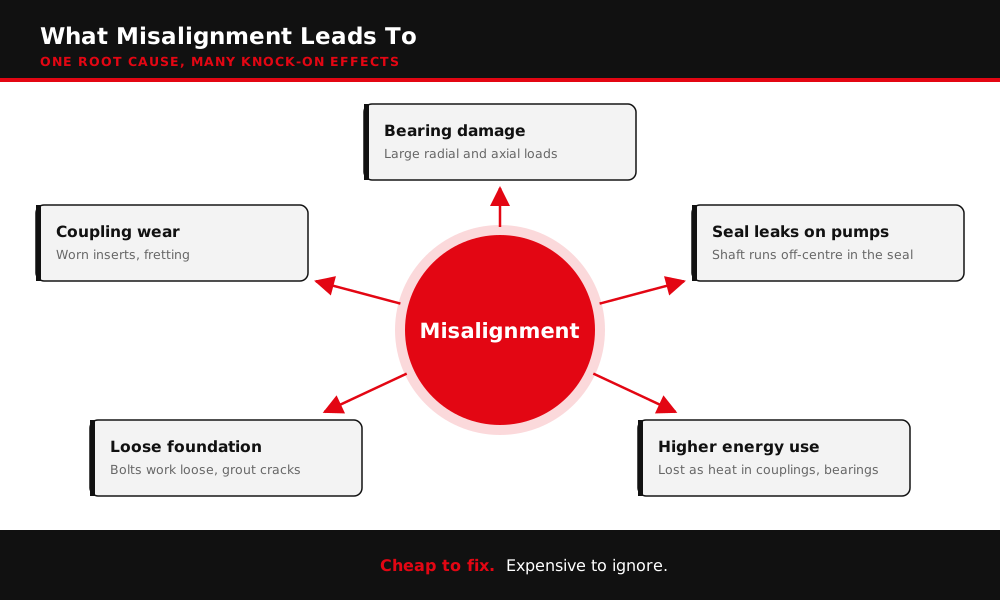
What misalignment leads to
- Bearing damage. Misalignment adds large radial and axial loads, and it is one of the leading root causes of premature bearing failure.
- Coupling wear and failure: worn elastomers, broken rubber inserts, fretting of gear couplings.
- Seal leaks on pumps, because the shaft runs off-centre in the seal.
- Repeated forces work bolts loose and crack grout, which is exactly why loose foundation was rising here.
- Higher energy use. Misaligned drives waste energy as heat in couplings and bearings.
Correlations worth remembering
- Misalignment + loose foundation + bearing rising together: fix alignment first, then re-check the others.
- Misalignment that returns quickly after a correction: suspect soft foot, pipe strain or a moving base.
- Unbalance + driven equipment rising on a fan: check blades for build-up, erosion or damage.
- A sudden jump in unbalance on a pump: look for debris in the impeller.
Checklist for maintenance and CM teams
- Always check for soft foot before aligning. An aligned machine on a soft foot will not stay aligned.
- Use laser alignment and record the as-found and as-left values.
- Allow for thermal growth on hot equipment (pumps handling hot fluids, fans on hot gas).
- Check pipe strain by loosening flange bolts and watching the shaft move.
- After correction, confirm on the trend. The misalignment parameter should fall, and linked parameters should follow.
Key takeaways
- One root cause can light up many parameters. Look for the one that explains the others.
- Misalignment is cheap to fix and expensive to ignore.
- Sensorless electrical signature analysis can see misalignment and its knock-on effects with no probes on the machine.
A second Artesis case confirms the pattern. At a fan in 2024, e-MCM flagged an unbalance issue that the customer traced to poor motor-to-fan coupling alignment. After realignment, vibration fell from 6 mm/s to 3 mm/s. The motor current had pointed to the fault before anyone opened a toolbox.
Is one hidden fault behind several of your alarms? Talk to Artesis about e-MCM online monitoring or an AMT Pro condition assessment.










 White Papers
 Case Study
 Documents
 Webinars
 Events
 ROI Calculator
 FAQ
FAQ