

University campuses are full of machines nobody thinks about until they fail. Air handlers, exhaust fans and chilled water pumps keep lecture halls, labs and dormitories comfortable. When they stop, the complaints arrive quickly. So when the facilities team at a large US university began testing their fans with Artesis AMT Pro, they expected to find the odd problem. They did not expect one small 415 V, 10.6 A fan to teach the team a lesson in belt drives.
What the motor current revealed
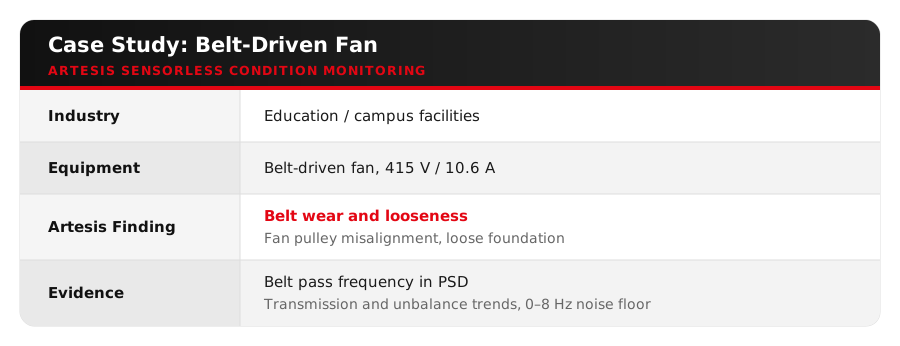
The PSD showed a clear belt pass frequency component, the frequency at which a point on the belt passes around the drive. When a belt is healthy and properly tensioned, this component is small. When the belt is worn, cracked, glazed or loose, it grows, because the belt slips and “slaps” once per revolution of the belt.
Alongside it, the trends showed unbalance on the pulley side of the transmission, the typical sign of pulley misalignment or an eccentric pulley. A noise floor between 0 and 8 Hz pointed to looseness in the structure. The loose foundation trend had improved since 10 April, but it had not gone away.
The recommendation was clear: check the belt condition and tension, check pulley alignment, and secure the base.
What counts as a “transmission element”?
Anything that carries power from the motor shaft to the driven machine:
- V-belts, wedge belts, poly-V and timing belts
- Pulleys and sheaves
- Couplings (elastomeric, gear, disc, grid)
- Gearboxes and chain drives
- Intermediate shafts and cardan shafts
Artesis reports these under the Transmission parameter, and gearbox, belt and coupling faults are among the most common findings in field tests.
How belt and pulley problems develop
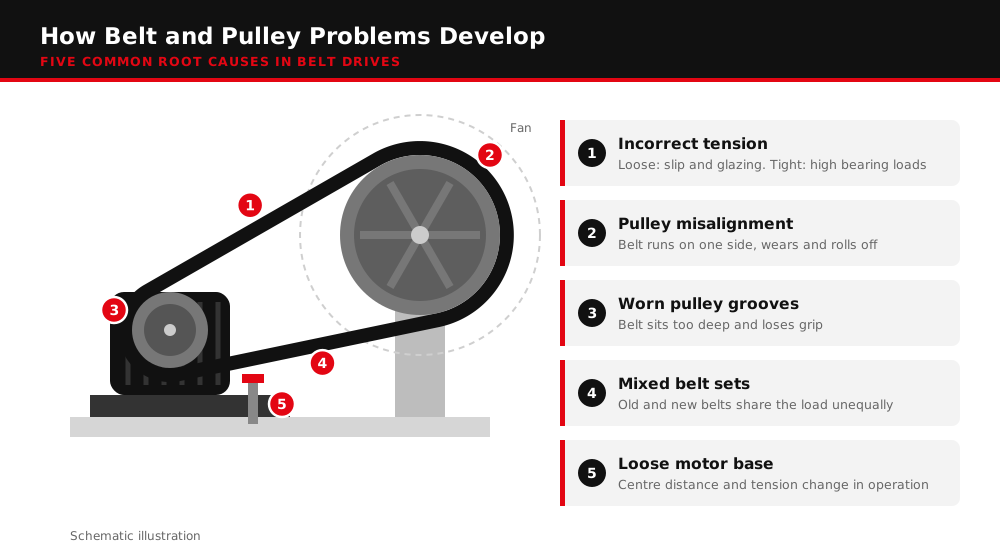
- Incorrect tension. Too loose and belts slip, glaze and overheat. Too tight and bearing loads rise sharply.
- Pulley misalignment, angular or offset, makes the belt run on one side, wear unevenly and roll off.
- Worn pulley grooves let the belt sit too deep, which reduces grip.
- Mixed belt sets on multi-groove drives, where old and new belts share the load unequally.
- A loose motor base, which changes the centre distance and tension as the machine runs.
What transmission faults lead to
- Energy losses. A slipping belt converts power into heat instead of airflow or flow rate.
- Bearing damage on both the motor and the fan, especially when belts are over-tensioned.
- Shaft fatigue from cyclic bending.
- Sudden belt breakage, which stops the machine immediately. In one Artesis pharmaceutical case, an air handling unit belt snapped only after the transmission trend had jumped days earlier.
- Reduced process performance. Fans move less air, pumps deliver less flow.
Correlations to watch
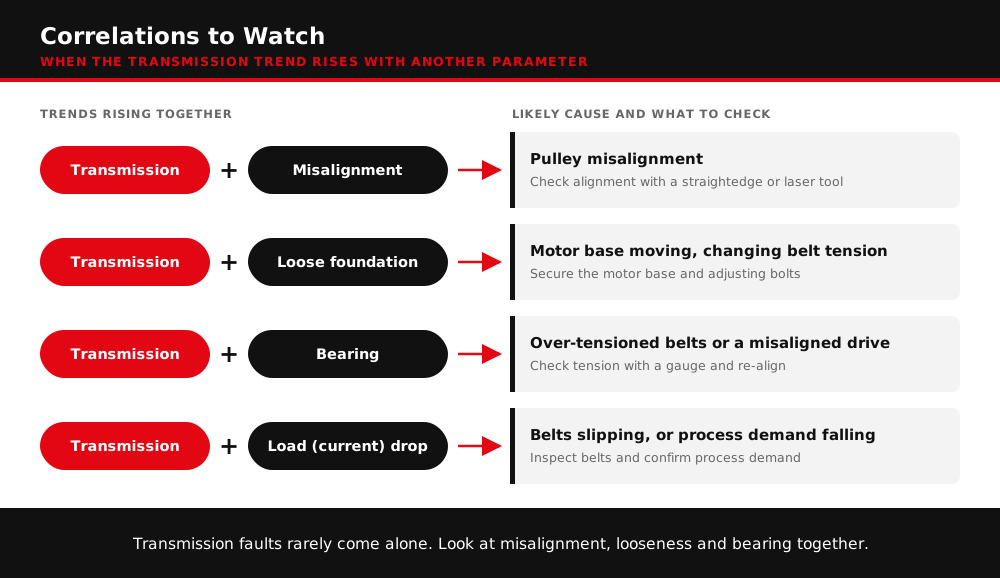
- Transmission + misalignment: check pulley alignment with a straightedge or laser tool.
- Transmission + loose foundation: the motor base may be moving and changing belt tension.
- Transmission + bearing: over-tensioned belts or a misaligned drive are loading the bearings.
- Transmission + a load (current) drop: belts slipping, or process demand falling.
Maintenance checklist
- Check belt tension with a tension gauge, not by thumb.
- Check pulley alignment with a laser or straightedge.
- Inspect belts for cracks, glazing, fraying and uneven wear. Replace belts as a matched set.
- Gauge pulley grooves for wear.
- Secure the motor base and adjusting bolts.
- Re-test after the job and compare the belt pass component with the previous PSD.
Key takeaways
- Belt problems leave a clear fingerprint (the belt pass frequency) in the motor current.
- Transmission faults rarely come alone. Look at misalignment, looseness and bearing together.
- Small, cheap fixes such as tension, alignment and a new belt set protect bearings and cut energy losses.
For the university team, this small fan became a template. Test, read the transmission trend, fix the belt and pulley, then test again. Across dozens of campus fans, that routine turns into fewer hot rooms and fewer emergency call-outs.
Want a quick health check of your belt-driven fans? Ask Artesis about an AMT Pro campus or site survey.











 White Papers
 Case Study
 Documents
 Webinars
 Events
 ROI Calculator
 FAQ
FAQ