
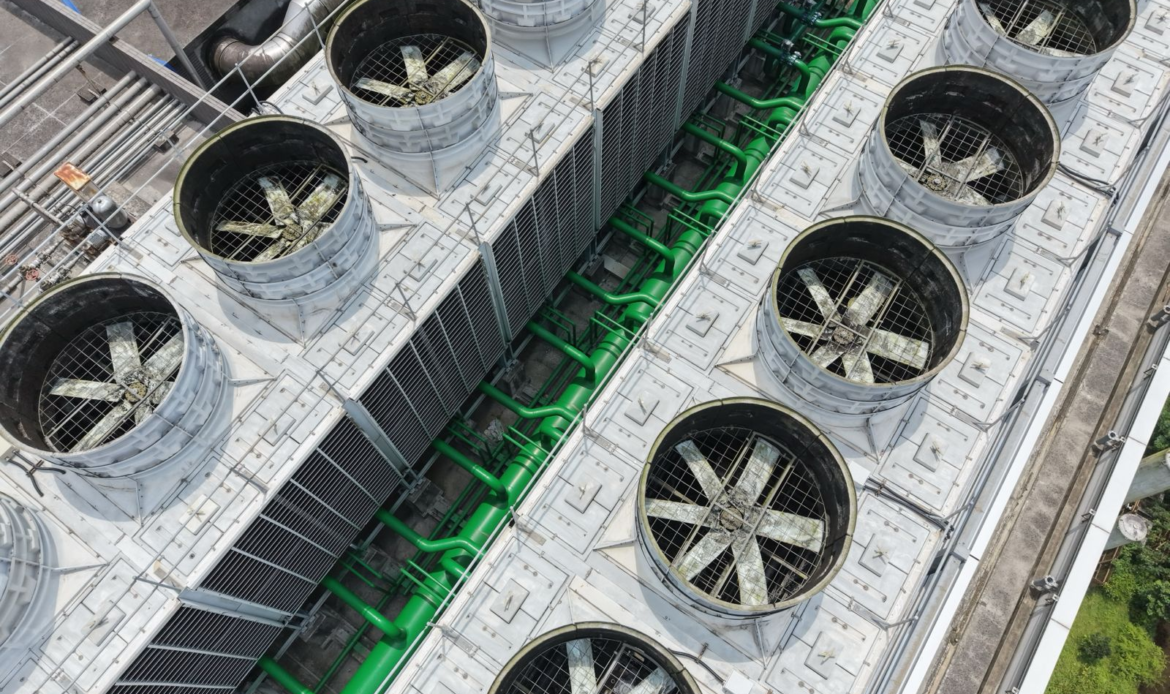
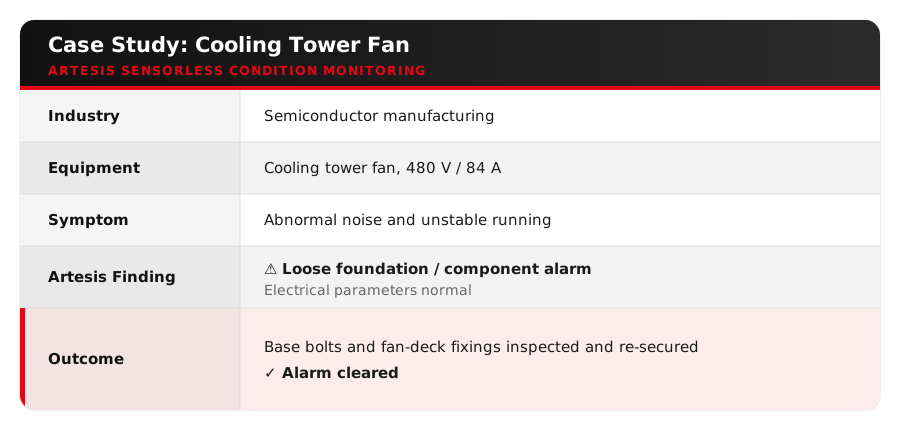
It was the night shift that noticed it first. On the roof of a semiconductor fab, one of the cooling tower fans had started making a sound the operators described as “a washing machine with a brick in it.” It wasn’t loud enough to trip anything, and the tower was still doing its job. But in a facility where process water temperature is controlled to fractions of a degree, “still doing its job” is not the same as “healthy.”
The fan, a 480 V, 84 A drive, was already being checked with Artesis AMT Pro. The next test gave a clear answer: the Loose Foundation / Components parameter had gone into alarm, and it was pushing several other diagnostic parameters up along with it. The electrical parameters told a different story. Voltage, current balance and power quality were all normal. The motor was fine. The structure it sat on was not.
What “loose foundation” actually means
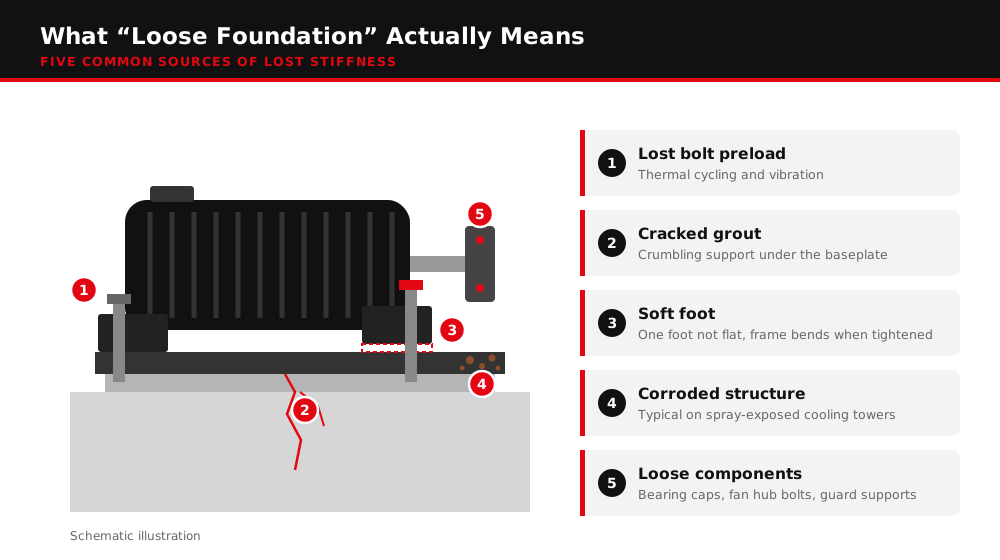
A loose foundation is any loss of stiffness between the rotating machine and the ground that is supposed to hold it still. It is rarely one dramatic failure. More often it is one of these:
- Anchor or hold-down bolts that have lost preload through thermal cycling and vibration
- Cracked or crumbling grout under a baseplate
- A “soft foot”, where one motor foot does not sit flat, so tightening the bolt bends the frame
- Corroded or fatigued steel structures, a common problem on cooling towers exposed to constant spray
- Loose components on the machine itself: bearing housing caps, fan hub bolts, guard supports
When the machine is no longer held rigidly, every small force (residual unbalance, blade-pass pulses, torque ripple) makes it move more than it should. The machine starts to rock at low frequency, and that movement feeds back into the motor as a small, irregular change in load torque.
How the motor “feels” looseness
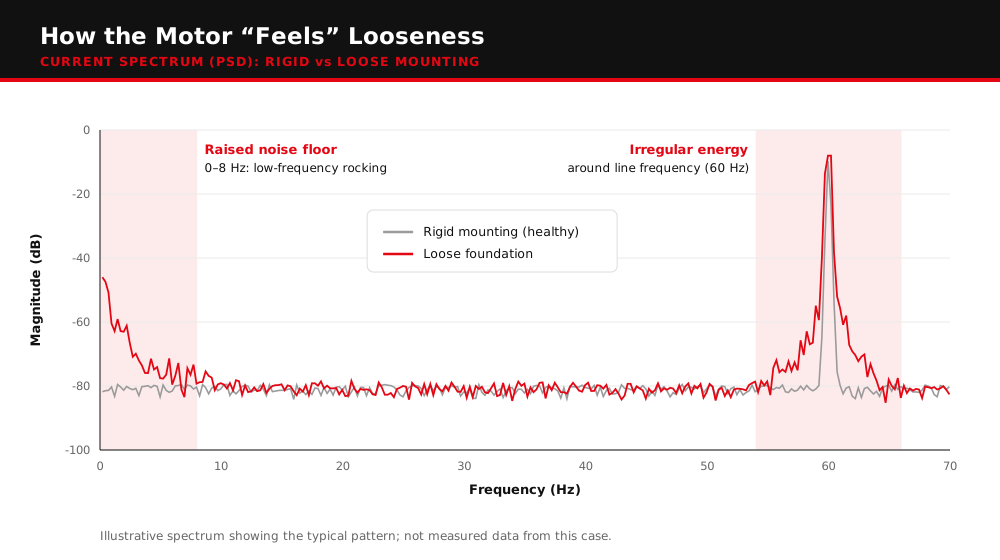
This is where electrical signature analysis becomes useful. The motor’s stator current is modulated by every change in the torque the shaft sees. A rigidly mounted machine gives a clean, stable spectrum. A loose one produces a raised “noise floor” at the very bottom of the spectrum, typically in the 0–8 Hz region, together with irregular, non-periodic energy near the line frequency.
In this case the power spectral density (PSD) showed exactly that pattern. Because looseness changes how the whole drive train responds, it also pushed up the bars for other parameters. This is an important lesson for anyone reading condition reports: looseness often masquerades as other faults.
What looseness leads to if you ignore it
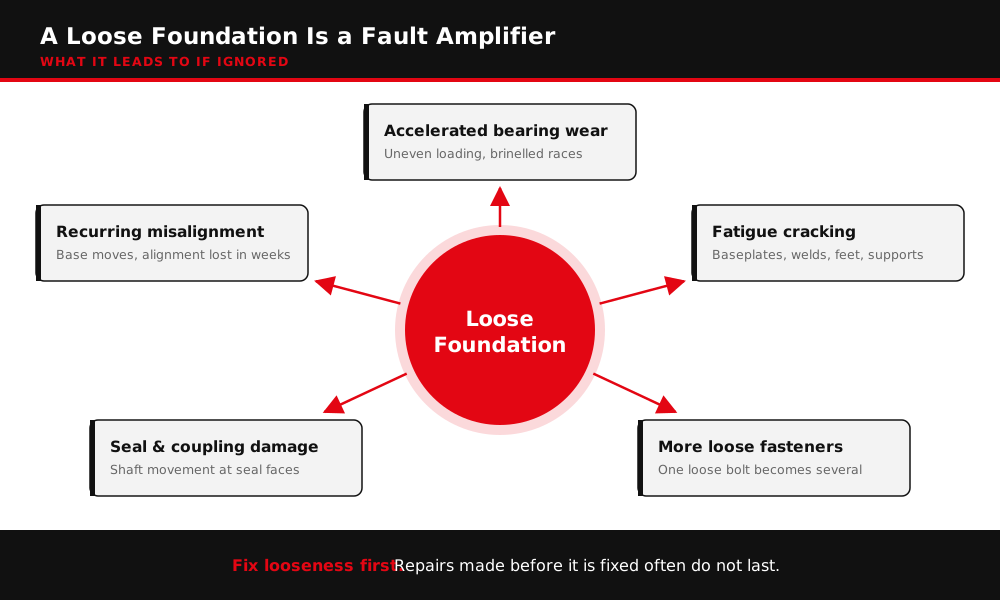
A loose foundation is a fault amplifier. Left alone, it typically causes:
- Accelerated bearing wear. Rocking loads the rolling elements unevenly and brinells the races.
- Misalignment that keeps coming back. You align the coupling, the base moves, and the alignment is lost again within weeks.
- Fatigue cracking of baseplates, welds, motor feet and fan support structures.
- Seal and coupling damage on pumps, from shaft movement at the seal faces.
- Loosening of other fasteners, which turns one loose bolt into several.
Correlations to look for
When the Loose Foundation parameter rises, check these related indicators before you plan the job:
- Misalignment / Unbalance. Often rises at the same time. If both rise together after an alignment job, suspect soft foot.
- A slow rise after looseness appears usually means the looseness is now damaging the bearings.
- Transmission elements. On belt drives, a loose motor base changes belt tension and pulley alignment.
- Electrical parameters. If these are normal, as they were here, you can rule out the motor and focus on the mechanical structure.
In another Artesis case at a chemical plant, fixing a 2 mm misalignment at the base made the loose foundation, transmission and bearing trends fall together. It is a good reminder that the parameters are linked.
A practical checklist for the maintenance team
- Check every hold-down bolt with a calibrated torque wrench, not by feel.
- Look for fretting marks, rust bleeding or polished areas around bolts and feet. These show movement.
- Check for soft foot with feeler gauges before and after re-torquing.
- Inspect grout and concrete for cracks and hollow spots (a hammer tap test is enough to start).
- On cooling towers, inspect the fan deck, gearbox support and drive shaft guards for corrosion.
- After the repair, compare the new trend with the pre-repair baseline to confirm the fix.
Key takeaways
- Loose foundations are mechanical faults that show up clearly in the motor’s electrical signature, with no sensors mounted on the structure.
- A low-frequency noise floor in the PSD, with normal electrical parameters, points strongly to structural looseness.
- Fix looseness first. It inflates and causes other faults, so repairs made before it is fixed often do not last.
At the fab, the maintenance crew found and re-secured the loose fixings on the fan assembly during the next planned stop. The “washing machine” sound went away, and so did the alarm. The fix took a wrench and a few hours, compared with what a fan collapse on a production-critical cooling tower would have cost.
Want to see what your motors are telling you about the structures they sit on? Contact Artesis to arrange an AMT Pro assessment or an e-MCM online monitoring pilot.










 White Papers
 Case Study
 Documents
 Webinars
 Events
 ROI Calculator
 FAQ
FAQ