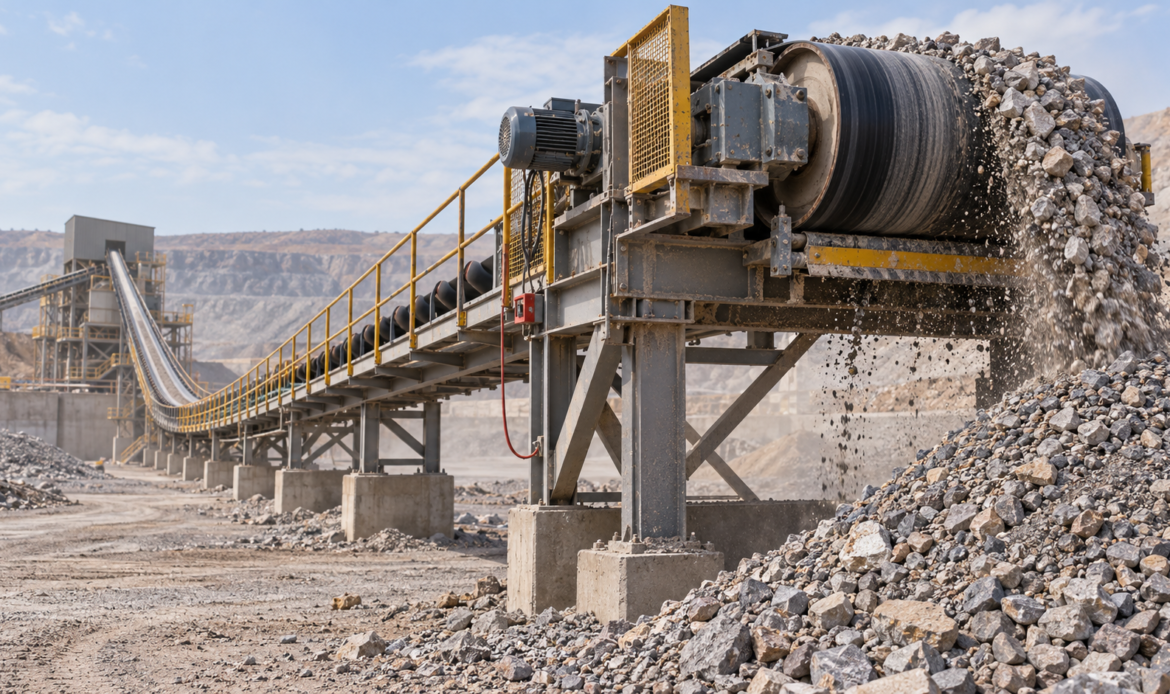
In a mine, the conveyor is the artery. Ore moves from the crusher to the stockpile to the plant, and if the belt stops, so does everything else. Conveyors are long, noisy and often in dusty, hard-to-reach places, so small problems can go unnoticed for weeks.
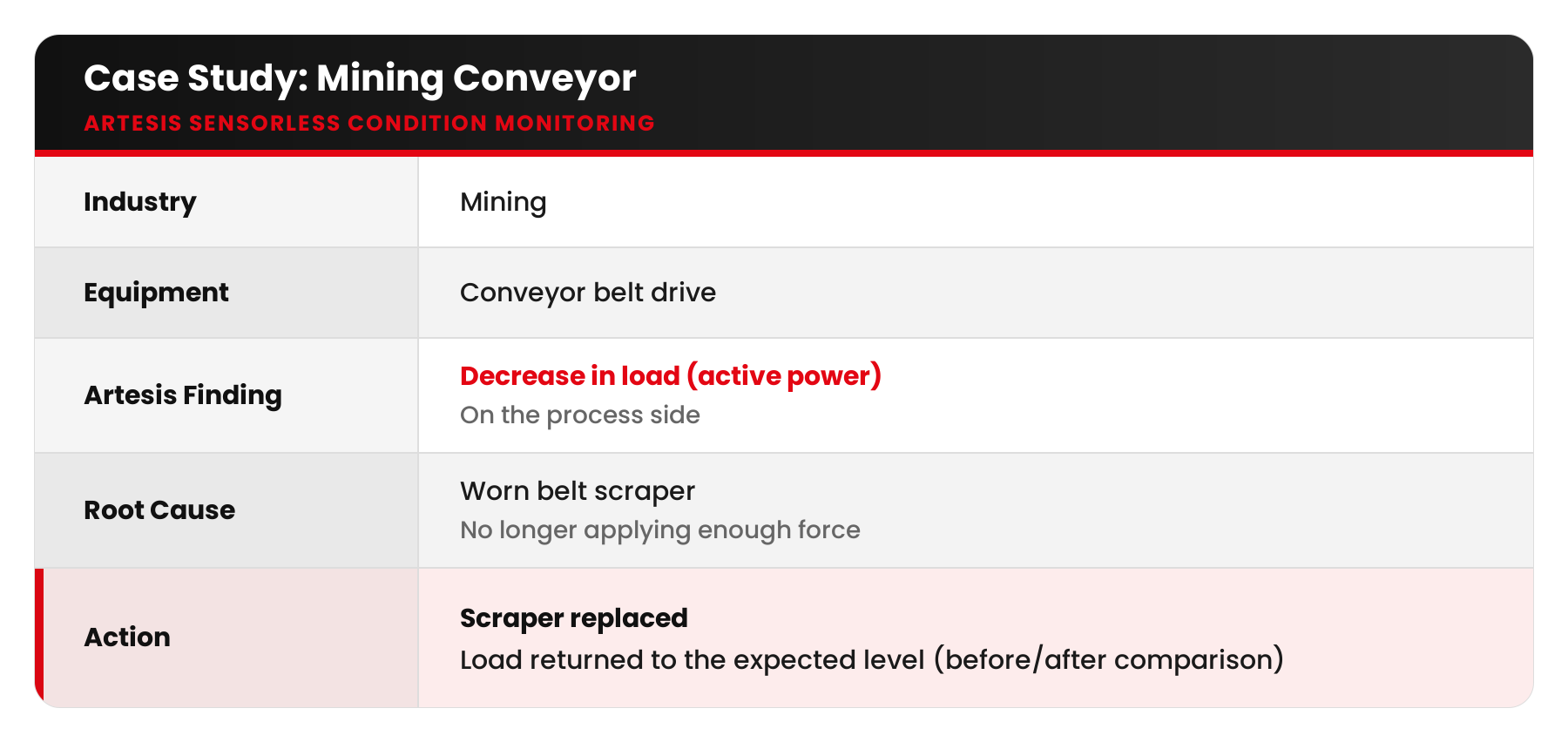
At this mining operation, the conveyor drive was being monitored by Artesis. The first signal was not an alarm on a mechanical parameter. It was a drop in load on the process side, a change in the active power the motor was delivering.
Reading the power trend
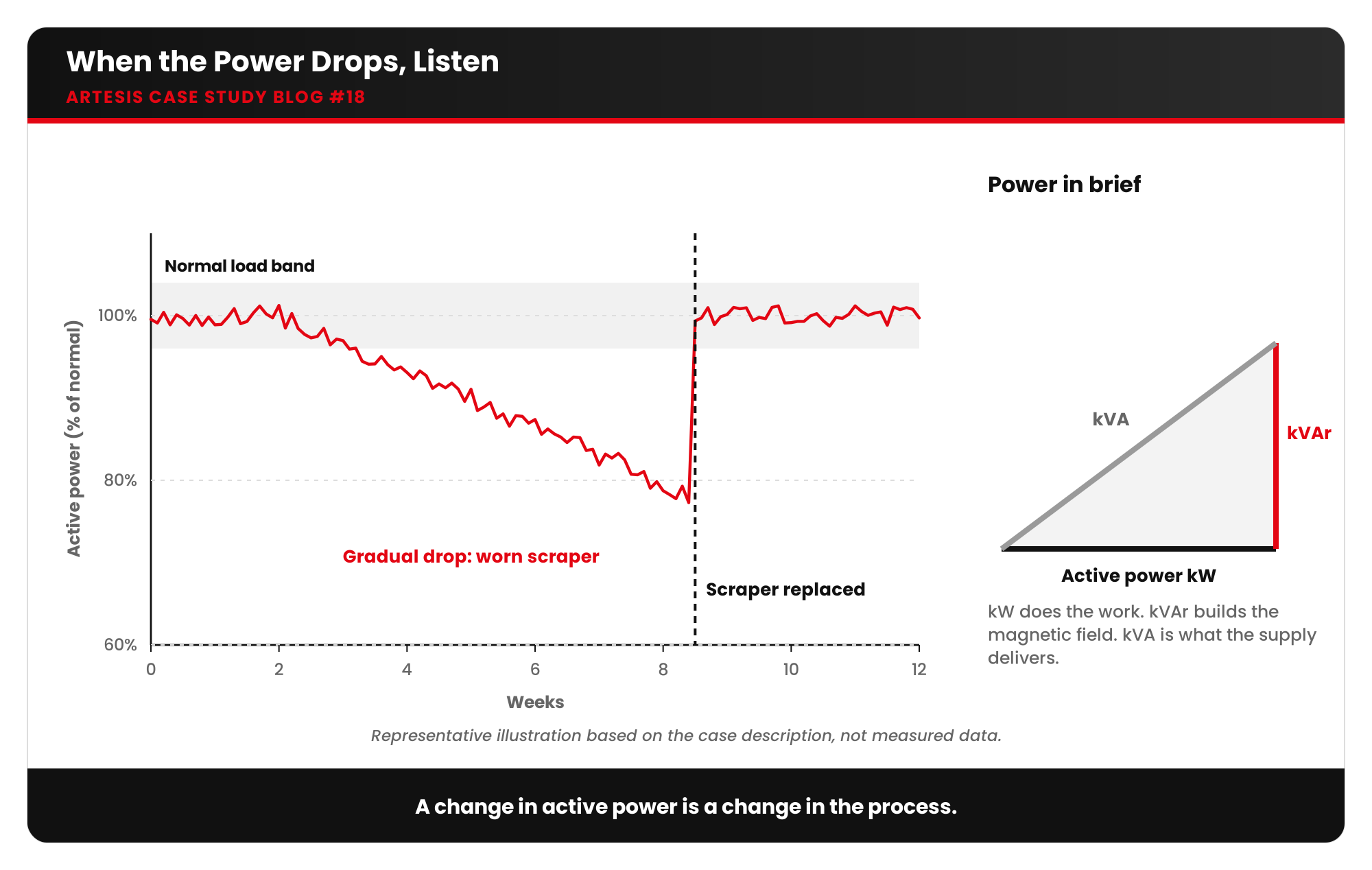
A conveyor’s power demand depends on what it carries and the friction in the system. The belt scraper keeps the return belt clean and applies a consistent drag. When the load trend fell, the team knew that something in the process had changed.
The maintenance crew went to the conveyor and found the belt scraper worn to the point where it no longer applied enough force. Material was carrying back on the return belt, which causes spillage, build-up on idlers and pulleys, and eventually belt tracking problems and damage. After the scraper was changed, the before-and-after comparison showed the load back where it should be.
Active, reactive and apparent power in brief
- Active power (kW): the power that does useful work: moving material, pumping water, turning a fan.
- Reactive power (kVAr): the power that builds magnetic fields in the motor. It does no useful work but still loads cables and transformers.
- Apparent power (kVA): the combination of the two, and what the supply must deliver.
- Energy (kWh): active power over time, what you pay for.
What power and energy trends reveal
Because the motor delivers all the power the process needs, changes in active power are direct evidence of changes in the process or the machine:
- Sudden drop: blockage at a pump inlet, broken belt, loss of product, closed valve
- Gradual drop: filter clogging on a fan, wear of scrapers or impellers
- Gradual rise: increased friction (bearings, misalignment), fouling on a pump discharge
- Rise with no output increase: efficiency loss from electrical or mechanical faults
In another Artesis case, a water distribution pump’s active power dropped drastically in December after load alarms began in September. The cause was a piece of wood blocking the pump inlet. At a wastewater site, electromechanical faults on a PD blower had increased energy consumption by 20%, which fell back to normal after repair.
What unmanaged power problems lead to
- Undetected process issues (spillage, blockages, loss of throughput)
- Energy waste that shows up only on the monthly bill
- Reactive power penalties and overloaded electrical infrastructure
- Missed opportunities to justify repairs with measured savings
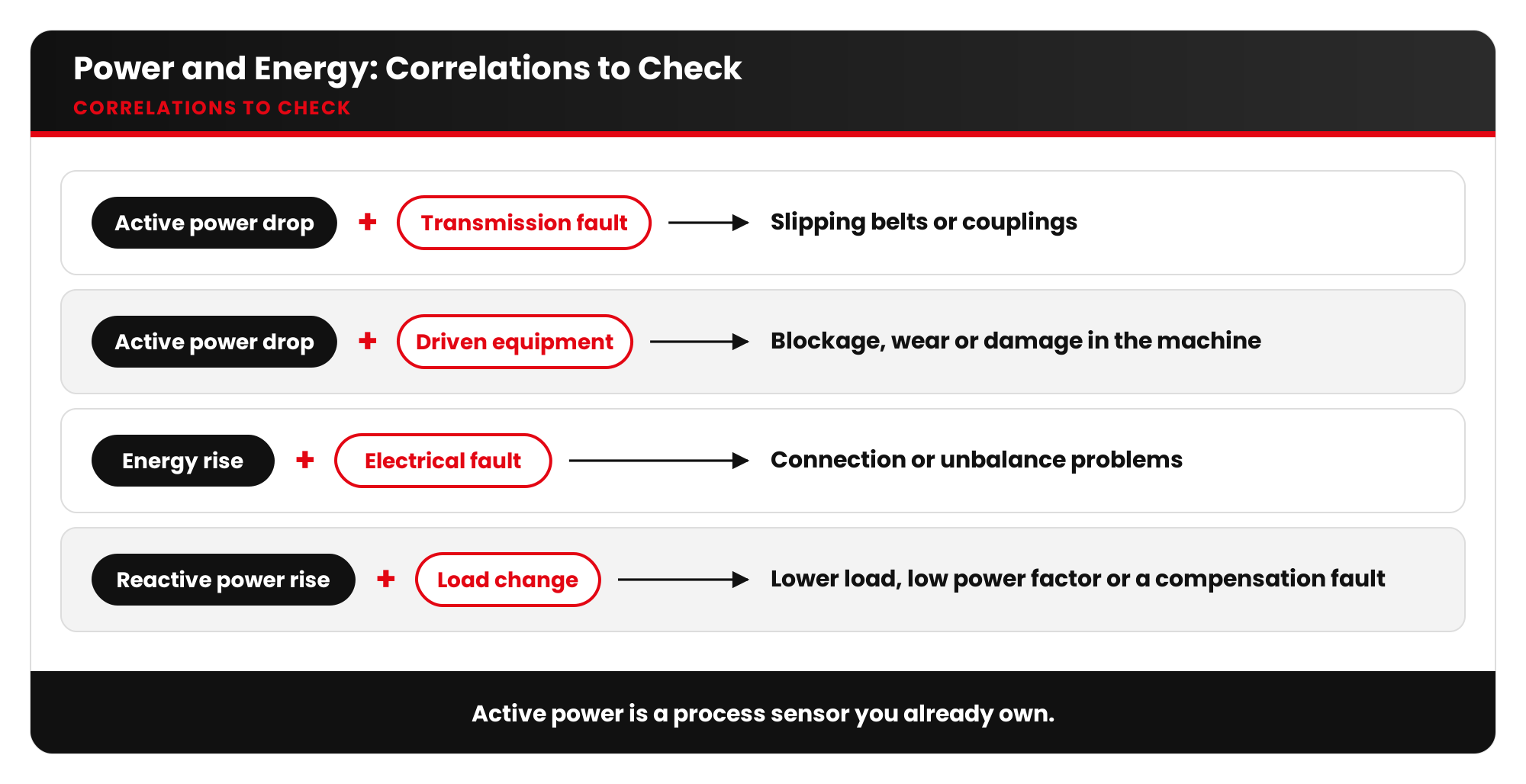
Correlations to check
- Active power drop + transmission fault: slipping belts or couplings.
- Active power drop + driven equipment fault: blockage, wear or damage in the machine.
- Energy rise + electrical fault: connection or unbalance problems.
- Reactive power rise: lower load, low power factor, or a compensation fault.
Checklist
- Trend kW and kWh per asset, not just per plant.
- Know the normal load band for each machine and set alerts on deviations.
- When power changes, check the process first. The fault may not be in the machine.
- Use kWh data to quantify the cost of faults and the savings from repairs.
- Review reactive power and power factor together with load.
Key takeaways
- Active power is a process sensor you already own.
- A small change in power can reveal worn parts long before they cause damage.
- Energy data turns maintenance findings into measurable savings.
Want to turn every motor into a process and energy sensor? Ask Artesis about e-MCM.




 White Papers
 Case Study
 Documents
 Webinars
 Events
 ROI Calculator
 FAQ