
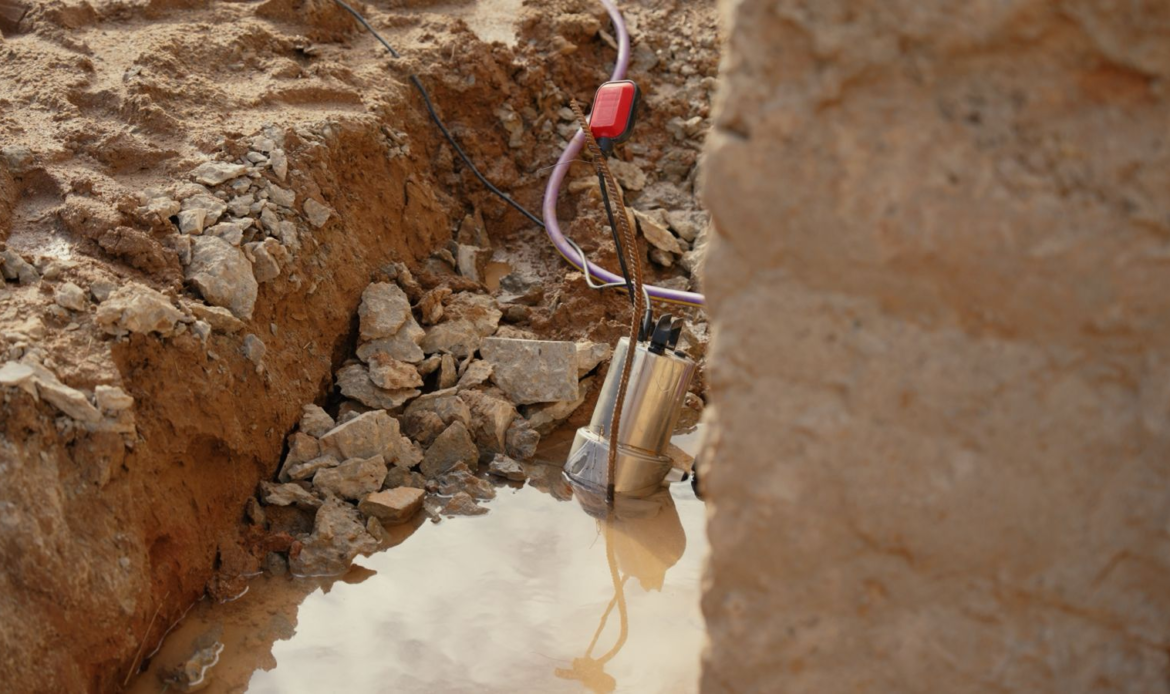
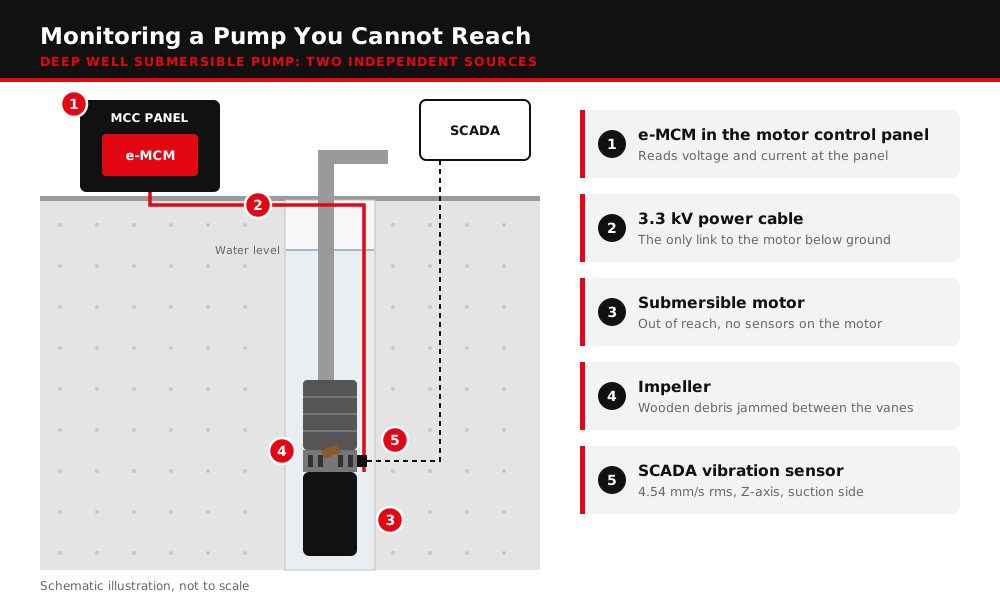
Deep well pumps are the definition of “out of sight, out of mind”. The motor and pump sit far below ground, submerged in the water they are lifting. You cannot walk up to them with a vibration pen or put your hand on the casing. For the water utility that ran this 3.3 kV submersible pump, the only way to know its condition was to listen to what came up the cable.
The Artesis e-MCM unit in the motor control panel did exactly that, and one day it started giving a warning.
The investigation
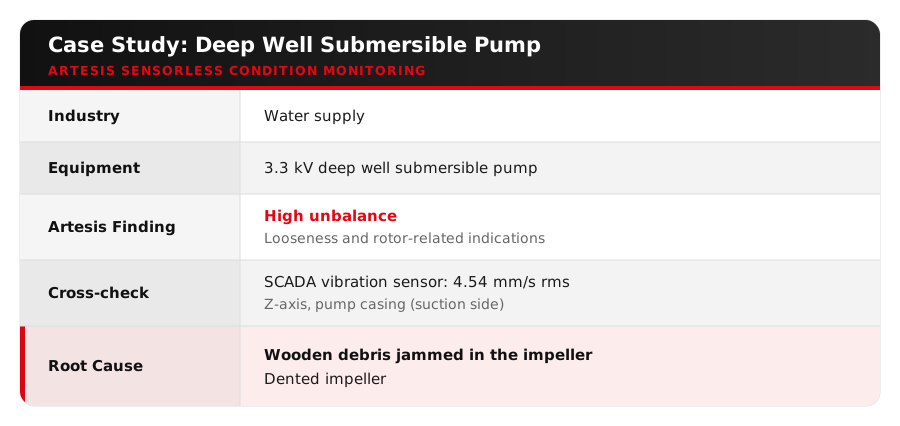
The e-MCM report showed a high level of unbalance, together with looseness and rotor-related indications. The team compared this with their SCADA system, which had a separate online vibration sensor on the pump casing. It confirmed the diagnosis: 4.54 mm/s rms on the Z-axis at the suction side, clearly elevated.
When the pump was pulled and inspected, the answer was lying in the impeller. A piece of wood had been sucked in and jammed between the vanes. It had dented the impeller and thrown the rotating assembly out of balance. The maintenance crew removed the debris and dealt with the damaged impeller.
For the supervisor, the most satisfying part was simple. “We didn’t have to guess,” he said. “The motor told us something was wrong with the pump, not with itself.”
What are “driven equipment” faults?
Driven equipment faults are problems in the machine the motor drives, not in the motor. Examples:
- Pumps: damaged, eroded or blocked impellers, worn wear rings, vane damage, rubbing, bent shafts
- Fans: blade erosion, build-up, cracked or loose blades, hub problems
- Compressors: valve leaks, worn pistons or rings, rotor rub
- Mixers, mills, conveyors: worn scrapers, damaged paddles, changes in process load
Because the motor delivers all the torque the driven machine needs, every irregularity in that machine shows up as a small modulation of the motor current. Electrical signature analysis turns the motor into a sensor for the whole drive train.
How driven equipment faults develop
- Foreign objects entering pumps or fans, as with the wooden debris here
- Erosion and corrosion from abrasive or aggressive fluids
- Cavitation damage on pump impellers
- Material build-up on fan blades, dust or product deposits
- Fatigue cracks from long-term cyclic loading
- Wear of close-clearance parts (wear rings, seals, compressor valves)
What they lead to
- Unbalance and vibration, which in turn damage bearings and seals
- Loss of hydraulic or aerodynamic efficiency, so higher energy per unit of output
- Reduced capacity: less flow, less pressure, less airflow
- Eventually catastrophic failure: a broken impeller or a thrown fan blade
Correlations to look for
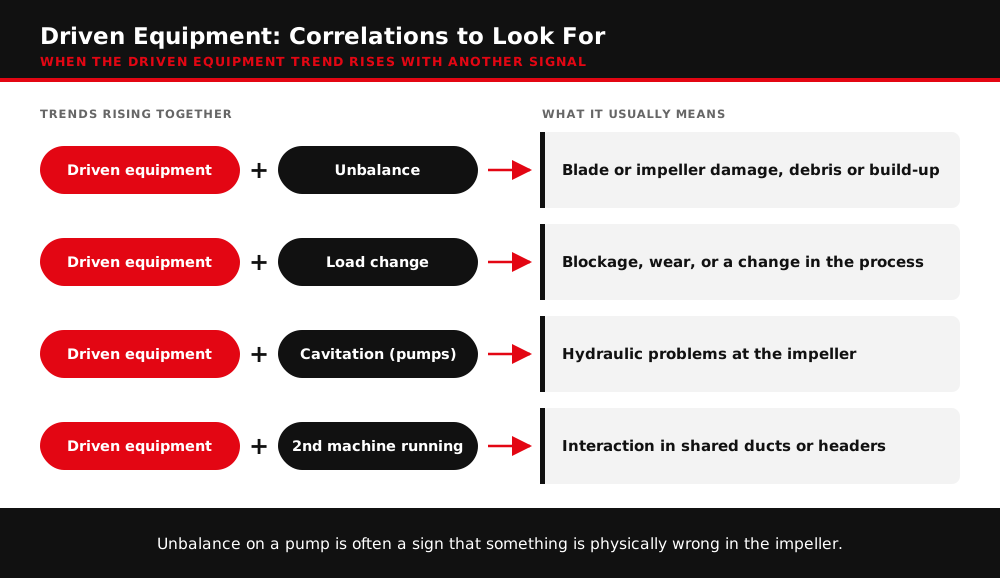
- Driven equipment + unbalance: blade or impeller damage, debris or build-up
- Driven equipment + load change: blockage, wear, or a change in the process
- Driven equipment + flow turbulence / cavitation (pumps): hydraulic problems at the impeller
- Driven equipment rising only when a second machine runs: interaction in shared ducts or headers
Checklist for maintenance and CM personnel
- Compare the motor current / active power trend with the process data (flow, pressure, level).
- Check inlet screens, strainers and suction areas for debris.
- Correlate with any existing vibration or SCADA data. Two independent sources give confidence.
- For fans, schedule blade inspection and cleaning when unbalance and driven-equipment trends rise together.
- After repair, re-learn or re-baseline the monitoring if the machine’s behaviour has changed significantly.
Key takeaways
- Driven equipment faults can be detected from the motor control panel, even on submersible pumps you cannot reach.
- Unbalance on a pump is often a sign that something is physically wrong in the impeller.
- Combining e-MCM with existing SCADA data gives fast, confident decisions.
Monitoring submersible, borehole or other hard-to-reach pumps? Ask Artesis how e-MCM monitors them from the motor control centre.




 White Papers
 Case Study
 Documents
 Webinars
 Events
 ROI Calculator
 FAQ
FAQ