
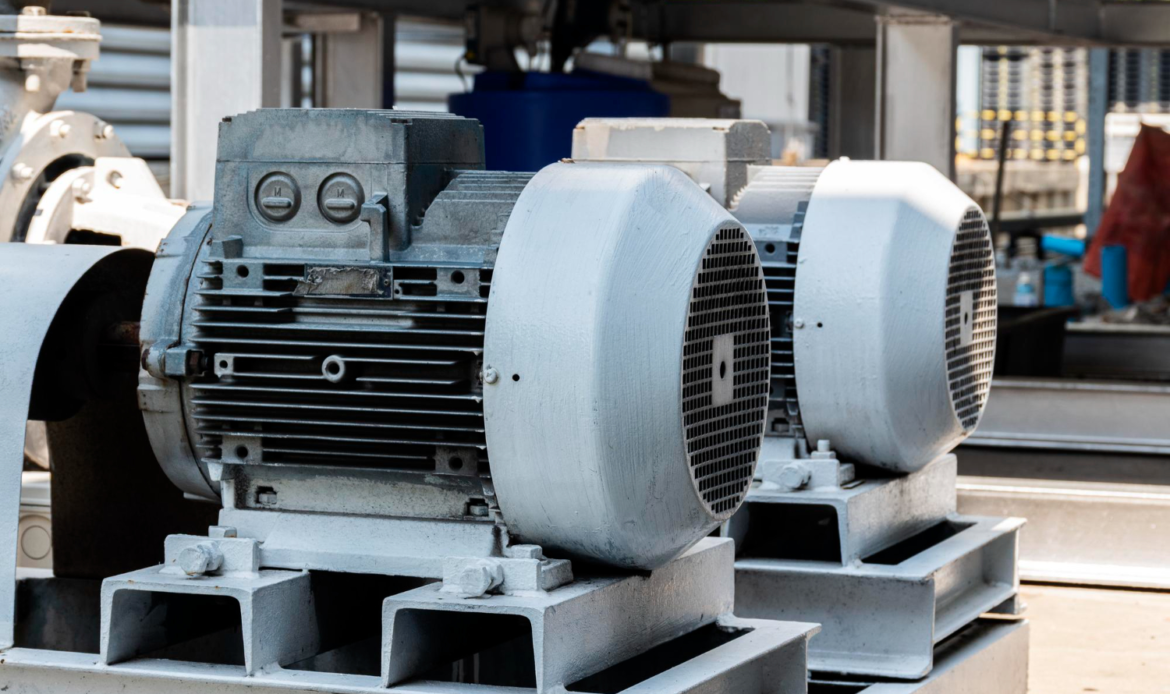
May is a bad month for a chiller to fail. At a large coatings manufacturer in the north-eastern United States, the cooling season was only weeks away when a routine vibration survey flagged Chiller 1 as “failed”. The recommendation was blunt: take it out of service immediately.
The problem was what the report did not say. It named no fault, no location and no severity. The motor nameplate on site was also wrong, which made the job harder. The plant engineer faced an uncomfortable choice. He could open up a critical chiller on a hunch and pay for an unplanned outage, or keep it running into the hottest months and risk a catastrophic failure.
He called the service partner, who brought in Artesis for a second opinion.
A diagnosis from the motor terminals
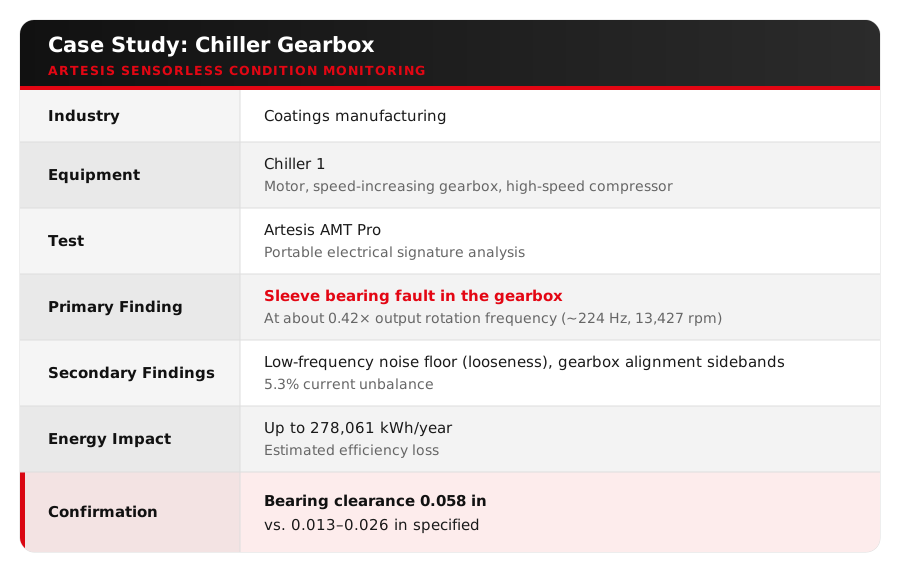
The AMT Pro test took minutes and required no access to the gearbox. The Condition Assessment Report, delivered on 23 May 2025, used a high-resolution power spectral density (PSD) analysis of the motor current.
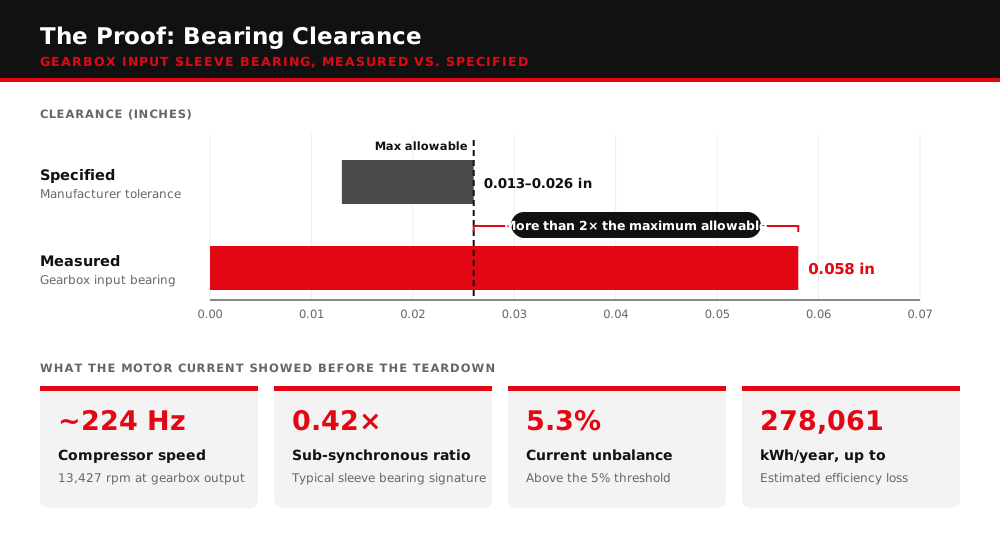
The key was the gearbox output speed. The chiller’s compressor turned at about 13,427 rpm, roughly 224 Hz. The spectrum showed several fault frequencies at about 0.42 times this output rotation frequency. That sub-synchronous ratio is a classic signature of a sleeve (journal) bearing problem, typically oil whirl in a bearing with excessive clearance.
The report also found:
- A noise floor at the start of the spectrum, suggesting loose foundation or components
- Sidebands around the line frequency suggesting gearbox alignment issues
- A current unbalance of 5.3%, above the 5% threshold
- An estimated energy efficiency loss of up to 278,061 kWh per year from the combined faults
The proof
With a specific target, the team planned a focused teardown. The manufacturer’s specified clearance for the bearing was 0.013–0.026 inches. The bearing at the gearbox input measured 0.058 inches, more than double the maximum allowable wear. The worn bearing was replaced and the chiller went into the cooling season healthy.
Why gearboxes, belts and couplings deserve their own attention
The transmission path between motor and machine is where much of the mechanical stress in a drive train ends up. Typical faults:
Gearboxes
- Tooth wear, pitting and cracked teeth
- Bearing wear (rolling element or sleeve) inside the gearbox
- Misalignment between the gearbox and motor or driven shaft
- Lubrication breakdown, contamination or overheating
Belts
- Wear, cracking, glazing, incorrect tension and broken belts
Couplings
- Worn or broken elastomer inserts, worn gear teeth, loose bolts, fatigue cracks in disc packs
How they develop, and what they cause
Most gearbox and coupling failures trace back to misalignment, overload, lubrication problems or looseness. Once started, they cause:
- Increasing vibration and noise
- Heat, which degrades oil and accelerates further wear
- Loss of efficiency: gearbox losses end up on the electricity bill
- In high-speed machines like this chiller, a risk of rapid, destructive failure
Correlations to check
- Gearbox + misalignment sidebands: check gearbox-to-motor and gearbox-to-compressor alignment.
- Gearbox + loose foundation: gearbox mounting bolts, baseplate and grout.
- Gearbox + bearing (sub-synchronous components): sleeve bearing clearance, oil supply, oil temperature.
- Gearbox + current unbalance: check the supply as well. Electrical and mechanical problems often coexist.
Checklist
- When a gearbox is flagged, identify the shaft speeds (input, intermediate, output) so fault frequencies can be matched.
- Take an oil sample and check for wear metals and water.
- Measure sleeve bearing clearances against the manufacturer’s tolerance during any teardown.
- Check alignment at both gearbox couplings.
- Record the energy impact of faults to support the repair decision.
Key takeaways
- A “failed” vibration result is a warning, not a diagnosis. Specific fault identification avoids unnecessary, costly teardowns.
- Electrical signature analysis can see inside a gearbox, even on high-speed machines, from the motor terminals.
- Quantifying energy losses turns a maintenance decision into a business decision.
Facing a vague alarm on a critical asset? Ask Artesis for an AMT Pro second opinion.







 White Papers
 Case Study
 Documents
 Webinars
 Events
 ROI Calculator
 FAQ
FAQ