
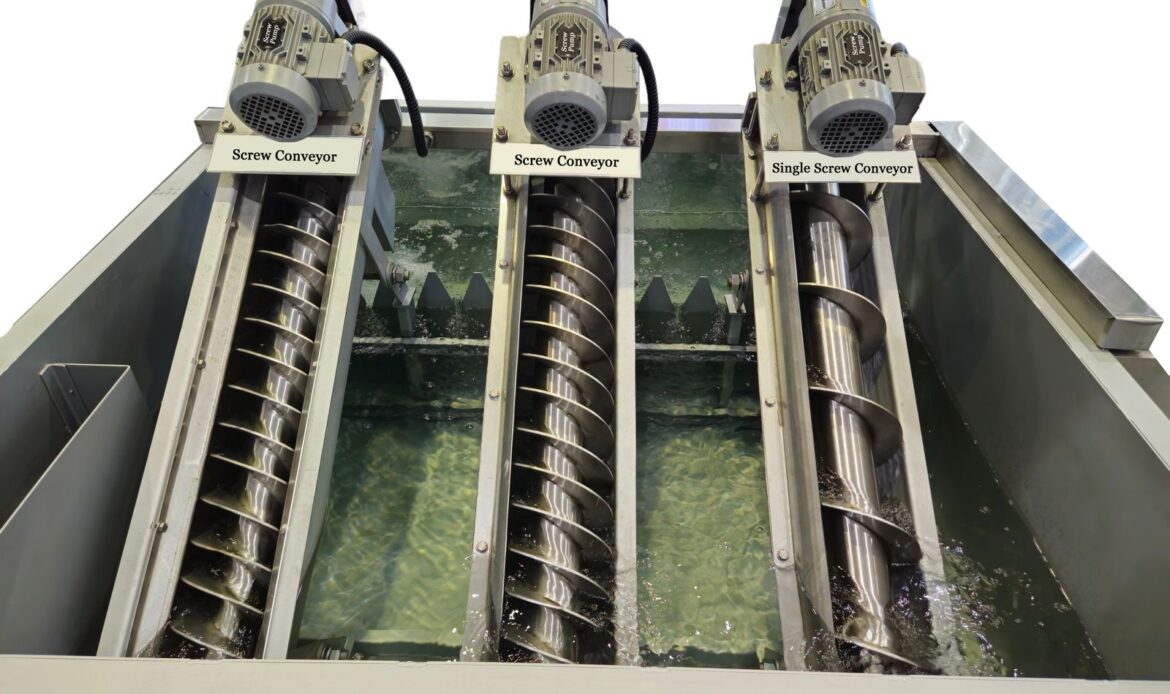
Submersible pumps fail in a particularly frustrating way: by the time anyone notices a problem, the pump is usually already underwater, out of reach, and the only diagnostic tool available is a crane and a maintenance crew’s afternoon. Archimedes screw pumps, common in wastewater lift stations and irrigation systems, present a different but related challenge — they’re large, slow-turning, mechanically simple machines that are easy to assume are low-maintenance right up until a bearing or gearbox fails and takes the whole screw assembly out of service.
Both pump types share a common thread that makes condition monitoring particularly valuable: the mechanical components most likely to fail are physically inaccessible for routine inspection during normal operation, which means any monitoring approach depending on physically getting a sensor onto or near the moving parts is either impractical or requires the kind of installation effort most facilities never get around to actually doing.

Why These Pumps Fail Differently Than Typical Industrial Rotating Equipment
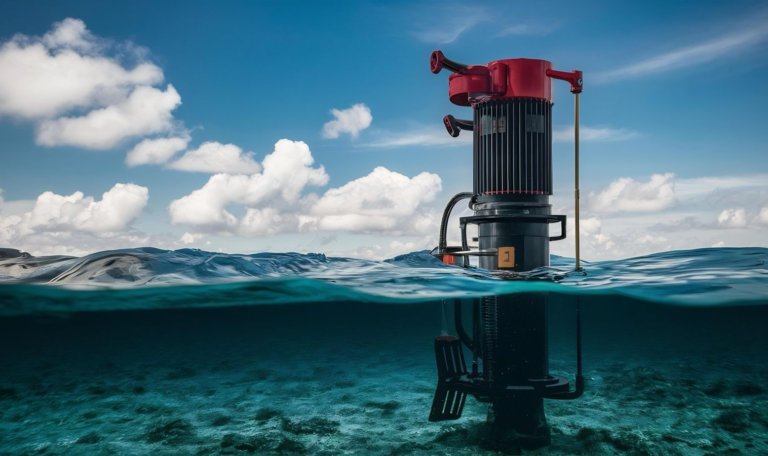
A submersible pump’s motor, bearings, and seals are sealed inside a housing designed to operate underwater, often at significant depth in a wet well, lift station, or borehole. There’s no practical way to walk up with a vibration meter and take a reading the way you would on a horizontal centrifugal pump mounted at floor level. Any physical inspection requires pulling the pump — a process that itself takes the asset out of service, requires lifting equipment, and in wastewater applications, involves decontamination procedures that add real cost and time to something as simple as checking bearing condition.
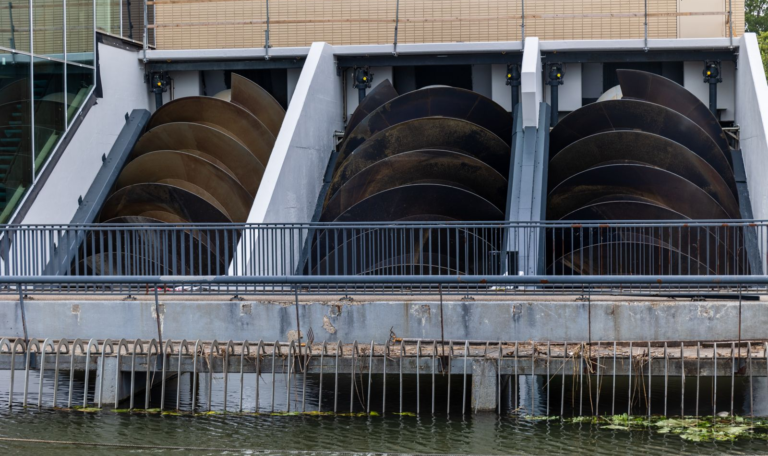
Archimedes pumps operate differently but present a parallel accessibility problem. The screw itself typically runs at low speed — often under 50 RPM — through a gearbox reduction from a standard-speed motor. The gearbox and upper bearing are usually accessible, but the lower bearing, submerged in the channel the screw sits in, is not something you can inspect without draining the channel or using specialized underwater inspection techniques that most operations simply don’t have in their routine maintenance toolkit.
In both cases, the practical result is the same: mechanical faults develop invisibly until they either produce an audible symptom loud enough to notice from the surface, or until they fail outright.
What Early-Stage Failure Actually Looks Like Electrically
The mechanical fault progression in both pump types follows familiar patterns — bearing wear progressing from surface pitting to spalling to cage failure, seal degradation allowing water ingress into the motor housing, impeller wear changing hydraulic loading, and in geared Archimedes systems, gear tooth wear and misalignment building up over years of continuous low-speed operation.
What makes current signature analysis particularly well suited to these applications is that every one of those mechanical fault progressions produces a measurable change in the electrical signature the motor draws, long before the fault becomes severe enough to produce a mechanical symptom detectable at the surface. A developing bearing fault modulates the load torque on the motor in a characteristic, repeating pattern tied to the bearing’s specific geometry — and that torque modulation shows up as sidebands in the motor’s current spectrum, detectable from a current transformer at the motor control center, with no need to physically access the submerged or enclosed mechanical components at all.
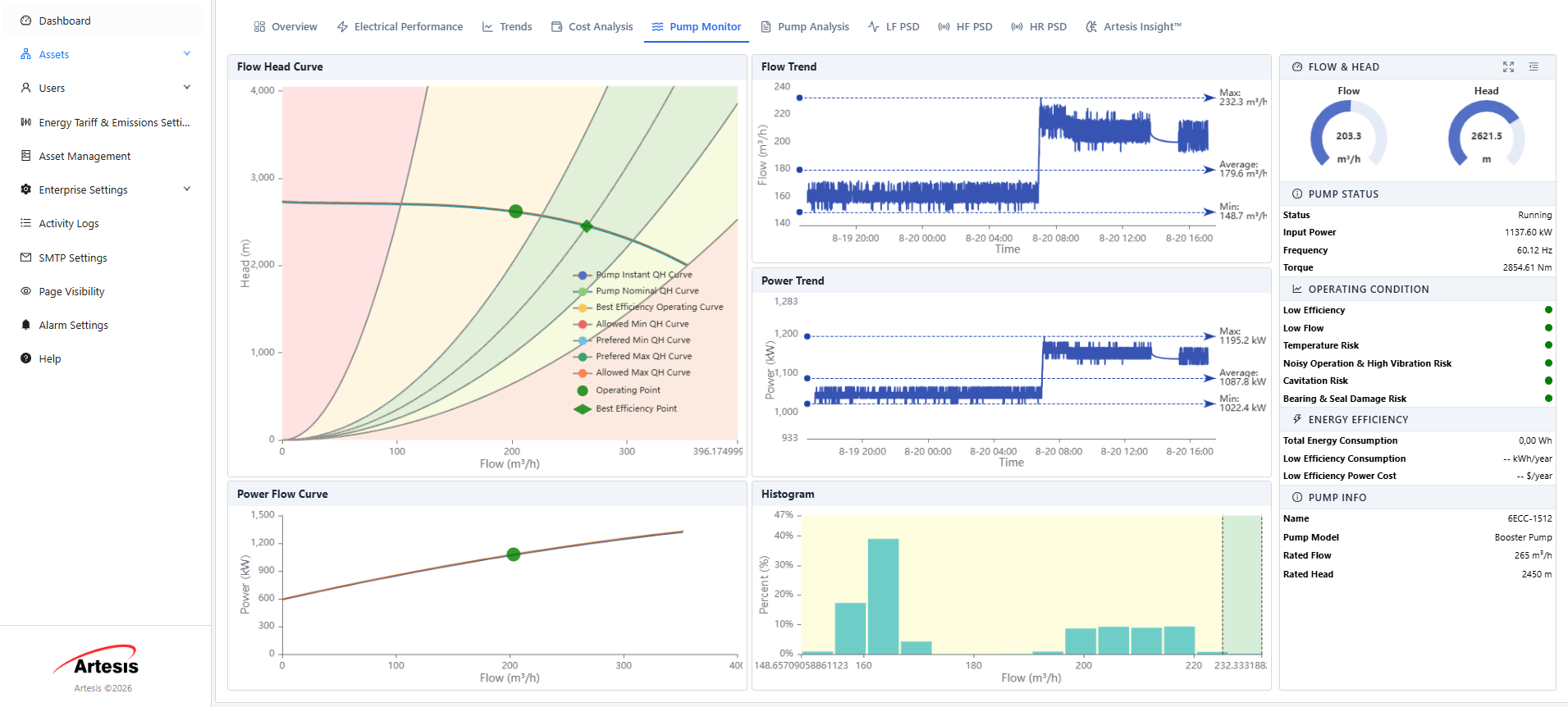
This is the practical advantage sensorless current signature monitoring, of the kind Artesis provides, offers specifically for this equipment category: the sensing point is at the motor control center or starter panel, somewhere technicians can access without lifting a pump, draining a channel, or entering a confined space. For a wastewater utility running dozens of submersible pumps across scattered lift stations, or an irrigation district managing a bank of Archimedes screws along a canal system, that difference between “sensor at the accessible control panel” and “sensor on the submerged component” is often the difference between a monitoring program that actually gets deployed across the whole fleet and one that stays a pilot project on two or three easily accessible units.
Specific Failure Modes Worth Watching in Each Pump Type
For submersible pumps, the failure modes most worth prioritizing in a monitoring program are seal degradation leading to moisture ingress (which shows up first as insulation resistance changes and eventually as electrical signature anomalies before a catastrophic ground fault), bearing wear (detectable through the torque modulation signature described above), and impeller wear or clogging, which changes the hydraulic load the motor sees and is detectable as a shift in load current and power factor over time, distinguishable from a genuine mechanical fault because it correlates with flow rate changes rather than a fixed characteristic frequency.
For Archimedes pumps, the priority list looks slightly different given the gear reduction stage: gear tooth wear and misalignment, which produce characteristic sideband patterns related to gear mesh frequency and shaft speed, upper and lower bearing wear, and coupling degradation between the gearbox output and the screw shaft, which in continuously running low-speed applications tends to develop slowly enough that early detection provides a genuinely useful maintenance window — often months rather than weeks — before intervention becomes urgent.
Building a Monitoring Program Around Fleet Realities
Water and wastewater utilities in particular tend to operate large numbers of pumps across geographically distributed sites with limited on-site staffing at any individual location. A monitoring approach that requires a technician to visit each site regularly with portable equipment doesn’t scale well against that reality, and tends to default back to reactive maintenance once the initial enthusiasm for a pilot program fades.
Continuous monitoring from the motor control center, reporting back to a central platform, fits this operational reality much better. A utility can establish baseline signatures for each pump during commissioning or during a period of known-healthy operation, then let the system flag deviations automatically as they develop, with maintenance staff investigating only the assets the system actually flags rather than performing routine inspections across the entire fleet on a fixed calendar regardless of actual need.
A Realistic Example
A municipal wastewater system operates twelve submersible pumps across six lift stations, with two pumps per station running in duty/standby configuration. One pump begins showing a subtle current signature change consistent with early bearing wear — nothing an operator driving past the station would notice, since the pump is still pumping normally and no alarm has triggered on the SCADA system monitoring flow and level. The current signature system flags the deviation, trending gradually worse over six weeks. Maintenance schedules the pump for a planned pull and inspection during a low-flow period, confirms bearing wear consistent with the flagged signature, and replaces the bearing during a controlled maintenance window with the standby pump covering the station throughout. Without the flag, the likely alternative outcome is a bearing seizure that takes the pump out of service unexpectedly, potentially during a high-flow event when having only the standby pump available matters most.
The Underlying Point
Submersible and Archimedes pumps are exactly the kind of equipment where the argument for sensorless, electrically-based condition monitoring is strongest — not because the mechanical fault physics are different from any other rotating equipment, but because the practical accessibility of these specific machines makes traditional sensor-based monitoring approaches genuinely difficult to deploy at scale. Reading the electrical signature from an accessible point in the control system, rather than requiring physical access to submerged or enclosed components, turns a monitoring program from a theoretical good idea into something a utility or irrigation operator can actually roll out across an entire fleet without a disproportionate installation effort standing in the way.
Installation Practicalities Worth Planning For
Even with a sensorless, control-center-based monitoring approach, a few practical details determine whether a rollout goes smoothly or turns into a slower, more frustrating project than anticipated. Current transformers need to be sized correctly for the actual motor full-load current, not just the nameplate rating rounded to the nearest standard size, since an oversized CT reduces measurement resolution exactly where subtle early-stage fault signatures matter most. Panel space inside older motor control centers is sometimes tighter than expected, particularly at lift stations built decades ago and retrofitted repeatedly over the years, so a site survey before committing to a rollout schedule saves considerable rework later.
Communication infrastructure is the other practical constraint that trips up fleet-wide rollouts more than the sensing technology itself. Many lift stations and irrigation pump sites were built with minimal or no data connectivity beyond whatever SCADA radio or cellular link handles basic level and flow telemetry. Adding condition monitoring data to that same link is usually feasible, since the data volumes involved are modest compared to continuous streaming telemetry, but it’s worth confirming bandwidth and reliability at each site during planning rather than assuming uniform connectivity across a geographically scattered fleet.
Comparing the Economics Against Reactive Replacement
For many water utilities operating older pump fleets, the default has been reactive replacement — run the pump until it fails, then replace it, on the reasoning that submersible and Archimedes pumps are relatively simple, well-understood machines without much benefit to sophisticated monitoring. This reasoning holds up less well once the true cost of an unplanned failure is accounted for honestly: emergency confined-space entry procedures, expedited crane mobilization, overtime labor, and in wastewater applications, the genuine public health and regulatory exposure of an unplanned sanitary sewer overflow if a lift station loses pumping capacity during a failure.
Comparing those costs against the modest incremental cost of adding current signature monitoring to an existing motor control center — no new wiring to the pump itself, no confined space entry required for installation, and monitoring hardware that mounts inside the accessible control panel — tends to produce a favorable economic case even before accounting for the softer benefits of predictable, plannable maintenance windows instead of emergency callouts. Utilities that have made this comparison rigorously, using their own historical failure and callout cost data rather than industry averages, have generally found the payback period for fleet-wide monitoring considerably shorter than initial budget conversations assumed.
Artesis Solutions for Submersible and Archimedes Pump Fleets
Artesis’s Pump Performance Monitoring solution, built on the same sensorless e-MCM signature analysis used across the company’s motor monitoring products, is designed specifically for this equipment category — tracking flow, head, efficiency, and operating zone deviation using electrical data captured at the motor control center, with no need to access the submerged or enclosed mechanical components discussed throughout this article. For utilities and irrigation operators managing pumps across scattered lift stations or canal sites, Artesis Omnisight brings fleet-wide visibility into one dashboard, so maintenance staff can see which of dozens or hundreds of pumps across a service area actually need attention, rather than relying on a fixed inspection calendar or waiting for a SCADA-level alarm that typically only triggers once a failure has already occurred. Where a portable check is more practical than a permanently installed system — a single remote site, for instance — Artesis AMTPro extends the same signature-analysis approach to a handheld, route-based inspection tool.




 White Papers
 Case Study
 Documents
 Webinars
 Events
 ROI Calculator
 FAQ
FAQ