
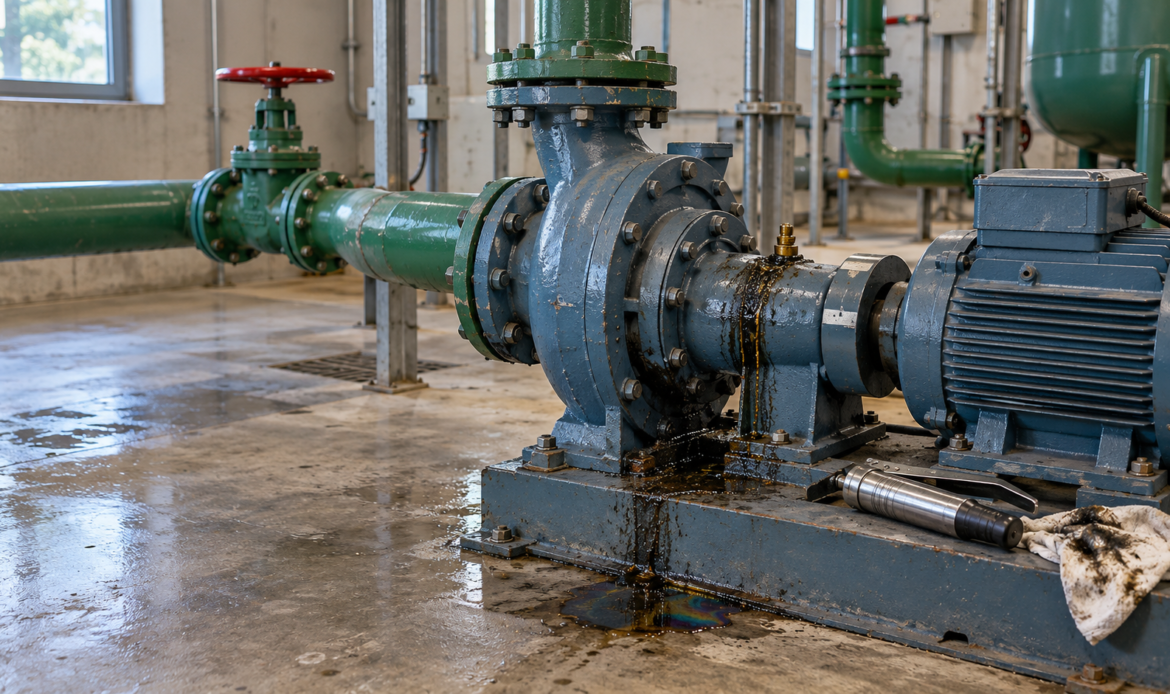
Ask any reliability engineer for the single most common root cause of bearing failure and you will often hear the same answer: lubrication. Too little, too much, the wrong type, contaminated, or applied at the wrong interval. It is a simple task that is easy to get wrong.
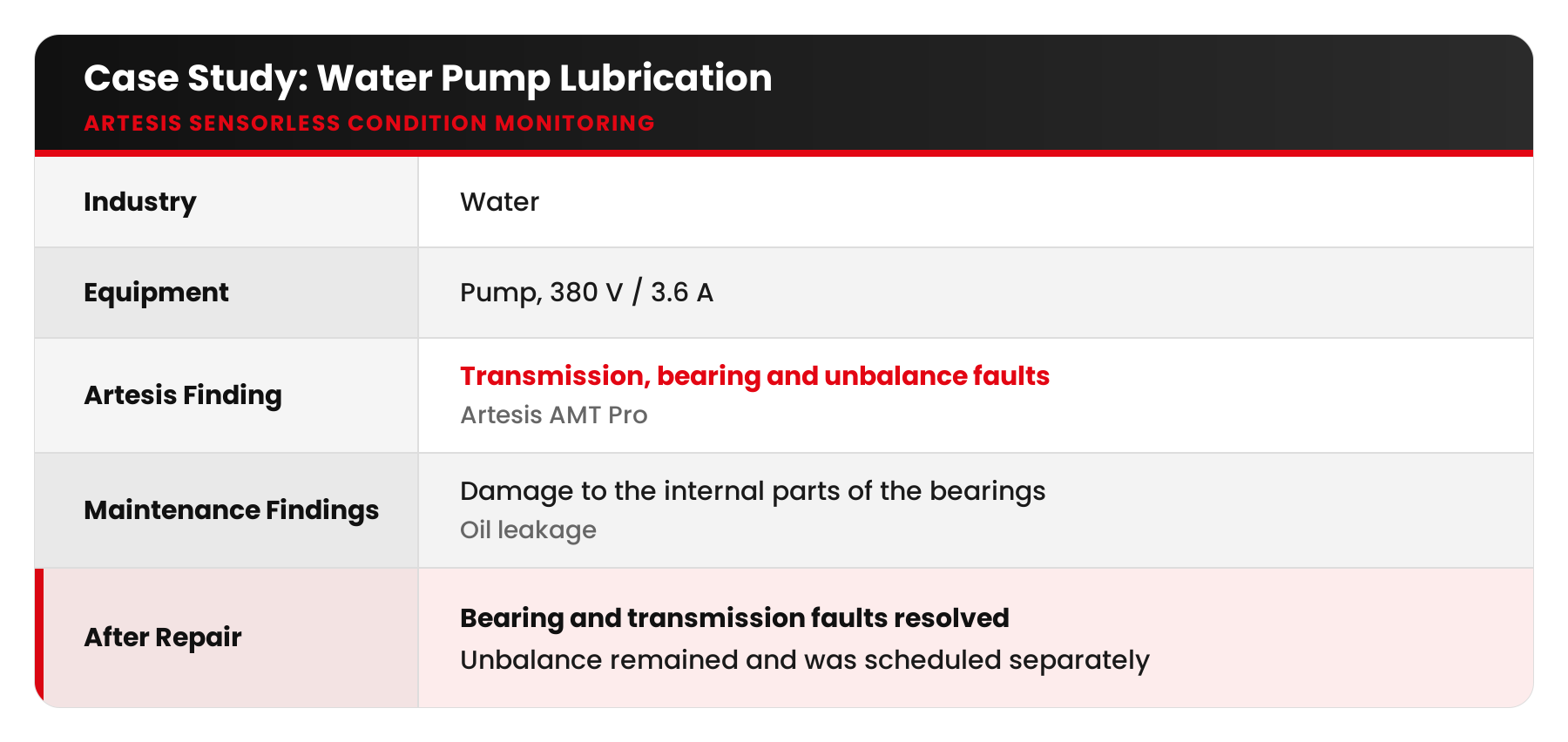
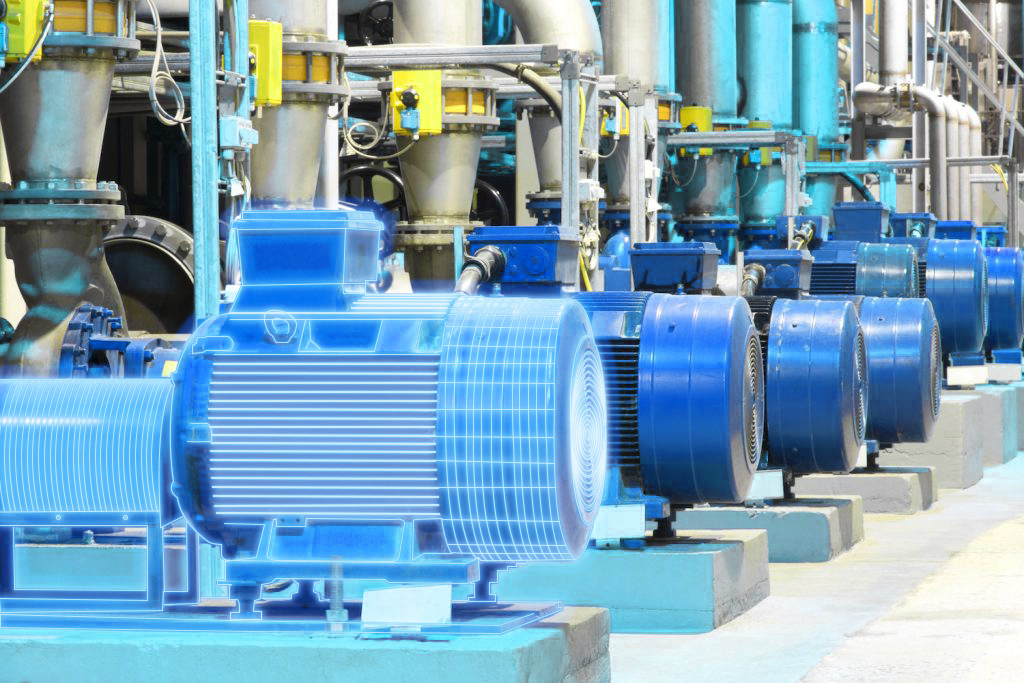
This story starts with a small 380 V, 3.6 A pump at a water facility. It is the kind of machine that gets a routine greasing on the schedule and not much else. The maintenance team tested it with Artesis AMT Pro.
What the test and teardown showed
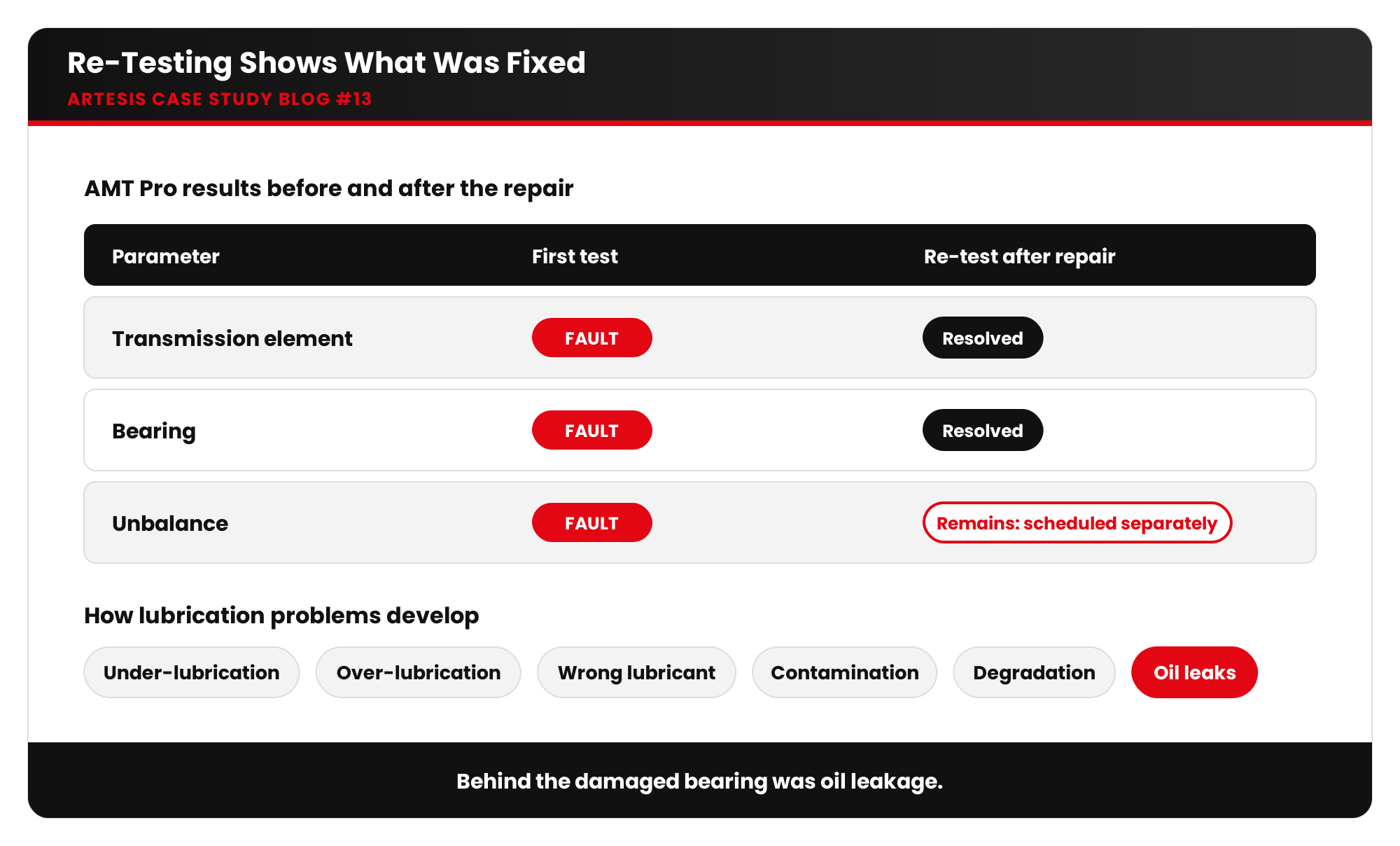
The AMT Pro report clearly indicated faults in the transmission element, bearing and unbalance parameters, and maintenance was planned. When the team removed the bearings, they found damage to the internal parts and clear evidence of oil leakage. The bearing had been running without the lubricant film it needed.
After replacing the bearings and repairing the transmission element, the team tested again. The bearing and transmission faults had cleared. The unbalance remained. This was a useful result, because it showed exactly which repair had worked and which fault was still open.
Why lubrication problems matter
A rolling element bearing depends on an oil film only a few microns thick to separate its balls or rollers from the races. When that film fails, metal touches metal. This causes:
- Adhesive wear and smearing
- Surface distress and micro-pitting, which grow into spalls
- Overheating, which degrades the lubricant further
- Corrosion when water gets in
How lubrication problems develop
- Under-lubrication: missed intervals, blocked grease lines, leaking seals
- Over-lubrication: too much grease causes churning, overheating and seal damage
- Wrong lubricant: incorrect viscosity or base oil, or incompatible greases mixed
- Contamination: dust, process material or water from washdowns
- Degradation: oxidation from high temperature and long service
- Oil leaks from worn seals, damaged housings or overfilled sumps
What they lead to
- Bearing failure: the most direct consequence
- Higher friction and energy use
- Heat damage to motor windings near overheated bearings
- Gearbox wear in oil-lubricated transmissions
- Secondary damage to shafts, housings and seals
How lubrication problems show up in condition monitoring
Electrical signature analysis does not measure oil directly. It sees the effects of lubrication problems:
- Rising bearing parameter and bearing defect frequencies
- Increased friction-related energy, often a gradual rise in load
- Correlated transmission changes where gearboxes or couplings are involved
In its generator fault reference material, Artesis lists lubrication problems (greasing schedules, bad lubrication) as an operational fault type that causes loss of efficiency and bearing damage. The monitoring job is to catch that damage early and point the team to the root cause.
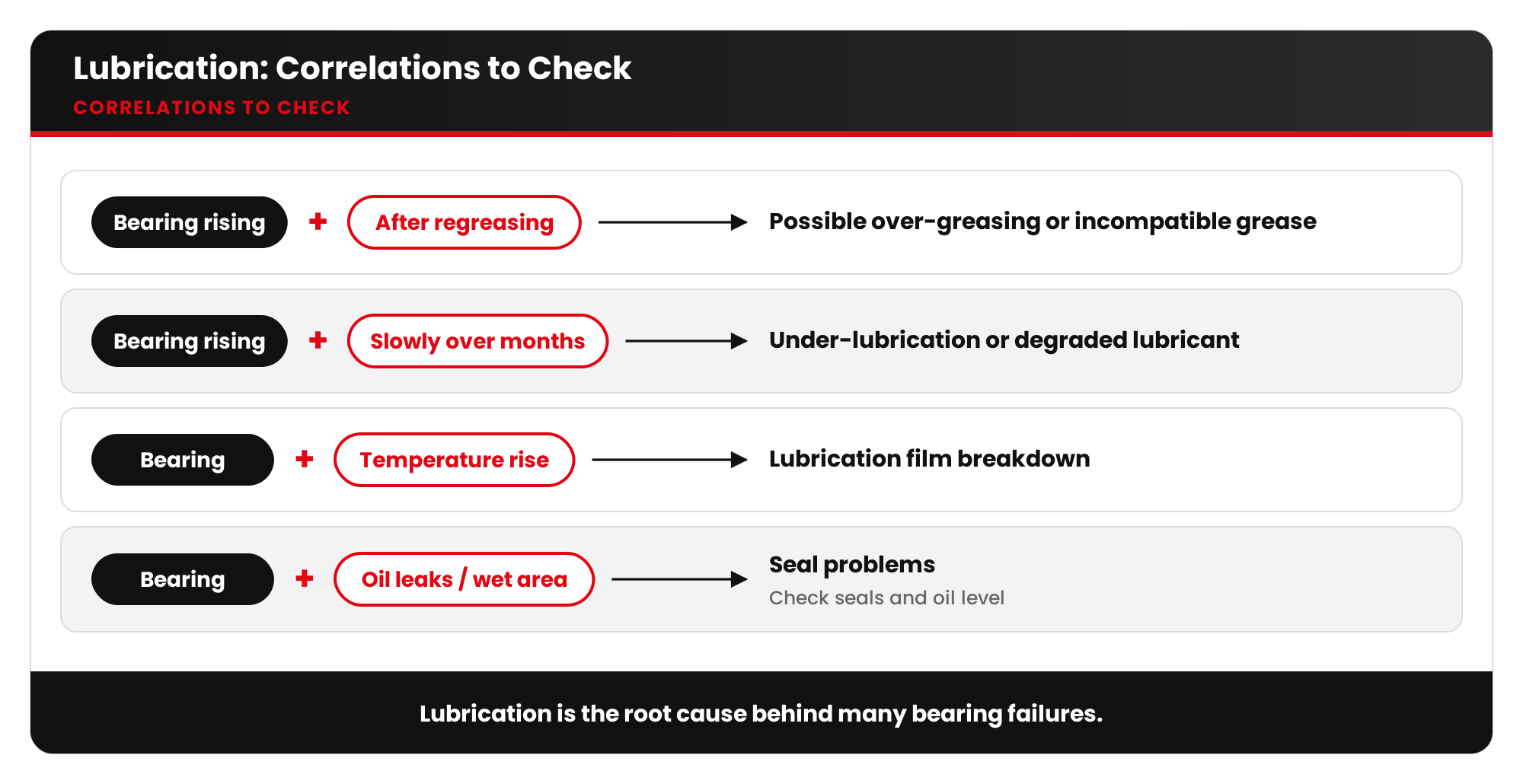
Correlations to check
- Bearing rising after a regreasing: possible over-greasing or incompatible grease.
- Bearing rising slowly over months: under-lubrication or degraded lubricant.
- Bearing + temperature rise: lubrication film breakdown.
- Bearing + oil leaks or wet surroundings: seal problems; check seals and oil level.
Lubrication checklist
- Use the right grease or oil, in the right quantity, at the right interval, and write it down.
- Clean grease nipples before greasing. Never mix incompatible greases.
- Check seals and oil levels. Investigate any leaks immediately.
- Use condition data: regrease when the bearing trend starts to rise, not only on the calendar.
- After lubrication work, check the bearing trend for the next few days.
- When replacing a failed bearing, look at the old grease: colour, consistency and contamination tell the story.
Key takeaways
- Lubrication is the root cause behind many bearing failures.
- Condition monitoring detects the effects of poor lubrication early and helps confirm the fix.
- Re-testing after maintenance shows exactly which faults are resolved and which remain.
Want to move from calendar-based greasing to condition-based lubrication? Ask Artesis how e-MCM and AMT Pro can help.







 White Papers
 Case Study
 Documents
 Webinars
 Events
 ROI Calculator
 FAQ