

IoT in manufacturing is transforming into a $200.3 billion market by 2030. Smart factories already make use of technologies that traditional manufacturers haven’t adopted yet. These advanced facilities use 5G networks supporting up to 800 million connected devices, AI-powered predictive maintenance that reduces breakdowns by 70%, and digital twins for live optimization. We’ll explore the manufacturing IoT solutions smart factories deploy in a variety of IoT industries, especially when focusing on connectivity, automation, and the implementation challenges you need to overcome.
Smart Factory Connectivity: 5G and Edge Computing Integration
Manufacturing facilities worldwide are deploying connectivity infrastructure that processes data faster than traditional cloud-dependent systems. Modern manufacturing IoT solutions rely on private 5G networks and edge computing as their backbone. These technologies enable manufacturers to handle massive device ecosystems while maintaining the low-latency requirements critical for automated production.
5G Networks Supporting 800 Million IoT Devices by 2030
More than 49 million 5G connections will operate inside manufacturing and industrial facilities by 2030. These connections will generate $2.40 billion in global revenue. Private cellular networks designed for IoT industries will reach 108 million connections in manufacturing alone during the same period. 5G networks afford lower latency and support Time-Sensitive Networking. This enables wireless process automation for robotics use cases and increases bandwidth support for data-heavy applications such as video analytics.

Manufacturers get complete control over security, access, and traffic priorities with private 5G networks. Network slicing allows you to create virtual lanes within the same infrastructure. Each lane can be tuned for latency, throughput, or reliability requirements. You can prioritize traffic for critical operations like programmable logic controllers, vision systems, or automated guided vehicles. Non-essential devices get assigned lower priority. This guaranteed Quality of Service sets private 5G apart from Wi-Fi or public networks. Mission-critical applications requiring ultra-reliable connectivity can experience interruptions on those networks that lead to substantial revenue loss.
5G architecture supports radio latency less than 1 millisecond with packet reliability greater than 99.9999%. Time synchronization over the radio interface reaches sub-millisecond accuracy. These capabilities enable isochronous live motion control, sensor systems for monitoring critical processes, and AR/VR applications. All of this can be deployed over a single wireless communication system.
Edge Computing for Live Data Processing
Edge computing will exceed 37% compound annual growth rate from 2020 to 2027. Manufacturers seeking ways to modernize operations are driving this growth. The global edge computing market in manufacturing reached $2.76 billion in 2024 and is projected to hit $24.9 billion by 2034. That represents a CAGR of 24.6%. Currently, 78% of manufacturers globally are planning, have partially implemented, or have fully implemented an edge use case.
The fundamental latency problem in manufacturing IoT solutions gets solved when you process data at the edge rather than routing it to distant servers. Cloud computing handles volumes but cannot deliver the eight milliseconds or less response time required for near-live decisions. Edge computing processes sensor data on site and issues commands in microseconds rather than waiting for cloud responses. Applications like robotics control, conveyor belt coordination, and safety systems require sub-millisecond response times that cloud round-trips cannot provide.
Edge nodes analyze data on-site and enable immediate feedback and controls without relying on remote data centers. To name just one example, edge AI models run against sensor streams and identify equipment degradation patterns before they result in failure. Cloud-based analytics depend on periodic data uploads. Edge-based predictive maintenance operates live and catches faults at the earliest possible stage.
Approximately 74% of global data will be processed outside traditional data centers by the early 2030s. Mobile edge computing drives this change further when combined with 5G. This combination enables massive sensorization orders of magnitude higher than previous cellular technologies. The 5G architecture amplifies edge computing benefits through lower latencies and faster response times.
Bandwidth Optimization in Manufacturing IoT Solutions
Industrial IoT environments generate enormous volumes of raw sensor data. Transmitting everything to the cloud proves expensive and unnecessary for many use cases. Edge computing filters, totals, and processes data on site. Only meaningful events, alerts, and summaries get sent to the cloud. This reduces WAN bandwidth consumption by substantial margins.
What is Pump Monitoring A Practical Guide for Industrial Engineers
Manufacturers handling high volumes of video data from monitoring or quality control sensors benefit from processing capabilities on site. Edge computing supports continuous monitoring and enables you to identify issues early, avoid unexpected breakdowns, reduce waste, and boost efficiency. A manufacturer may have several locations with automated machines streaming thousands of data points per minute. The amount of data passed through servers grows with demand and causes latency.
Dynamic data rate adjustment allows automatic modifications depending on network load and application needs. Networks can reduce data rates during low-demand periods and increase them when needed. This optimizes bandwidth and improves efficiency. Data prioritization ensures essential information transmits first and minimizes the effect of bandwidth constraints on mission-critical operations. Data gets compressed before transmission to reduce required bandwidth. This allows more information to flow across the network efficiently.
AI-Powered Predictive Maintenance Systems
Equipment failures cost manufacturers between $22,000 and $260,000 per minute in lost production. AI-powered predictive maintenance systems now prevent these catastrophic events by analyzing sensor data patterns that precede breakdowns. This moves manufacturing IoT solutions from reactive repairs to proactive interventions.
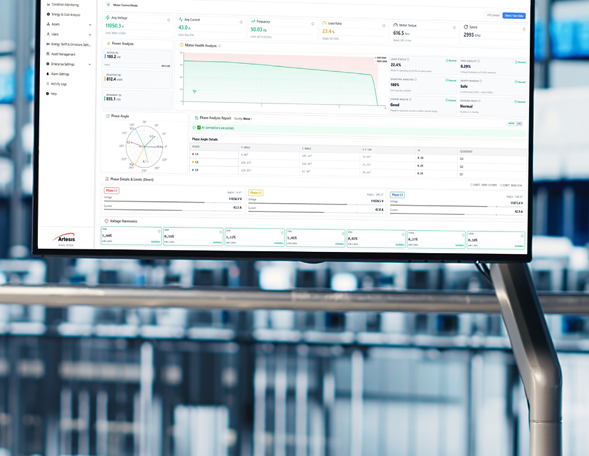
Machine Learning Algorithms for Equipment Monitoring
Multiple machine learning algorithms power predictive maintenance in IoT industries of all types, and each excels in specific applications. Artificial Neural Networks outperform other models in image-based defect detection. Support Vector Machines and Random Forests excel in predictive maintenance and process parameter optimization. Random Forest models demonstrate particular strength in handling high-dimensional sensor data for fault detection in manufacturing quality assurance operations.
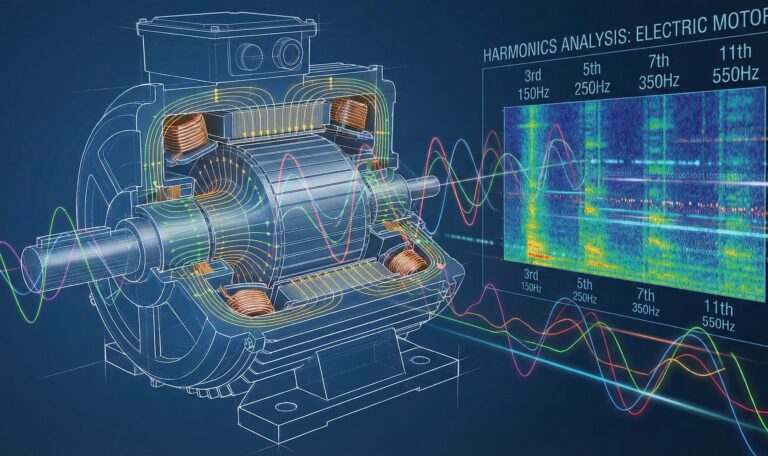
Studies comparing algorithm performance reveal nuanced differences. Research analyzing motors and rotating components used KNN, SVM, and long short-term memory networks to diagnose faults and estimate remaining useful life based on vibration analysis. Support Vector Classification produced superior results when analyzing electric current patterns for valve diagnostics compared to KNN, decision trees, and random forests. Fault diagnosis for pneumatic cylinders using pressure, flow, and energy parameters employed SVM, KNN, Gaussian process classifiers, and neural networks.
Machine learning models achieve failure prediction accuracy rates that reach 92%. These algorithms process IoT-generated data to detect equipment performance deterioration and make proactive repair measures possible before failures occur. Supervised learning trains on labeled failure data and learns to recognize sensor measurement patterns that preceded known failures. Unsupervised learning identifies unusual patterns without requiring labeled examples.
Reducing Downtime by 70% with IoT Sensors
IoT-enabled predictive maintenance delivers substantial operational improvements. Companies that implement these systems reduce unexpected breakdowns by 70-75%. Unplanned downtime decreases by 35-45%. Some manufacturers report reductions up to 50%. Research shows IoT monitoring cuts downtime by up to 35% while boosting overall equipment effectiveness by 15-20%.
The financial impact proves just as substantial. Predictive maintenance reduces overall maintenance costs by 18-25%, with some studies showing reductions of 10-40%. Plants deploying combined vibration-temperature analytics report 45% fewer catastrophic gearbox failures. One Fortune 500 manufacturer saved $2.8 million per year after reducing unplanned downtime by 45%. BMW’s Regensburg plant prevented over 500 minutes of annual production disruption using AI-supported systems.
Equipment lifespan extends by about 40% under AI predictive maintenance. Manufacturers deploying smart sensors report a 30% reduction in emergency maintenance spending. Machine learning-driven alerts integrate with email, SMS, and CMMS workflows. Technicians arrive with correct spare parts before downtime occurs.
AI Predictive Maintenance: Real Data Shows 73% Drop in Equipment Failures
Condition-Based Maintenance Scheduling
Condition-based maintenance replaces time-elapsed triggers with condition triggers. Maintenance occurs when monitored parameters show necessity rather than following fixed schedules. Research shows that about half of all scheduled preventive maintenance occurs without need and consumes resources without adding value.
IoT sensors monitor multiple condition indicators that precede failure:
- Vibration sensors detect bearing race defects, misalignment, and balance issues weeks before audible noise develops
- Temperature sensors identify overheating from inadequate lubrication or cooling system problems
- Pressure sensors monitor hydraulic systems for leaks or blockages
- Current sensors track electrical usage patterns that show motor trouble
- Acoustic sensors detect leaks or mechanical problems through sound analysis
Condition monitoring allows maintenance teams to act 14-42 days before failures occur with complete information about degrading assets, developing fault modes, and required parts. AI trend analysis produces remaining useful life estimates with specific confidence intervals. Systems create priority work orders 40% faster than manual entry when models predict failure within the next shift.
Digital Twin Technology in Production Lines
Virtual replicas of physical manufacturing systems are becoming essential components of manufacturing IoT solutions. They allow you to test production changes, identify bottlenecks, and optimize operations without touching actual equipment. Digital twins create dynamic models that mirror real-life performance through continuous sensor data streams. Manufacturers can simulate thousands of scenarios before implementation.
Creating Virtual Copies of Physical Manufacturing Systems
Digital twins function as virtual copies of physical assets that interact in live time with their physical counterparts. These sophisticated models combine multiple technological layers to replicate manufacturing operations with precision. The physical layer has manufacturing machines with integrated sensors, transportation systems with GPS and RFID tracking, storage systems with automated shelving, and energy infrastructure with smart meters. The communication layer employs industrial networks like Ethernet/IP, PROFINET, and Modbus alongside wireless technologies that include Wi-Fi 6, 5G, and LoRaWAN.
Data architecture forms the foundation for effective digital twin deployment. Live databases handle immediate data processing. Historical databases track long-term trends. Data lake systems manage unstructured information, and metadata catalogs organize data source management. The analytics layer processes this information. Machine learning algorithms recognize patterns. Predictive models forecast outcomes, and optimization algorithms improve processes.
Application interfaces deliver insights through dashboards and reports for management, mobile applications for operators, and AR/VR interfaces for immersive experiences. API interfaces enable third-party integration and create efficient workflows across the manufacturing value chain.
Live Monitoring and Simulation Capabilities
Factory digital twins simulate outcomes from live conditions. What-if analyzes across production scenarios such as process or layout changes become possible. Manufacturers can predict production bottlenecks where traditional spreadsheet modeling falls short, so hard-to-predict stochastic processes, inventory buffers, material travel times, and changeovers are modeled with high fidelity through live data.
An industrials player deployed a factory digital twin that redesigned production schedules recently. The system compressed overtime requirements at an assembly plant and resulted in 5-7% monthly cost savings. Digital twins uncover hidden blockages in manufacturing processes by simulating live bottlenecks on production lines with precision. The model integrated into existing MES platforms, IoT devices, and inventory databases to determine optimal sequencing of different product lines and minimize downtime.
Digital twins cut development times by up to 50% for some users and reduce costs along the way. This acceleration stems from the ability to test and iterate designs virtually before physical prototyping. Manufacturing companies identify design flaws, optimize performance, and validate concepts in digital environments. Costly physical iterations are eliminated.
Remote Process Optimization and Testing
Digital twins enable complete simulations and predictive analyzes. They give an explanation throughout the entire product lifecycle from design and prototyping to production and maintenance. Manufacturers employ digital twins to simulate and streamline production processes that include layout planning, workflow optimization, and scheduling. Production lines operate efficiently.
A metal fabrication plant deployed a factory digital twin to identify ideal batch sizes and production sequences. The system optimized scheduling of thousands of potential product combinations across four parallel production lines. An AI-based agent trained to build optimal order sequences through the digital twin used reinforcement learning. The approach created cost reduction and yield stability compared to manual scheduling.
Digital twins reduce total processing time by measuring how long each unit spends in every production step. They identify when processing stations sit idle waiting to receive the next unit or remain blocked waiting to advance units after work completion. One deployment reduced total processing time by about 4% through repeatable sequencing rules that optimized production sequences for bottleneck stations.
24% Current Adoption with 42% Planning Implementation
29% of manufacturing organizations report full or partial implementation of digital twin initiatives globally. Digital twin adoption remains pilot-heavy in manufacturing. About 40% of organizations test the technology before full-scale deployment[163]. Around 20% of manufacturing industries are scaling digital twin implementation across multiple operations.
The worldwide market for digital twins will increase from about €16.42 billion in 2025 to €240.11 billion by 2032, with an annual growth rate of 39.8%. Manufacturing is expected to be the fastest-growing sector in this market. Investment in digital twin technology from manufacturing firms can reach up to $714.01 billion by 2032 at a CAGR of 60.20% from 2024 to 2032.
An overwhelming 97% of manufacturers believe digital twin solutions are important to their business. Digital twins serve not just as operational tools but as catalysts for business model change for 35% of manufacturers. Digital twin simulation-based risk planning helped one manufacturer improve EBITDA by 2 points and reduce inventory by 15%.
Advanced Quality Control with Computer Vision
Quality defects that escape manual inspection cost manufacturers millions in recalls, returns, and brand damage. Deep learning powers computer vision systems that now detect microscopic flaws at production speeds and achieve accuracy levels that surpass human capabilities while processing visual data live across manufacturing IoT solutions.
AI-Driven Visual Inspection Systems
AI-powered visual inspection combines computer vision and machine learning to automate defect detection on production lines. Convolutional neural networks process images through layers of filters that detect features of increasing complexity, from edges and textures at lower layers to specific defect patterns at higher layers. CNNs learn to recognize defects in new images without needing explicit programming for each defect type when trained on defect examples.
Different AI approaches suit different defect detection tasks. Classification determines whether a part is good or bad and identifies the defect category. Object detection locates defects and draws bounding boxes around them. Segmentation provides pixel-level defect boundaries for the most precise analysis. Research shows that enhanced VGG16-based CNN models outperform conventional architectures in defect classification accuracy and feature extraction capabilities. YOLO framework implementations detect defects live, with some steel strip surface inspection systems achieving up to 99% detection rate with 95.86% recall at 83 FPS.
Automated Defect Detection Beyond Human Accuracy
Modern machine vision installations report 98-99% defect detection rates, compared to about 85-90% for manual inspection. Manual inspectors catch only 80% of defects on average, and fatigue reduces their accuracy during long shifts. AI-powered systems have reached 99.97% accuracy in spotting solder joint flaws in electronics manufacturing. AI visual inspection machines achieve 99.86% accuracy rates for casting products.
AI systems maintain consistent evaluations and eliminate variability due to fatigue or subjective judgment. Human accuracy declines by a lot over an 8-hour shift, but AI vision systems maintain very high defect detection rates throughout continuous inspection. So manufacturers that implement AI-driven label verification detect errors right away, preventing mislabeling and reducing recalls.
Live Quality Monitoring Across Production
AI inspection systems process thousands of parts per minute, well beyond human capacity. Vision-guided robots handle up to 10,000 parts per hour in high-speed environments. One automotive implementation cut inspection time from 1 minute per seat to just 2.2 seconds per seat. Glass manufacturers detect bottle defects within milliseconds live and ensure only flawless products proceed.
Edge computing makes this speed possible by processing images on-site and eliminating network delays for live decision-making. Edge-based AI-powered defect detection executes fast, cycle-time-compliant inspections. The system rejects the part, triggers an alarm, or adjusts upstream process parameters without human intervention when a defect is detected. Manufacturers that implement AI defect detection see ROI within 8-12 months through reduced escapes, lower scrap costs, and eliminated inspection labor.
Energy Management and Decentralized Power Systems
Manufacturing facilities consume substantial energy. The industrial sector accounts for 45% of total electricity consumption in countries like Germany. IoT-enabled monitoring systems provide granular visibility into this consumption and cut energy costs by 15-30% in the first year. Some implementations achieve reductions up to 40% with continuous machine monitoring.
IoT-Enabled Energy Consumption Monitoring
IoT sensors deployed on machines, lighting and HVAC systems collect live energy consumption data. Energy transforms from a black box into a controllable cost center with this visibility. Peak demand management represents one immediate savings chance. Utility companies charge based on total consumption and peak demand. A single 15-minute spike can increase an entire month’s bill by thousands of dollars. IoT monitoring reveals when peaks occur and which machines cause them. Manufacturers reduce peak demand charges by 10-20%.
Idle machine detection provides a quick win. Machines left on during breaks or between shifts waste energy. A single CNC machine on idle overnight at 5 kW wastes over $1,000 in electricity alone each year. Compressed air leak detection matters just as much. Compressed air generation consumes 10 times more energy than equivalent electrical power. Studies show 20-30% of compressed air is lost to leaks. HVAC optimization correlates energy use with occupancy, production schedules and outdoor conditions through IoT monitoring. This saves 15-25% on HVAC energy.
Local Power Generation with Solar and Wind Integration
Decentralized generation serves multiple purposes. It provides off-grid electricity for remote industries and peaker plants that ensure grid stability with high renewable capacity. Hybrid plants that combine conventional power with renewables achieve fuel savings up to 30%. These plants can offset additional investments within three years. Combined heat and power systems reach system efficiency as high as 95%. They generate electricity and heat together and distribute thermal energy to nearby off-takers.
Rooftop solar arrays can meet annual electricity demands of up to 35% of US manufacturing sectors. Yet on-site renewable sources supply less than 0.1% of industrial electricity demand.

Reducing Manufacturing Sector’s 33% Energy Footprint
IoT platforms integrate with factory systems to make automatic adjustments. They shut down idle machines or reroute energy. Factories with on-site renewable energy sources make use of information from IoT energy management. They store excess energy and deploy it when demand peaks. This reduces reliance on external sources and lowers costs.
Implementation Challenges Smart Factories Face
Deploying manufacturing IoT solutions introduces obstacles that prevent many organizations from achieving full-scale implementation. Technical complexity ranks as the main barrier. 38% of companies cite it as their top challenge, followed by limited budget and staff resources at 29%.
Data Security and Privacy Concerns
Security vulnerabilities expose manufacturers to most important risk. 81% of organizations experienced an IoT-focused attack in the past year. About 57% of IoT devices in industrial settings run on outdated operating systems, lack encryption, or use weak credentials. This creates multiple entry points for unauthorized access. Legacy systems were designed with little thought about security threats present in interconnected manufacturing environments. Network segmentation, authentication and encryption protocols must be standardized between devices and locations. This protects sensitive manufacturing data from cybersecurity threats.
Integration with Legacy Manufacturing Systems
Industrial plants contain heterogeneous equipment, vendor-specific software and siloed infrastructure. Many systems were never designed to share data. This makes interoperability a big hurdle. Legacy devices use older protocols or require hardwiring versus wireless communication. This prevents easy integration with modern IoT platforms and cloud-based solutions. On top of that, there is often a skills gap in organizations, with limited expertise available for integration projects.
Scaling IoT Manufacturing Solutions Across Operations
Complexity multiplies when scaling across numerous factory sites or geographies. Manufacturers end up with isolated pilots that never reach full deployment without a unified, cloud-based approach to IoT management. Managing security across multiple sites presents distinct challenges and requires unified security frameworks across different IoT devices deployed at various locations.
ROI Justification and Investment Requirements
The breakdown for a mid-sized manufacturer’s original investment looks like this: sensors and hardware ($150,000-$250,000), software and analytics platforms ($100,000-$150,000), cloud infrastructure ($50,000-$75,000), integration with existing systems ($50,000-$75,000), and training ($25,000-$50,000). But predicted savings and ROI estimated at 1-2 years reduce this risk.
Conclusion
Smart factories are deploying technologies that change manufacturing operations. We explored how 5G and edge computing enable device connectivity, AI-powered systems reduce equipment failures by 70%, digital twins optimize production through virtual simulation, and computer vision achieves defect detection beyond human accuracy. Energy management systems cut consumption by up to 40%. This addresses the sector’s massive environmental footprint.
Implementation challenges around security, legacy integration, and ROI justification remain barriers. The financial returns and operational improvements make IoT adoption inevitable rather than optional though. Manufacturers who deploy these solutions now will establish competitive advantages that traditional facilities cannot match through incremental improvements alone.








 White Papers
 Case Study
 Documents
 Webinars
 Events
 ROI Calculator
 FAQ
FAQ