
Pump failures can bring operations to a standstill, costing thousands in downtime and repairs. A remote monitoring system changes that by delivering immediate insights that predict issues before they escalate and keeps your operations running smoothly.
Industries have reported energy savings of 10-15% after implementing advanced monitoring solutions.
You might be learning about an IoT remote monitoring system, a wireless remote monitoring system, or a SCADA remote monitoring system. Choosing the right technology matters. Each offers distinct advantages that track pump performance and prevent expensive failures.
This piece walks you through what a remote monitoring system is and the key features you should look for. We’ll also provide a step-by-step process that helps you select the best solution for your pumps.
What Is a Remote Monitoring System for Pumps
A remote monitoring system for pumps is an integrated setup that uses sensors, communication devices, and software to oversee pump operations from a distance. These systems gather data on parameters such as flow rate, pressure, temperature, and vibration. They then transmit this information via cellular, satellite, or Wi-Fi networks to centralized platforms where operators can analyze performance and detect anomalies.
Key Components of Remote Pump Monitoring
Sensors are the foundations of data collection. Pressure sensors detect changes within the pump or pipeline that indicate blockages or leaks. Flow sensors measure fluid volume passing through the pump, while temperature probes monitor liquid and equipment temperatures from 0°F to 300°F. Vibration sensors measure velocity ranging from 0 to 25 millimeters/second over the frequency range 10 to 1,000 hertz. They detect issues like bearing wear before they cause failures.
Controllers process incoming sensor data using pre-programmed algorithms to make operational decisions. The controller can start the pump or adjust its speed to maintain desired levels if pressure drops unexpectedly. Communication devices then transmit data between sensors, controllers, and the remote monitoring station through wired connections like Ethernet or wireless technologies including Wi-Fi, cellular networks, or satellite communication.
The monitoring station is where operators access and analyze collected data through computers, tablets, or smartphones. You can view immediate data, receive alerts, and control pumps remotely through this interface. This reduces downtime and maintenance costs.
AI Predictive Maintenance: Real Data Shows 73% Drop in Equipment Failures
How Remote Monitoring Works
The system collects data from sensors or existing equipment constantly. You program the base unit to designate high or low parameters on monitored sensors. The base unit contacts designated personnel via phone, email, or text when a sensor reading moves outside preset limits. You can also access immediate and historical data log information to identify trends suggesting potential problems.
SCADA Remote Monitoring System vs IoT Systems
SCADA systems have been the backbone of industrial monitoring for decades. They use Remote Terminal Units and Programmable Logic Controllers to collect data, which travels back to control centers through protocols like Modbus or OPC-UA. SCADA is deterministic and valued for control and compliance, answering “what’s happening now”.
IoT remote monitoring extends oversight into the cloud and onto mobile devices. IoT devices send data wirelessly using protocols like MQTT or LoRaWAN, with advanced analytics and AI models providing immediate insights. SCADA offers control while IoT delivers intelligence, agility, and scale.
Essential Features to Look for Before You Buy
Selecting the right remote monitoring system requires reviewing features that directly affect operational efficiency and return on investment.
Real-Time Data and Alert Capabilities
Instant notifications separate effective systems from simple ones. A wireless remote monitoring system should send alerts via email, SMS, and text within seconds once it detects parameter deviations. One case study found that monitoring alerts at 15 lift stations cut overflows by 80%. Automated alarms let staff fix small issues in time. One utility reported saving approximately $10,000 for each prevented overflow. Remote sensors reduced site visits by 40% and saved 1,200 technician-hours per year, preventing costly incidents.
Integration with Existing Infrastructure
Complexities in integrating new systems with legacy equipment often require specialized technical expertise and present operational barriers. A quality SCADA remote monitoring system or IoT remote monitoring system should interface easily with existing control systems, PLCs, and MODBUS equipment. Systems that require minimal modernizing offer the best return on investment.
Installation Requirements and Complexity
Sensor-free solutions using electrical signature analysis provide faster, more economical installation procedures. They eliminate complex wiring and calibration requirements. Most monitoring systems allow setup without hiring outside experts, though pump house installations can be more involved depending on monitored conditions.
Scalability and Future Growth
Your system should accommodate expansion as facilities grow. Select solutions with capacity to add more sensors and incorporate additional data analysis tools. The ideal platform provides flexibility to scale across multiple pump assets and locations without complete overhaul.
Cost vs Long-Term Value
Original price represents only 10% of total cost over a 15-to-20-year lifespan, compared to 40% for energy and 25% for maintenance. Review total cost of ownership rather than upfront investment alone.
Types of Remote Monitoring Technologies
Different monitoring technologies address specific operational challenges. Each offers unique advantages depending on your pump environment and maintenance goals.
Wireless Remote Monitoring Systems
Wireless systems eliminate extensive wiring infrastructure. They transmit data through cellular networks like 4G, 3G, GPRS, or CDMA. These solutions operate independently of plant networks and use global cellular communications. This helps ensure ISO 27001 certified security without interference to controlled processes.
Sensors build a wireless mesh network and route data to gateways automatically. This removes the need for cabling. Installation becomes faster and more affordable since wireless communication removes complex wiring requirements.
IoT Remote Monitoring Systems
An IoT remote monitoring system extends oversight into cloud platforms and mobile devices. It delivers live insights through advanced analytics and fault diagnostics. Cloud-based applications connect you with 24/7 data access worldwide. You can review pressure, flow, levels, temperature, and vibration remotely from any computer or smart device.
IIoT solutions provide anomaly notifications through visual alerts, automated emails, and push notifications. Flashing lights and color-coded graphics show system anomalies for quick action.
Vibration-Based Monitoring
Vibration monitoring detects bad attachments, loose and broken parts, defect bearings, clogging, cavitation, phase loss, and wrong rotation through velocity measurements. But vibration monitoring alone does not include process-related factors, which account for over 70% of pump failures. Sensors that measure temperature and vibration in three axes give insight into pump performance when coupled with continuous data storage.
Electrical Signature Analysis (ESA)
ESA analyzes current and voltage rather than vibrations or temperature. This approach builds on work initiated by Oak Ridge National Laboratory in 1985. This non-intrusive method measures 3-phase current and voltage signals to detect subtle changes that reveal equipment faults.
Sensors install in the motor control cabinet instead of near the actual machine. This provides safety advantages and ease of installation. ESA identifies both electrical and mechanical anomalies and offers early detection before failure occurs.
Step-by-Step Process to Choose the Right System
A structured approach prevents costly mistakes when you select a remote monitoring system for your pumps.
Assess Your Pump Types and Operating Conditions
Different pump types have distinct vulnerabilities and failure patterns. Submersible, centrifugal, and positive displacement models each require specific monitoring approaches. Environmental factors such as temperature fluctuations, humidity, and exposure to corrosive materials affect performance over time. Document these operational nuances and determine whether vibration analysis, electrical signature analysis, or an IoT remote monitoring system delivers the most value.
Identify Your Monitoring Goals
Industry best practices suggest you focus on the 20% most critical assets that represent the greatest operational risk. A single day of unscheduled downtime can result in lost chance costs exceeding £120,000 in power generation. Assess direct effects on production output and safety implications. Consider whether the pump represents a single point of failure.
Compare Vendors and Technology Options
Assess solutions based on accuracy and integration capabilities with existing SCADA or telemetry systems. Consider adaptability, total cost of ownership, and vendor support. Review case studies that demonstrate ground performance. One pilot in a chemical plant reduced pump downtime by 20% through predictive analytics.
Assess Support and Maintenance Requirements
Choose a provider that offers continuous updates, reliable technical support, and long-term system improvements. Strong after-sales service ensures your wireless remote monitoring system evolves with your operations.
Calculate Total Cost of Ownership
Purchase price represents less than 10% of total ownership costs. Energy consumption accounts for 32% and maintenance for 20%. Factor in operation, downtime, and production effects when you compare systems.
Test with a Pilot Program
Begin by selecting easy-to-access machines for portable tools and harder-to-reach machines for wireless sensors. Pilot programs demonstrate tangible benefits before you deploy the system completely.
For a more technical audience, here is the English version of the article focusing on the specific diagnostic capabilities of Artesis ESA technology:
Advanced Predictive Maintenance for Pumps: The Power of ESA
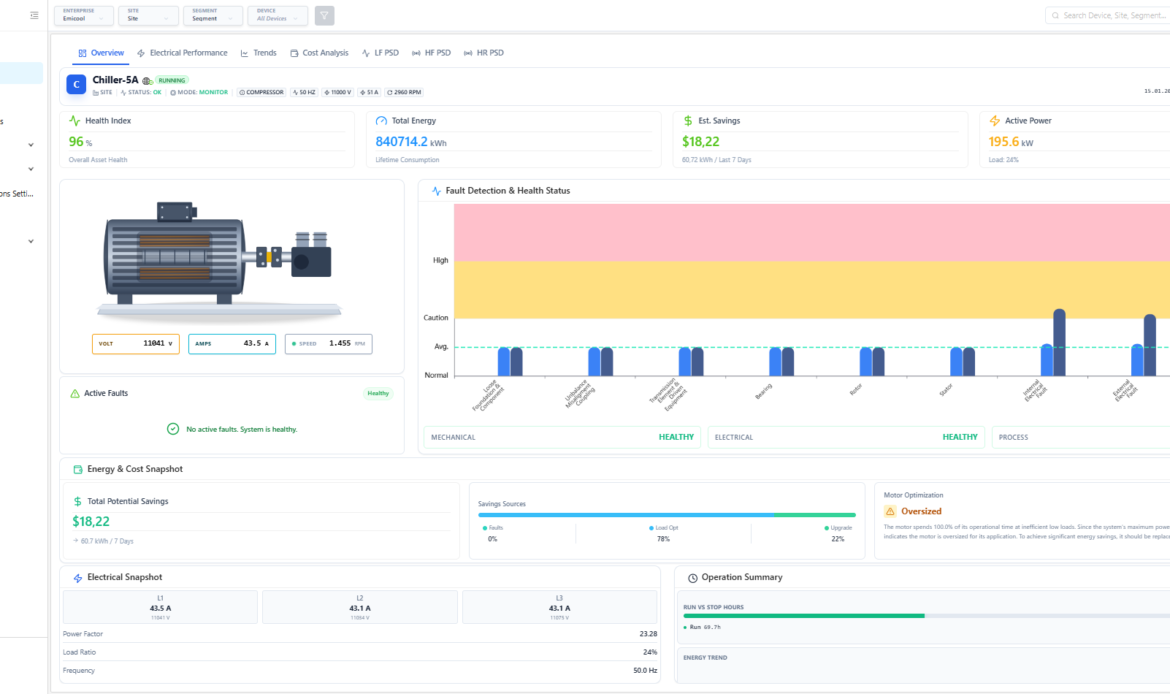
Artesis Electrical Signature Analysis (ESA) represents a significant leap in predictive maintenance by utilizing the motor itself as a sophisticated transducer. Unlike traditional vibration monitoring that requires external sensors, ESA captures high-resolution current and voltage waveforms directly from the Motor Control Center (MCC). By performing a Fast Fourier Transform (FFT) on these electrical signals, the system identifies specific frequency components associated with both electrical and mechanical anomalies. This allows for the precise detection of stator winding faults, rotor bar degradation, and power quality issues, alongside traditional mechanical problems like bearing wear or shaft misalignment, all through a single point of connection.
The technical edge of Artesis solutions lies in its Model-Based Condition Monitoring approach. The system creates a dynamic digital twin of the healthy motor-pump set, continuously comparing real-time data against this baseline to isolate deviations. This methodology excels in diagnosing complex hydraulic issues such as cavitation, flow turbulence, and impeller erosion which are often masked in standard vibration spectra. Because the analysis is performed at the electrical source, it is particularly effective for submerged pumps or assets in hazardous environments where physical sensor mounting is impractical. By leveraging these deep spectral insights, maintenance teams can shift to a data-driven strategy that targets the root cause of inefficiency and prevents unplanned downtime.
Conclusion
You now have everything you need to select the right remote monitoring system for your pumps. The technology you choose today will affect your operational costs, downtime prevention, and long-term efficiency.
Assess your critical assets and monitoring goals first. Compare vendors based on real-life performance, not just features. Test with a pilot program before committing to full deployment.
Your pumps will thank you, and so will your bottom line.




 White Papers
 Case Study
 Documents
 Webinars
 Events
 ROI Calculator
 FAQ
FAQ