

The industrial market has seen growth in the condition monitoring of motors and generators. This is due to the increased reliability and availability of technology, which has provided a competitive advantage for buyers. Condition monitoring is an important part of maintaining a healthy plant. It is estimated that equipment breakdowns account for about 30% of downtime in manufacturing plants. This downtime costs businesses millions of dollars every year and can potentially harm company reputation. The best way to prevent these time-consuming breakdowns is to monitor your equipment for any signs of potential malfunctions. This article discusses what condition monitoring is, where it is used and how it differs from predictive maintenance.
Condition Monitoring for Motors & Generators
Condition monitoring is a process that monitors or tests machinery or equipment during its operation. The goal is to identify potential failures before they happen. In addition to noticing when something is wrong, it can also help you know when something needs to be fixed or replaced. Condition monitoring can increase reliability, availability, and uptime for machines and equipment by reducing downtime.
Condition monitoring is used for many different applications in the industrial world, from motors and generators to wind turbines and solar panels. Monitoring devices help identify problems before they occur. They also provide remote access to critical information to alert people to an issue before it gets worse. However, it can be overwhelming to choose the right condition monitoring solution for your needs. There are many solutions on the market today.
WhitePaper | Electrical Signature Analysis for Compressor Reliability
The Effectiveness of Condition Monitoring In Preventing Unplanned Downtimes
Condition monitoring is one of the most effective and advanced methods of preventing unplanned downtimes in factories. The generator makes it possible to fulfill the power requirements in the modern era, and generator types and ratings vary concerning its use, location, and economics. Besides, the motor role is inevitable in the feasible operations of any industry. On top of that, it is an integral part of the processes such as power generation, oil & gas, cement, food processing, and fertilizer sector. Its use varies across the industry, and motor ratings start from a few watts to megawatts depending upon the nature of work. In mega industries, generators and heavy-duty motors must work under high loads and operates non-stop 24/7. As a result, we require reliable monitoring systems to oversee the nonstop functioning of motors and generators. In this post, we look at what condition monitoring is, why it’s necessary, and which approaches are best for it.
On top of that, it is an integral part of the processes such as power generation, oil & gas, cement, food processing, and fertilizer sector. Its use varies across the industry, and motor ratings start from a few watts to megawatts depending upon the nature of work. In mega industries, generators and heavy-duty motors must work under high loads and operates non-stop 24/7. Therefore, To manage the non-stop operation of motors and generators, we need to have reliable monitoring systems. Here, we discuss in detail what condition monitoring is, why it is important, and which methods are preferred in condition monitoring.
In mega industries, generators and heavy-duty motors must work under high loads and operates non-stop 24/7.
Due to non-stop usage of the motors and generators, wear and tear in parts are common abnormalities that need to be addressed. To predict and prevent massive failure of equipment is a vital need for today’s industry.
How Condition Monitoring Prevents Unplanned Downtime
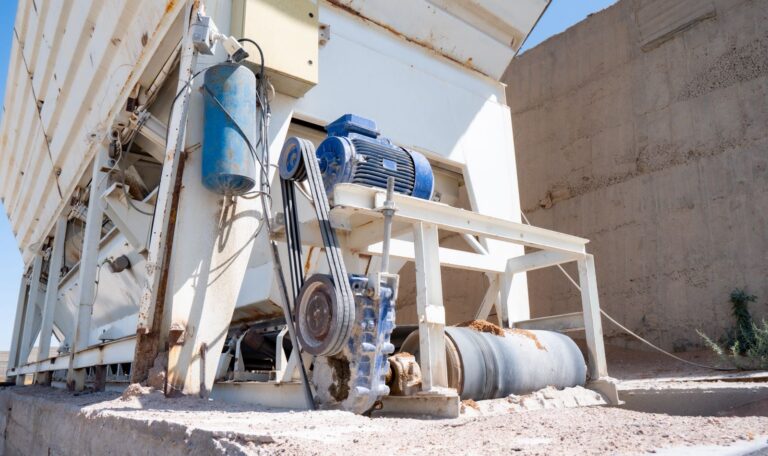
The first basic rule is to apply the pro-active approach to maintenance. The pro-active maintenance applies with physical inspection and with the help of performing periodic maintenance to determine any damaged or defective parts. Accordingly, the inadequate parts will be replaced before a major breakdown happens. It’s a little risky because periodic maintenance is planned as per the time specified, but over time, the generator and motor’s part’s condition remain deteriorated.
More Interested: Predictive Maintenance And Asset Management
So, what’s the solution?
The absolute solution comes up with comprehensive condition monitoring.
Condition Monitoring Techniques
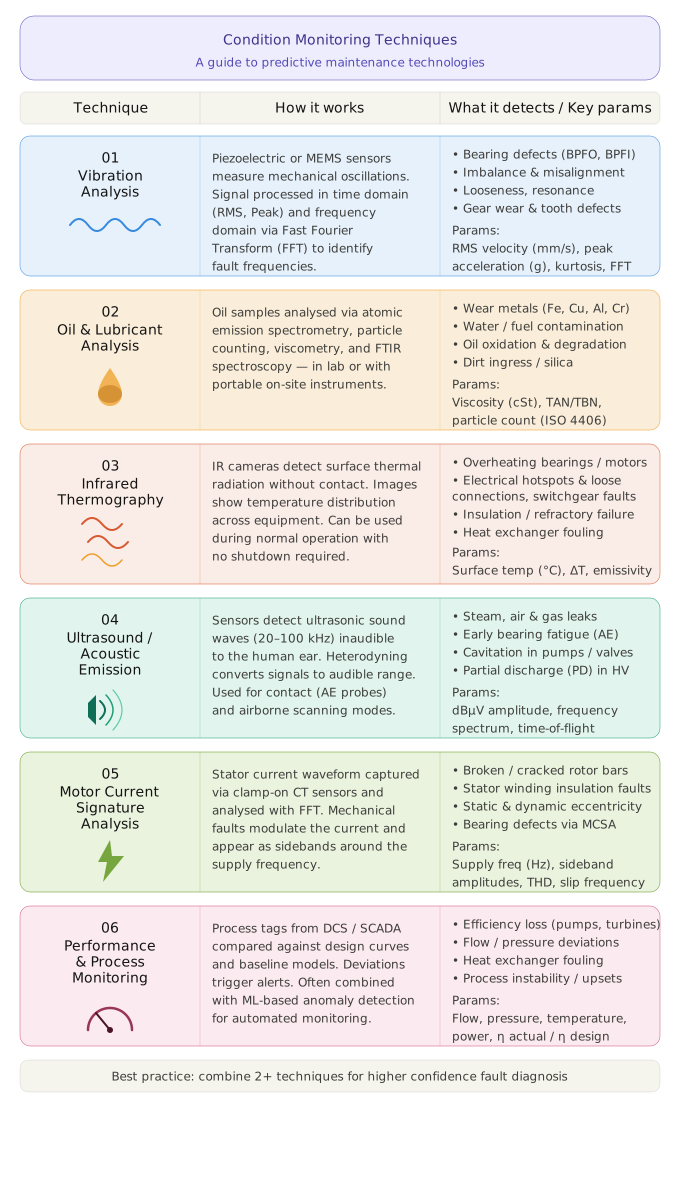
Multiple condition monitoring techniques exist. Each detects different failure modes through distinct physical phenomena. Vibration analysis measures oscillatory motion in rotating machinery and detects mechanical faults such as imbalance, misalignment, bearing defects and gear mesh issues. Accelerometers capture vibration signatures that reveal specific frequencies corresponding to different failure types. This provides weeks or months of advance warning before catastrophic failure occurs.
Oil analysis gets into lubricant samples for wear metals, contamination and chemical degradation. Tests measure viscosity, particle counts, acid number and elemental content to assess both machinery health and remaining lubricant life. This technique detects bearing failures, gear wear and contamination issues by analysing microscopic evidence carried within the oil.
Temperature monitoring uses sensors at critical points to detect abnormal heat generation from friction, insufficient lubrication or electrical overload. Thermal imaging cameras provide surface temperature mapping for periodic inspections. Fixed sensors deliver continuous monitoring of known hot spots.
Oil Analysis for Lubrication Systems
Oil condition monitoring tracks lubricant quality in engines, gearboxes and hydraulic systems. Viscosity measurement reveals changes in oil thickness, while elemental analysis detects metal wear particles that show component degradation. Contamination by fuel, water or acid degrades lubrication properties and causes equipment damage. Infrared spectroscopy identifies chemical changes like oxidation. Microscopy techniques examine wear debris. Service intervals can be extended if no significant wear appears, and this optimizes maintenance schedules.
Vibration Analysis for Rotating Equipment
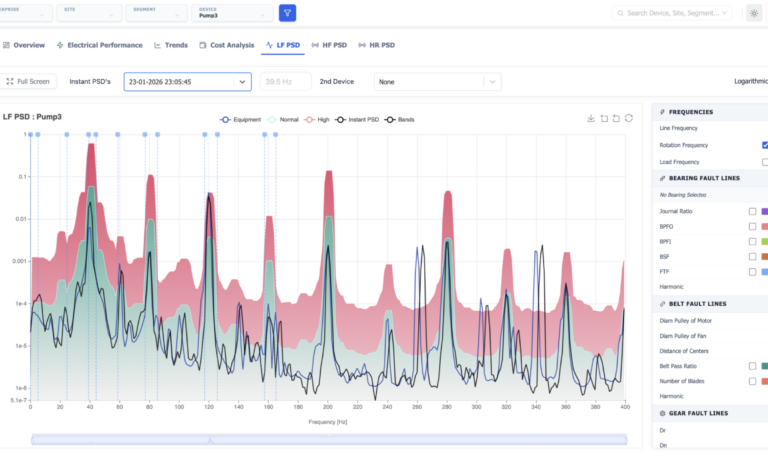
Vibration testing provides vital information about a machine’s condition in rotating machinery. A Fast Fourier Transform algorithm converts complex time waveforms into frequency spectrums and separates individual vibration sources for analysis. Imbalance generates vibration at 1× shaft turning speed. Misalignment produces peaks at 1× and 2× turning speed. Bearing defects create vibration at specific frequencies that bearing geometry determines. ISO 10816 provides severity guidelines, though machine-specific baselines prove more useful. Alert levels set at 2× to 2.5× baseline, while alarm levels trigger at 4× to 5× baseline.
Motor Circuit Analysis (MCA Testing)
Motor circuit analysis evaluates electrical health through resistance, inductance, impedance and phase angle measurements. This de-energized test method assesses the entire motor system and includes cables and connections. The technology detects winding defects, cable faults and rotor issues. Phase angle measurements and current-frequency response tests identify developing shorts. Testing takes less than three minutes.
Thermography and Infrared Imaging
Thermal cameras capture infrared energy and create images that show temperature variations. NEMA states that temperature rise of 21°C above ambient indicates probable faults, while 40°C above ambient requires immediate action. Infrared inspection detects loose electrical connections, overheating components and mechanical friction issues.
Ultrasonic Monitoring for Leak Detection
Ultrasonic sensors detect high-frequency sounds between 25 to 100kHz. Pressurized gas leaks produce ultrasound that sensors identify right away. This method works well in ventilated environments where traditional gas detection fails. Compressed air leaks waste up to 30% of system output.
Electromagnetic and Electrical Testing
Electromagnetic interference diagnostics collect EMI signals from rotating machines during operation. Each machine has a unique EMI signature across different frequencies. Testing requires about one hour per asset using split-core radio frequency transformers.
Motor Current Signature Analysis
Motor Circuit Analysis (MCA) reviews electrical characteristics of de-energised motors in under three minutes. This offline testing measures resistance, inductance, capacitance and impedance to identify turn-to-turn shorts, ground faults and insulation degradation that traditional megohmmeter testing misses.
Motor Current Signature Analysis (MCSA) works by listening to a signal that’s already there — the current flowing through the motor’s stator windings. Rather than bolting sensors onto the machine, you clip a current transformer onto the supply cable, capture the waveform, and run it through an FFT. What comes out tells you a surprising amount about what’s happening inside.
The core idea relies on a simple physical reality: any asymmetry inside a rotating machine disturbs its magnetic field, and that disturbance shows up in the stator current. A healthy motor draws a clean sinusoidal current at the supply frequency — 50 Hz in most of the world. When something goes wrong mechanically or electrically, the current gets modulated at specific frequencies tied to the fault. Those frequencies appear in the FFT spectrum as sidebands flanking the main supply peak.
Broken rotor bars are the textbook MCSA fault. When a bar cracks, the rotor’s magnetic symmetry breaks down. The resulting imbalance induces a small oscillating component in the stator current at frequencies of f ± 2sf, where f is the supply frequency and s is the motor slip. The higher the load, the greater the slip, and the more pronounced those sidebands become — which is why MCSA works best when the motor is running under representative load conditions.
Beyond rotor bars, the technique picks up eccentricity (static or dynamic misalignment between rotor and stator centres), stator winding degradation through changes in harmonic distortion, and even bearing faults via specific frequency signatures linked to rotor speed and bearing geometry.
Factors to Consider When Selecting a Condition Monitoring Method
You just need a systematic evaluation process to select the right condition monitoring method rather than adopt technology opportunistically. Asset criticality assessment is the foundation of this decision. Identify the 10-20% of assets that cause 80% of downtime. Monitoring everything dilutes resources and gets alarm fatigue. Focus on bottleneck machines where failures halt production lines.
Match your chosen condition monitoring techniques to expected failure modes. Teams often select tools based on convenience instead of diagnostic requirements. Vibration analysis detects mechanical faults, and electrical testing identifies motor circuit degradation. Each technique addresses specific failure signatures. Start by documenting known failure patterns for your critical equipment, then select sensors capable of detecting those particular conditions.
Cost justification requires showing a Return on Investment ratio between 3:1 and 10:1, with payback periods under 18 months. Balance detection costs against repair expenses. Early detection methods cost more but prevent major damage. Delayed detection reduces monitoring expenses and increases repair costs. Each asset presents unique trade-offs based on failure consequences and repair complexity.
Begin with pilot programmes on five to ten troublesome assets. Traditional wired systems require six months to install; modern sensor-agnostic platforms deploy in 14 days. Document every prevented failure in your CMMS to build ongoing ROI evidence.
Condition monitoring can perform 2 different methods, online and offline. However, nowadays, with the rapid rise of digitalization, online condition monitoring methods are preferred. In the online status monitoring method, critical equipment to be monitored is constantly monitored by cloud and IoT-based software. In this way, unplanned downtime that may occur are caught at the initial stage.
From past to present, there are many condition monitoring techniques such as oil analysis, acoustic emission, vibration analysis, thermography. One method can have advantages and disadvantages over the other. However, the use of these traditional methods is gradually decreasing, especially with the use of digitalization and IoT. Moreover, the significant decrease in the costs of sensors in the last 10 years and the emerging concept of big data push businesses to more digital solutions.
Artesis condition monitoring method has a significant advantage over other techniques. This innovative method, which does not require any sensors, can diagnose malfunctions that may occur in motors 6 months in advance by only obtaining current and voltage information. Since this technique does not require a sensor, it is an effective solution for monitoring rotating equipment in hazardous and hard-to-access areas. Artesis offers solutions in a wide range from chemical industry to ATEX fields, from oil and gas industry to water treatment plants.
What Are the Benefits of Condition Monitoring for the Business?
As faults inevitably develop in machinery, even routine maintenance programs cannot effectively stop these failures. This is where condition monitoring helps you take the driving seat and prevent breakdowns. Moreover, it is a non-intrusive process that can help businesses save money in unnecessary maintenance, secondary damages, and lost productivity. Hence, making condition monitoring an integral part of routine maintenance programs can enhance machine functionality and promote long-term productivity.
There are several key benefits to condition monitoring for a business, including
- Automated workflow
- Faster responses
- Future-proofed infrastructure
- Lower operational costs
- Improved safety standards
- Greater profitability
- Immediate response to alarms

Condition monitoring allows for faster repairs and, by analyzing variables, helps ensure better reliability and maintenance. For example, knowing if a machine is malfunctioning, the system may be restored with fewer visits and lower costs. The ability to predict failures is important because it improves life-cycle management and optimizes resources. For example, a motor might be a ticking time bomb with corrosion and an ill-equipped electrical system. Condition monitoring could also detect symptoms that could indicate a component is failing.
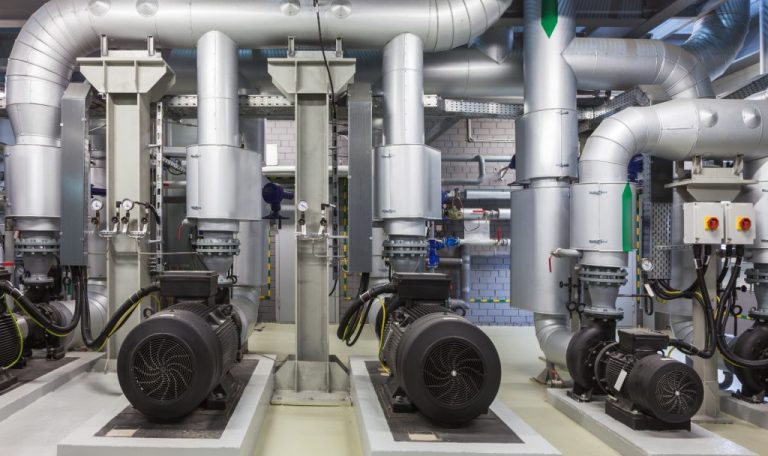
The condition monitoring system is more important for high rating generators which are connected to the national grid where continuous operation is required. Because any voltage or frequency fluctuation can cause a total blackout in the whole country in the worst scenario. For this reason generator frequency, current, voltage, MVAR, winding temperature, bearing temperature, bearing vibration, lube oil levels, lube oil pressure, etc. needs to be measured, watched, and monitored continuously. Similarly for heavy-duty motors, bearing temperature, vibration, and cooling oil /or mechanism; needs to be monitored continuously. Online condition monitoring system is used where sensors measure the desired readings, convert those reading into signals which are transmitted to dedicated software which displays the values in the graph, numeric and in the bar as per requirements.
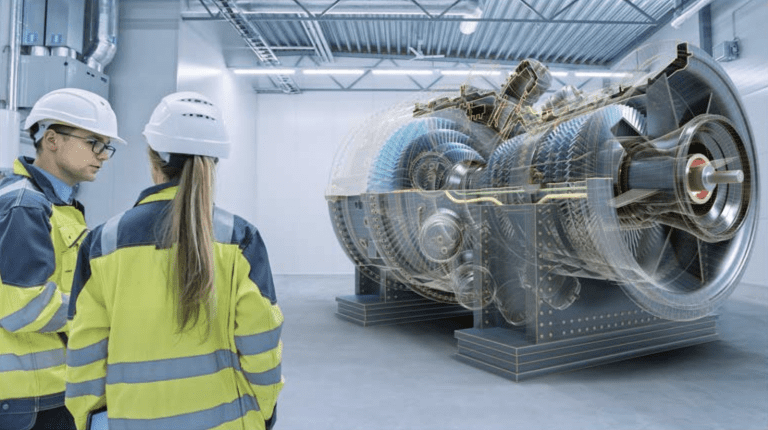
Condition monitoring solutions are critical to the performance of your motors and generators. In many industries, these systems provide an early warning for potential breakdowns or failures before they happen. High-tech condition monitoring solutions help minimize downtime and maintenance costs. There are effective ways to find and choose the right solution for your needs that won’t break the bank.
Condition Monitoring Software
Condition monitoring for motors and generators is a crucial part of plant maintenance. Motor condition monitoring can help plant managers reduce the number of unscheduled shutdowns by using predictive analytics to pinpoint risks before they occur. With this technology, you will not have to wait until the motor fails before you get an indication that something is wrong. The condition of your motors and generators will be constantly monitored so that you can take proactive measures when it is needed. In addition, condition monitoring for motors and generators can also provide a way for companies to quantify the level of wear and tear on their equipment which is necessary for long-term asset management plans.


Whenever unplanned downtime occurs in a plant, it is never a good time. Even the simplest and smallest errors can bring down a plant’s productivity to a minimum, with a detrimental effect to the cost structure and profitability. A cost-cutting engineering team can go far in improving power generation and distribution by only minimally increasing the efficiency and output by using better methods and monitoring the condition of the equipment. For this reason, generators and motor must be in the best working condition at all times. This ensures that they function efficiently and produce maximum power. To monitor the condition of these machines, various electrical and mechanical monitoring methods are used.
Dont’ Miss:Failures In Pump And Predictive Maintenance
Which One Is Right for Your Plant?
Selecting the right condition monitoring solution requires evaluating several interconnected factors that affect implementation success and long-term value directly.
Size and complexity of your plant
Budget or manpower perspectives prevent most plants from addressing all assets at once. A phased approach works better. You begin with assets that represent the best ROI and proceed to those with more modest returns. Asset criticality assessment drives this prioritisation and categorises equipment based on its effect on operations, safety, environment and economics. High-criticality equipment justifies sophisticated monitoring. Lower-criticality assets may suit simplified approaches or run-to-failure strategies.
Types of assets and equipment
Your monitoring approach must match the equipment it protects. Different physical phenomena cause different failure modes. Vibration analysis works well for most rotating equipment but has limitations on slow-speed machines where fault signatures are subtle. Variable-speed equipment, intermittent machines and assets with fluctuating loads require monitoring that adjusts and tracks RPM live while adapting diagnostic models to current operating states. Extreme temperatures, dust or moisture affect sensor selection and system durability.
Budget and ROI expectations
Predictive maintenance reduces maintenance costs by 18-25% compared to preventive approaches. Well-implemented programmes achieve payback within 12-18 months. Organisations report 10:1 to 30:1 ROI ratios. Wireless vibration sensors now cost between USD 1,100-2,000, making entry points more available. Training requires 40-80 hours per technician.
Integration with existing systems
SCADA, PLC and CMMS system integration increases condition monitoring success rates by a lot. This communication enables optimized measurement strategies and prevents meaningless data pollution from equipment working intermittently at variable speeds. High-priority alerts trigger automated maintenance actions while lower-priority issues are logged for ongoing analysis.
Data analysis and reporting needs
Systems that fine-tune alert timing and severity to each asset’s criticality prevent alert fatigue. Effective platforms track performance metrics, identify opportunities to move equipment between maintenance strategies and measure overall effectiveness. The gap between knowing and acting stretches response times without direct integration into maintenance workflows.
Matching condition monitoring systems to your plant requirements
Matching your plant’s characteristics to the appropriate condition monitoring system determines whether your investment delivers genuine value or creates unnecessary complexity.
Small to medium plants with limited assets
Route-based portable monitoring offers the most practical entry point when asset counts remain manageable. Handheld data collectors like the VST-100 enable technicians to perform periodic vibration measurements on pumps, motors and fans along predetermined routes. Technicians can gather valuable information without permanent installation costs with this approach. Simple online systems work well for pumps or fans. More complex machines with variable speeds and loads require sophisticated monitoring.
Large industrial facilities with diverse equipment
Multi-site operations benefit from distributed systems that reduce field wiring costs and bring data into centralised platforms. Online condition monitoring systems integrate easily into machinery protection series and feed mission-critical data to flagship software. You can assess plantwide machinery collections for predictive maintenance there. One petroleum refinery saved USD 5 million with these complete deployments. A coal-fired plant cut 250 days of downtime.
Remote or hazardous locations
Wireless sensors eliminate personnel exposure in dangerous environments. Rugged wireless vibration systems provide remote monitoring capabilities in power generation, oil and gas, and mining industries where access proves difficult or unsafe. Smart sensors for hazardous areas deliver cost-efficient condition monitoring for chemical and oil and gas operations. Equipment in difficult or dangerous locations like oil drilling platforms can be monitored from a distance.
Plants requiring continuous live monitoring
Mission-critical machinery demands permanently mounted systems that detect excursions the moment they occur. Online systems collect data continuously and detect small variations fast. Teams get notified when limits are exceeded. Failure conditions can evolve fast and approach critical thresholds. Minute-by-minute sampling proves far more efficient than manual monitoring in these cases.
Implementation and getting started with your chosen solution
Successful deployment begins with a full asset audit to classify equipment by criticality and determine monitoring parameters machine by machine. Define clear goals upfront—whether reducing unplanned downtime, extending machine life, or achieving economical solutions. Document your strategy to line up with broader business objectives and establish KPIs and performance metrics that demonstrate ROI. A phased approach works best. Address high-criticality assets first before you expand coverage.
Planning your monitoring deployment
Identify which conditions need monitoring on each machine, how often monitoring should occur, and who handles data analysis. Map rules, algorithms and alert triggers so responsibility chains remain intact. Assets that require continuous monitoring need sensors installed at appropriate locations with immediate data acquisition. Balance-of-plant equipment may suit route-based collection instead.
Training and skill requirements
Condition monitoring technicians require 9 to 12 months to achieve Level I competency in vibration analysis, with an additional 9 to 12 months for Level II certification. Technicians often cross-train in multiple technologies—infrared thermography and ultrasonic analysis—to offer more complete problem-solving skills. On-site mentoring through programmes like SmartStart provides individual instruction with field exercises on your plant’s actual machinery.
Measuring success and optimising performance
Track work orders by type, status and completion time to ensure detected conditions receive proper attention. Monitor KPIs including MTBF, MTTR and OEE to measure program effectiveness. Therefore, review threshold settings to prevent alert fatigue whilst you maintain sensitivity to genuine issues.
Why Artesis e-PCM?
The Artesis e-PCM is an AI-based online condition monitoring system for wind turbines and generators. e-PCM uses patented technology to offer a unique solution that safeguards generators from electrical and mechanical faults. e-PCM continuously identifies existing and developing faults on generators and their prime movers, effectively using the generator itself as a sophisticated transducer.
e-PCM utilizes an intelligent, model-based approach to provide anomaly detection by measuring the current and voltage signals from the electrical supply from the generator. It is permanently mounted, generally in the generator control center, and is applicable to 3- phase AC generators. Accompanying Artesis Enterprise Server Software and IoT Portal are used to view the data. Our mission to help industrial and commercial plants maximize their efficiency and uptime. Companies need to make sure they have the right condition monitoring solutions for motors and generators to make sure that their equipment is running smoothly and efficiently. Today, it’s more critical than ever for businesses to monitor their assets for potential problems. With our custom-designed Condition Monitoring Solutions for Motors and Generators, you can eliminate production downtime caused by unexpected mechanical failures.
Please feel free to contact us if you have any queries related to condition monitoring for motor and generators. Our experts are always available to assist our esteemed clients with their queries.
Machine Condition Monitoring System
Monitoring the condition of machinery in a plant is one of the most important technologies for reducing unplanned downtime and maintenance at the right time. In line with the data received from the machines, electrical, mechanical and process failures will be determined in advance and the maintenance team will be informed; thus, there will be a chance to intervene while the malfunction is still in its initial stage. The following faults can be easily detected by machine condition monitoring.
- Stator fault
- Rotor fault
- Angular and parallel misalignment
- Broken, damaged and loose rotor bars
- Bearing fault
- Ball/roller wear
- Assembly phase problems
- Process Faults
Condition Monitoring vs. Predictive Maintenance: Key Differences
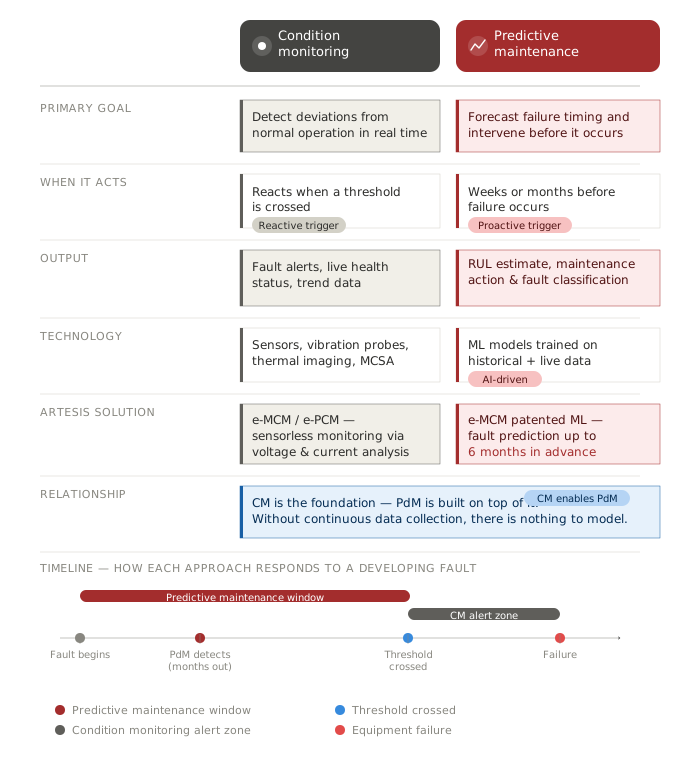
Predictive maintenance and condition monitoring are two specialized fields with distinct functions, yet they are frequently mistaken for one another. Condition monitoring is the ongoing tracking of equipment performance through normal operations. Condition monitoring aims to identify deviations of equipment performance (e.g., increased vibration, unusual current withdrawal, or unexpected temperature increase) from accepted performance standards. Condition monitoring generates alerts when these deviations exceed defined thresholds. While condition monitoring provides visibility, unassisted it responds to developing problems, offering no anticipation of problems weeks or months early.
Predictive maintenance takes real-time data and applies machine learning models to answer a fundamentally different question. Instead of asking, “Is something wrong right now?” the question becomes, “When will this component fail, and what should we do before it does?” For example, systems like the Artesis e-MCM, after training on millions of historical motor profiles and continuously refining its model against live readings, can classify the type of fault, estimate the remaining useful life of the equipment, and recommend a specific maintenance action — all up to six months before a failure would otherwise occur. With this capability maintenance can be transformed from reactive and scheduled, to precisely based on the actual health of the asset.
The two have a different type of relationship. Condition monitoring exists at a lower level than predictive maintenance, as predictive maintenance relies on condition monitoring. Artesis’s e-MCM, which utilizes voltage and current measurements to perform sensorless, continuous data collection, provides the monitoring, and there is no signal for the predictive algorithms to learn from. Condition monitoring and predictive maintenance, as a pair, complete the maintenance ecosystem. This ecosystem is a powerful tool for eliminating unplanned downtime. It extends the life of equipment and reduces average maintenance costs across multiple industries, including automotive manufacturing and water treatment.
Case Study about Condition Monitoring
Sector: Waste Disposal Company: Waste Incineration, Recycling
Equipment: Fan Failure: Winding Failure
Figure 1 and 2 display the trends of current and active power parameters of 14V001 equipment which had failure on stator windings on 21 November 2014. On November 21, 2014, the equipment with failure was sent to rewind the stator winding and it was recommissioned on 22 November 2014. Until 25 November 2014, an increase was observed in the current drawn by the rewinding motor. The customer was asked whether the load of the motor was changed by the operator and learned that no changes were made to load. After detailed inspection, it was realised that there was an error in the rewinding process and equipment has drawn more current than expected. The equipment rewinding has replaced with spare motor and the current values were observed again.As can be seen on Figure 2, there was a decrease in current values. In the event that the equipment that was rewinding was operated in this condition, an energy loss of 61320 kWh / year would have occurred.
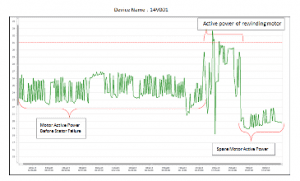
Figure 1: The trend of active power parameter of 14V001 Equipment
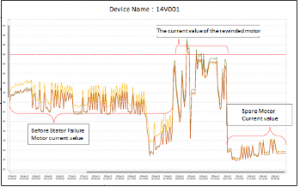
Figure 2: The trend of current parameter of 14V001 Equipment
Maintenance that doesn’t wait
The techniques and technologies featured in this article all have one thing in common: they move maintenance from a reactive to a proactive approach. While equipment failure may come as a surprise to end users, failure is often preceded by signs like a change in vibrations, lubricant, and thermal and electrical currents. Monitoring is a given for plant managers, but determining where to begin and how to implement coverage progressively is where the challenge lies. When starting with high-risk assets, establishing baselines, and justifying ROI, the program will grow as evidence accumulates. This will be more effective than attempting a large-scale rollout from the beginning. The declining price of sensors and AI technologies have lowered the barriers to entry, but the need for condition monitoring remains the same. The most valuable aspect of condition monitoring is not the data, but the informed decisions that data can drive.






 White Papers
 Case Study
 Documents
 Webinars
 Events
 ROI Calculator
 FAQ
FAQ