

Industries have to re-evaluate and re-interpret their maintenance and production processes in line with the digitalization experienced in the last 10 years. This rapid change and transformation are forcing production facilities to be smarter and more competitive. Industrial maintenance now has to be as digital and smart as possible for production facilities. Predictive maintenance PdM offers great opportunities to businesses for a smarter and more digital facility. In our new article, let’s take a look at what predictive maintenance is, why it is used, what advantages it provides to businesses.
What is Predictive Maintenance?
Predictive maintenance is a technique that uses data analysis tools and techniques to detect anomalies in your operation and potential defects in equipment and processes. Thanks to predictive maintenance, possible failures are detected in advance and possible errors are prevented. This way, production facilities have a chance to reduce unplanned downtime as much as possible. While techniques such as oil analysis, vibration analysis, and infrared were frequently used in predictive maintenance in the past, predictive maintenance technologies have also changed and developed with the cheapening of sensors and the spread of IoT technology. For more information condition monitoring.
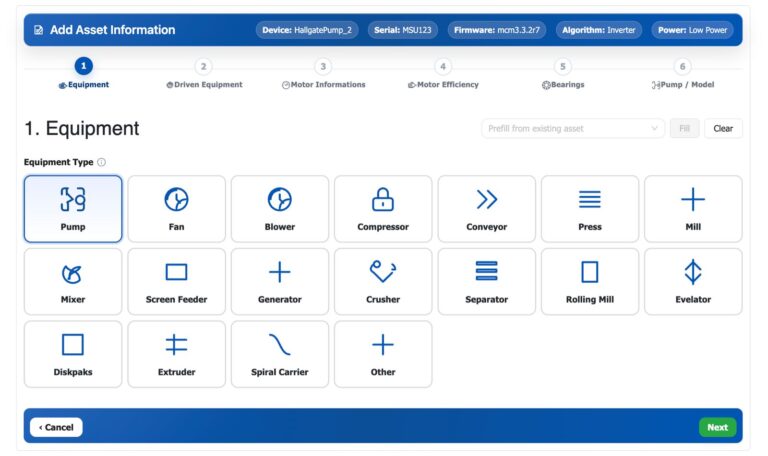
Predictive Maintenance Definition
Predictive Maintenance listens to what the machines are saying before they become quiet. As opposed to waiting for some visible failure like a breakdown, a shutdown, or an expensive disruption, PM leverages real-time data, advanced sensors, and sophisticated algorithms to detect the earliest symptoms of anomalies. The raw data such as operational vibrations, heat, sound, or any operational metrics are transformed into actionable patterns. Predictive maintenance determines the most efficient moment for interventions so that resources are not wasted, or so that a catastrophe is not prevented too late. Predictive maintenance is the paradigm of PM from a reactive to a proactive approach. Predictive maintenance maximizes the lifespan of assets, and the efficiency of maintenance while minimizing unplanned downtimes. Finally, PM is the transformation of mechanical failure from an unpredictable to a data driven science.
How does Predictive Maintenance work?
Predictive maintenance utilizes sensors and devices that connect wirelessly to a system. These sensors monitor factors, like temperature, vibrations and oil levels to provide real time information on equipment performance.
Data Analysis
The data gathered from sensors is sent to a hub where machine learning algorithms analyze it within the context of machine operation and wear. This analysis helps detect patterns, anomalies and deviations from operating conditions.
Predictive Models
Predictive maintenance models utilize the gathered data to predict equipment failures. Suggest maintenance actions. These models compare equipment behavior with expected behavior enabling technicians to take action before breakdowns occur. Early detection aids in preventing failures and reducing downtime.
What is Pump Monitoring A Practical Guide for Industrial Engineers
Predictive vs. Preventive vs. Reactive Maintenance
Predictive, Preventive, and Reactive Maintenance represent three different sets of thinking of time, risk, and the fusion of human intelligence and machine intelligence. Reactive Maintenance is the oldest instinct: waiting until the failure occurs, and then trying to fix it. It requires nothing from you in advance, but punishes you majorly with unplanned shut downs, emergency repair costs, and the chaos that spreads throughout the entire process in a matter of hours. Preventive Maintenance attempts to add some control to that chaos and, by scheduling service to equipment, organizations gain predictability, but at a heavy cost. The wall clock never coincides with the equipment wear and many components are replaced long before their time.
Predictive Maintenance is where the discipline finally becomes smart. It reacts to nothing, to no failure, and no calendar control. It listens to equipment and reacts when the data demands it when equipment speaks through vibration, thermal anomalies, acoustic patterns, and real time sensors. If Reactive Maintenance is firefighting, and Preventive is fire drills on a calendar, Predictive Maintenance is a smoke detector that knows the difference from burnt toast and a fire. The evolution from Reactive Maintenance up to Predictive is not just a technological upgrade, but it signifies an evolution of an entire organization, from tolerance of failure to avoidance of it, and finally, to mastery over it.
Preventive maintenance involves the inspection and maintenance of an asset at predetermined intervals, whether necessary or not. Maintenance intervals are typically based on usage or time determined from the average life cycle of an asset. Predictive maintenance ensures consistent tracking of an asset, which helps to define a tailored maintenance plan for each asset. This approach maximizes an asset’s lifetime while at the same time contributing to lowering maintenance costs.
The main difference between preventive and predictive maintenance is that preventive maintenance is scheduled regularly, whereas predictive maintenance is scheduled based on asset conditions, i.e., is scheduled only when needed. Thus, predictive maintenance reduces labor and material costs, whereas preventive maintenance costs less to implement. But implementing a predictive maintenance program requires a vast amount of money, training, and resources upfront. These costs are often acceptable to organizations that have already successfully implemented a preventive maintenance program.
Preventive maintenance faces the challenge of balancing the cost with returns. Experienced maintenance managers need to make smart decisions about the requirement of preventive maintenance tasks and how much they should be done.

Types of Predictive Maintenance
Predictive Maintenance (PdM), or Condition-Based Monitoring (CBM), is the practice of recording data to assess the health of equipment, ensuring early detection of degradation, and intervening only on data-based schedules.
Time-based preventive maintenance replaces components whenever scheduled maintenance arrives, and reactive maintenance intervenes only after the failure of a component. PdM attempts to operate just before the point of failure, and beyond, acting only when necessary.
Different measurement technologies exist in this field, each with their own individual failure mechanisms, physical phenomena, and locations on the machine. An effective PdM strategy is built upon these technologies, knowing their capabilities, and understanding their limits.
Vibration analysis
Of all the predictive maintenance technologies, vibration analysis is the most common. Accelerometers pick up the mechanical oscillations of rotating pieces of machinery. These accelerometers are typically located on bearing housings, motor frames or gear boxes. By using an FFT (Fast Fourier Transform), the time domain signal is converted into an equivalent frequency domain signal. In this frequency domain signal, the presence of various types of mechanical faults is revealed as excessive energy at fault-specific frequencies.
There is a specific spectral pattern for each mechanical fault. For example, if an electric motor rotor is imbalanced, then there will be a single dominant peak at the fundamental shaft rotational frequency. If the rotor is subject to an axial misalignment, then there will be an increase at the second harmonic frequency of the rotational speed. If the rotor has a bearing fault, there will be energy at certain calculated frequencies (ball-pass frequency, race frequency). If the rotor is simply loose, then all frequencies will be excited and a broadband noise is observed.
- Imbalance, misalignment
- Looseness
- Rolling element bearing diagnosis
- Gear defect and wear
- Structural resonance and critical speed analysis
Infrared thermography
A device’s functioning generates heat. When there is a fault, such as a loose electrical connection, an overloaded bearing, or friction in a belt drive, heat generation increases, and the thermal signature changes. Infrared cameras can record the distribution of surface temperatures and provide thermal maps that reveal anomalies that would otherwise be hidden.
Thermography can be done at a distance, and therefore can be done in low-access, high-voltage, electrical switchgear, rotating machinery, or large, hot, refractory structures such as kilns and furnaces. The major limitation is that it measures surface temperatures only, and therefore cannot diagnose internal faults that do not have thermal surface manifestations.
- Loose or corroded electrical connections
- Overloaded circuits and fuses
- Bearing overheating and lubrication failure
- Refractory deterioration in furnaces and boilers
Electrical signature analysis (ESA)
With electric motors driving loads, there are small, noticeable disturbances to the supply current and voltage. The most popular type of ESA, Motor Current Signature Analysis (MCSA), records the voltage waveform of the stator current using a clamp-on current transformer and then looks for fault sidebands in the frequency spectrum.
Because the measurement level is at the supply cable and not the machine, ESA is contactless, meaning there is not the need to interface with any moving parts. Monitoring several machine features is possible with a single sensor position. These features include the motor windings, rotor cage, gap, and the driven load (through a mechanical load) as equipment such as fans, pumps, compressors, and gearboxes. If combined with a voltage measurement, some effects of power quality problems such as hysteresis loss, harmonics, and supply unbalance, are also included in the analysis.
- End-ring cracks and broken rotor bars
- Static and dynamic eccentricity
- Bearing faults (as load torque oscillations)
- Cavitation in fans and pumps
- Power supply voltage unbalance and harmonics
Acoustic emission and ultrasound
Ultrasound testing consists of two distinct but related branches. The airborne ultrasound detectors operate in the 20-100 kHz range and capture the sound of leaks (pressurized air, steam, refrigerants) and the partial discharge (crackling) of electrical discharge. The structure-borne ultrasound, with a contact probe, registers the stress waves from micro-cracks, and impacts and rubbing in a bearing and gearbox assembly.
The technology works excellently with slow-speed bearings, where vibration analysis may not provide a sufficiently rich signal, and for the detection of the very incipient stages of bearing failure, often weeks before vibration levels become detectable. It is also the standard technique for the evaluation of the lubricant condition: a deficiency in the amount of grease produces a roughness in the ultrasound signal and the signal disappears once the proper amount of lubricant is applied.
- Leaks of compressed air, gas, and steam
- Partial discharge in high voltage equipment
- Bearing defects (at any speed) lubrication condition assessment
- Leakage of valves in pressurized systems

How to Implement a Predictive Maintenance Program
Over the past several years the technology behind predictive maintenance has developed rapidly, offering us more sensors and better algorithms at lower costs with the added bonus of near limitless and instant data access via the cloud. Many companies cite technology as the reason Predictive Maintenance (PdM) initiatives fail or under perform, however, in many cases it\u2019s the surrounding culture and the organization of the program that has not been constructed with the care it requires to be successful.
If data, such as vibration analysis results, current signature data, or condition monitoring data to the CMMS, goes unattended or is not acted upon then the fault lies with the organization, not technology. In the successful implementation of predictive maintenance initiatives, people, processes and then technology, in that order, will be the most relevant factors.
This paper will describe the most relevant and organized approach to implementing PdM and most describe how Artesis ESA (Electrical Signature Analysis) technology supplements and enhances each phase.
Not every asset needs the same level of operational scrutiny. The first step is to determine the importance of an asset based on an assessed score. This is a composite score based on the possible consequences of an asset failing (safety issue, production loss, damage to the environment), the likelihood of failure, replacement costs, and replacement lead time.
The goal is to identify the most critical, high scoring, assets, from a monitoring perspective. Assets scoring in the middle tier probably warrant occasional assessments. Those scoring in the lower tier may continue to be scheduled for maintenance on a time based framework. The economics of the program will not be adversely impacted.
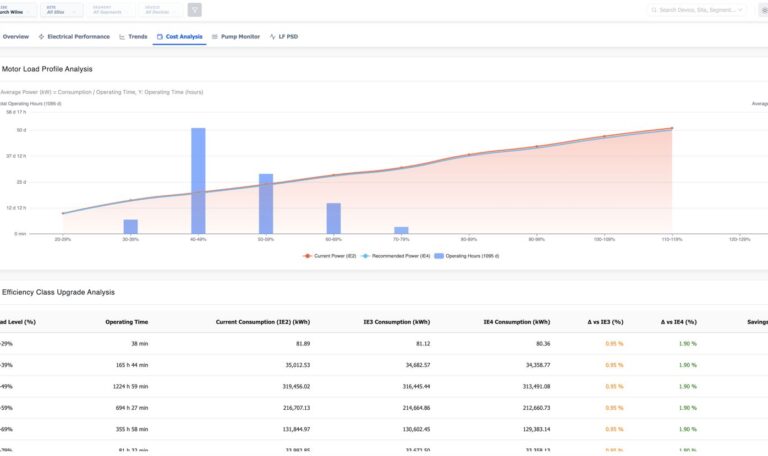
The assessments involve mapping all rotating assets to the process function and the production effect.
Score each asset based on the assessment of the consequence, the likelihood and the replacement difficulty.
Artesis Motor Current Signature Analysis (MCSA) captures the stator current waveform through a non-intrusive clamp fitted to a single supply cable in the MCC. From this single measurement point, the system simultaneously monitors the motor’s electrical health (stator winding integrity, rotor bar condition, air-gap eccentricity), the mechanical transmission (bearings, coupling, gearbox), and the driven load (pump cavitation, fan blade loss, compressor valve condition).
This breadth of coverage from a single, safe installation point is what distinguishes ESA from modalities that require direct mechanical access — and what makes it the natural backbone of an enterprise-scale PdM programme.
For a matured Artesis deployment that has been in place for 12–18 months, this is how Artesis works: The MCC cabinets throughout the plant are operated with real-time current and voltage data that are continuously streamed to the Artesis platform. Machine learning, modeled on each asset, learns and flags deviations, and without the need for an analyst to manage that, it assigns severity scores.
For example, take a pump motor with rotor bar degradation. Weeks before any vibration signature is detectable, the system sees the characteristic sideband growth. A Plan-tier alert, in this case, automatically creates a work order. Parts are procured, the outage window is coordinated with production, and the associated motor is rewound during the scheduled shutdown — not an emergency. The pump is never service. The production line never has an unexpected stop.

What Does Predictive Maintenance Offer to Factories?
Decrease in maintenance costs
Predictive maintenance is essential when creating a comprehensive maintenance management program for an industrial facility. While traditional maintenance programs are based on service routines for all equipment and offer rapid response to unexpected failures, predictive maintenance plans specific maintenance tasks only when they are actually needed. Therefore, one of the leading benefits of predictive maintenance is the reduction of overall maintenance costs in the business. Predictive maintenance reduces the cost of spare parts, tools and other equipment required for equipment maintenance.
Decrease in machine breakdowns
Regular monitoring of the actual conditions of equipment and process systems significantly reduces the number of unexpected and catastrophic equipment failures. When comparing the unexpected equipment failure prior to the implementation of the predictive maintenance program and the two-year period following the inclusion of condition monitoring into the program, the failure rate drops significantly.
Decrease in Stock Costs
The ability to predict defective parts and tools that require repair and the relevant workmanship skills reduces both repair time and costs. Industrial facilities have sufficient time to order a replacement or spare parts as needed, rather than purchasing all spare parts for stock.
Better Production Efficiency
The availability of process systems increases after implementing a state-based predictive maintenance program. The improvement here is based on machine availability and does not include improved process returns. However, a complete predictive maintenance program that includes process parameter monitoring contributes significantly to production efficiency.
Increased Employee Safety
Early warning of machine and system problems reduces the risk of catastrophic failure that could result in personal injury or death.
Longer Service Life
Prevention of catastrophic failures and the early detection of machine and system problems increase the service life of industrial machines by an average of 30%. Another benefit of predictive maintenance is that it can automatically estimate the mean time between failures (MTBF). This statistic provides a way to determine the most cost-effective time to replace the machine rather than constantly incurring high maintenance costs.
Verification of Maintenance Activities
Predictive maintenance can be used to determine whether repairs made on existing machines fix the identified problems or cause additional abnormal behavior before the system restarts. In addition, the data obtained in the predictive maintenance program can be used to schedule plant shutdowns. Many industries try to fix major issues or schedule preventive maintenance schedules during annual maintenance shutdowns. Predictive data can provide the information necessary to schedule specific repairs as well as other activities during shutdown.
PdM and Electrical Signature Analysis
The motor itself acts as a sensor. Any rotating machine connected to an AC supply acts like a modulated signal generator. There is a current flowing through power cables, while the stator windings sense small perturbations due to an air-gap flux change, uneven rotor, and load variations. ESA, or Motor Current Signature Analysis (MCSA) when concentrating on current, employs the aforementioned. current transformer is placed around a single cable (phase) to record time domain signal at high resolution, and use Fast Fourier Transform to break the signal into individual fault frequencies.

Due to the ESA methodology, the measurement point is supply cable and not a machine, ESA doesn’t need access to the motor shaft, interrupt production, or perform high risk work close to rotating parts. One sensor can in a single location monitor a motor and driven load and if the supply voltage is included supply quality as well.
How Artesis Helps You?
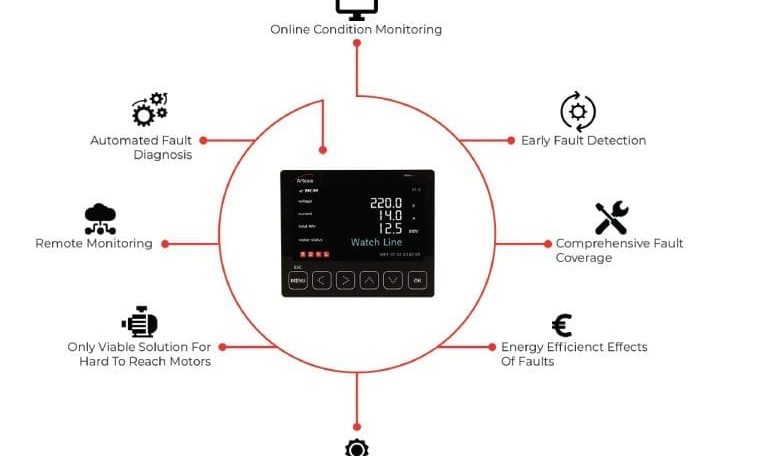
Thanks to its comprehensive fault detection feature, Artesis Predictive Maintenance solutions significantly reduce your maintenance costs and contribute to your energy efficiency throughout the facility. The error detection accuracy is higher than 90%, ensuring the most accurate maintenance.
Easy Installation
e-MCM installation requires only three-phase voltage and current connection via low-cost current transformers (CT) and voltage transformers (VT) (if needed). It is usually located at the motor control cabinet, requiring very short cable runs and avoiding the need to install equipment in remote or hazardous areas.
Easy Use
Predictive maintenance enables automatic database establishment and monitoring of parameters. The degree of failure is displayed on a variable scale, eliminating the need for expert personnel.
Diagnostic
Predictive maintenance is effective in detecting electrical, mechanical and process faults. In addition, it can be used in both production and energy efficiency measurement. This point is important, since studies show that motor failures can affect energy efficiency up to 18%.
Early warning
In Motor Condition Monitoring technology, threshold values are not affected by system conditions. Therefore, predictive maintenance can give early and accurate warnings.
Future of PdM
The future of maintenance is bright, with advancements and wider acceptance anticipated. As technology progresses the challenges associated with implementation are likely to decrease making predictive maintenance more accessible and cost effective for businesses of all sizes.
Companies that embrace maintenance practices stand to gain from operational efficiency cost savings and improved maintenance strategies. Predictive maintenance is set to play a role in industries ensuring the longevity and peak performance of essential equipment.
In summary predictive maintenance enables businesses to adopt an approach to maintenance through the use of technology and data analysis. By detecting equipment issues before they manifest companies can reduce downtime cut expenses. Prolong the lifespan of their machinery. With technology advancing the future of maintenance appears promising emphasizing its importance, for businesses striving to remain competitive in an ever evolving environment.
FAQ about Predictive Maintanence
-
What is predictive maintenance?
Predictive maintenance is a technique that uses data analysis to detect errors that may occur in your operations and equipment in advance. Thanks to predictive maintenance, it is aimed to prevent unplanned downtime.
-
What are the advantages of predictive maintenance?
Predictive maintenance is one of the most important factors that increase productivity in the facility. Direct benefits of predictive maintenance include early detection of equipment failure, analysis of root causes, improved productivity, employee safety, reduction of resources.
-
What is the difference between predictive and preventive maintenance?
The difference between preventive maintenance and predictive maintenance is the data analysed. The data of the equipment running in predictive maintenance are monitored and analysed. According to this analysis, an action plan is taken. Preventive maintenance is based on historical data, averages, and expected life statistics to predict when maintenance activities will be required. Preventive maintenance refers to the repair or replacement of defective, broken, or worn equipment.
-
What innovation does Artesis offer for predictive maintenance?
Artesis’ unique patented technology utilizes a model-based voltage and current system approach to detect a wide range of faults on electric motors. This model-based approach works on the principle that the current drawn by an electric motor is affected by not only the applied voltage but also the behaviour of both the motor and the driven equipment.
-
Can Artesis predictive maintenance technology be used in hazardous areas?
Artesis predictive maintenance technology uses the motor as a sensor, without using any sensor. By measuring only current and voltage, both electrical and mechanical failures are detected months in advance. Thus, Artesis predictive maintenance solutions are the first choice in hard-to-reach and hazardous areas.









 White Papers
 Case Study
 Documents
 Webinars
 Events
 ROI Calculator
 FAQ
FAQ