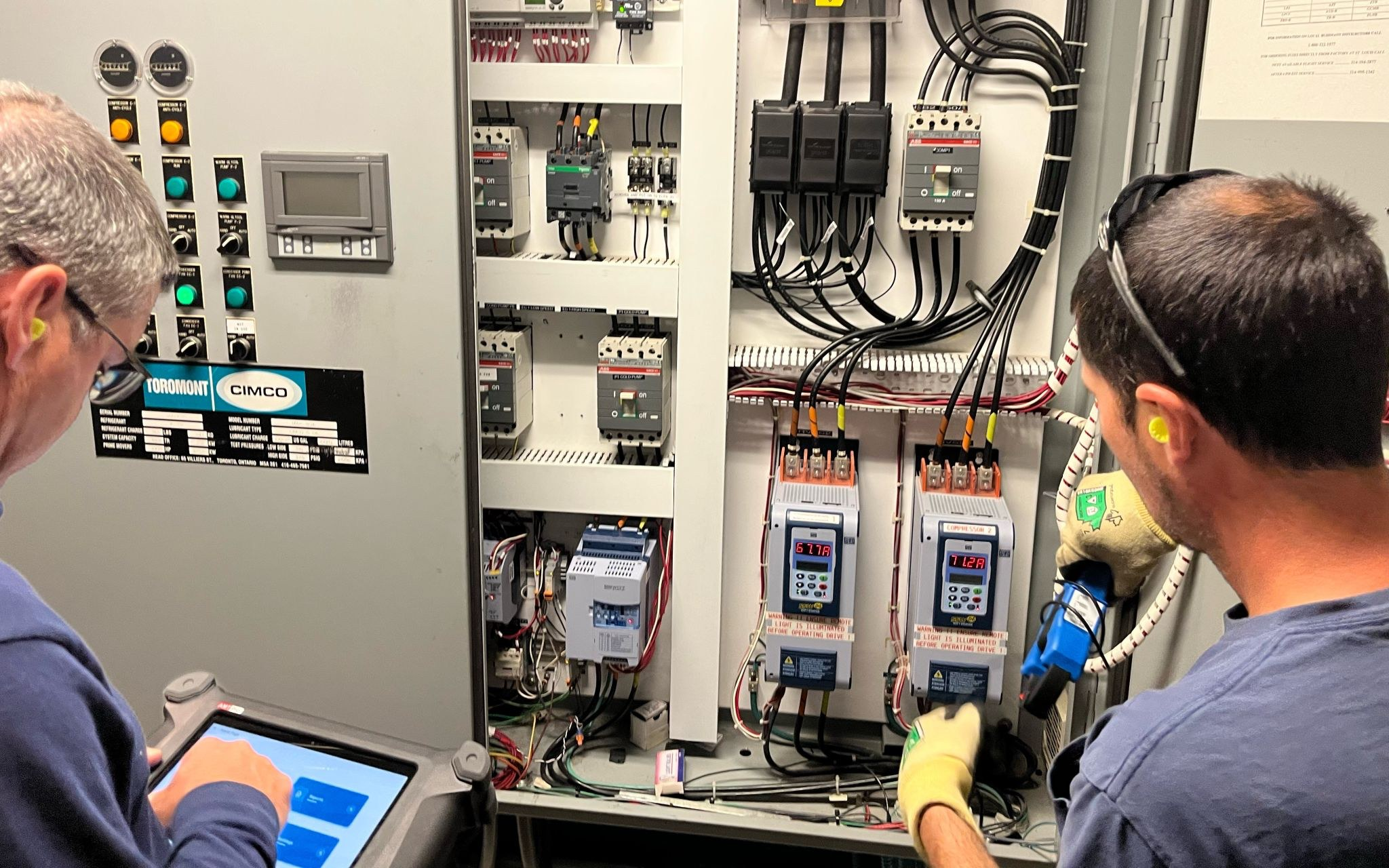
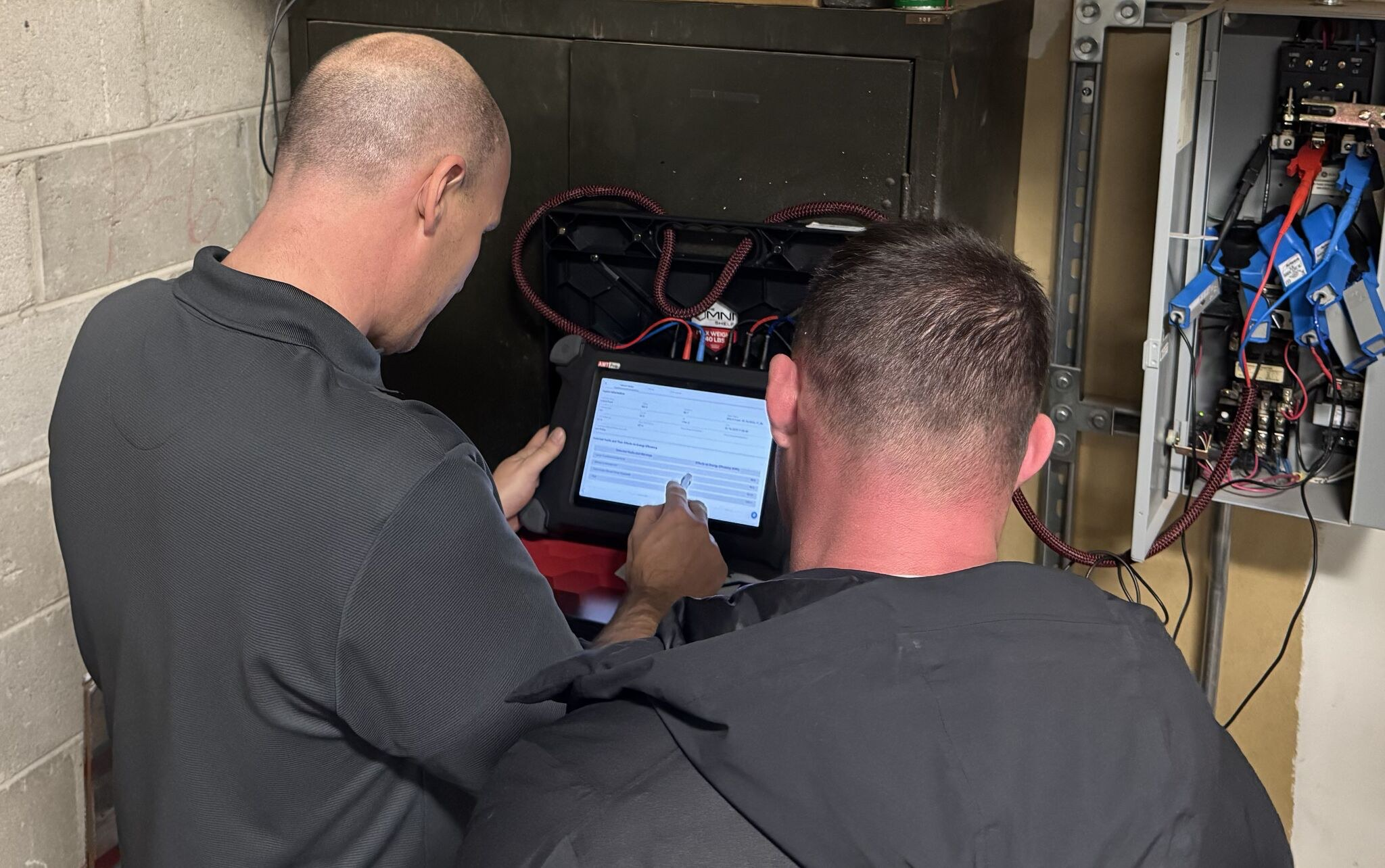
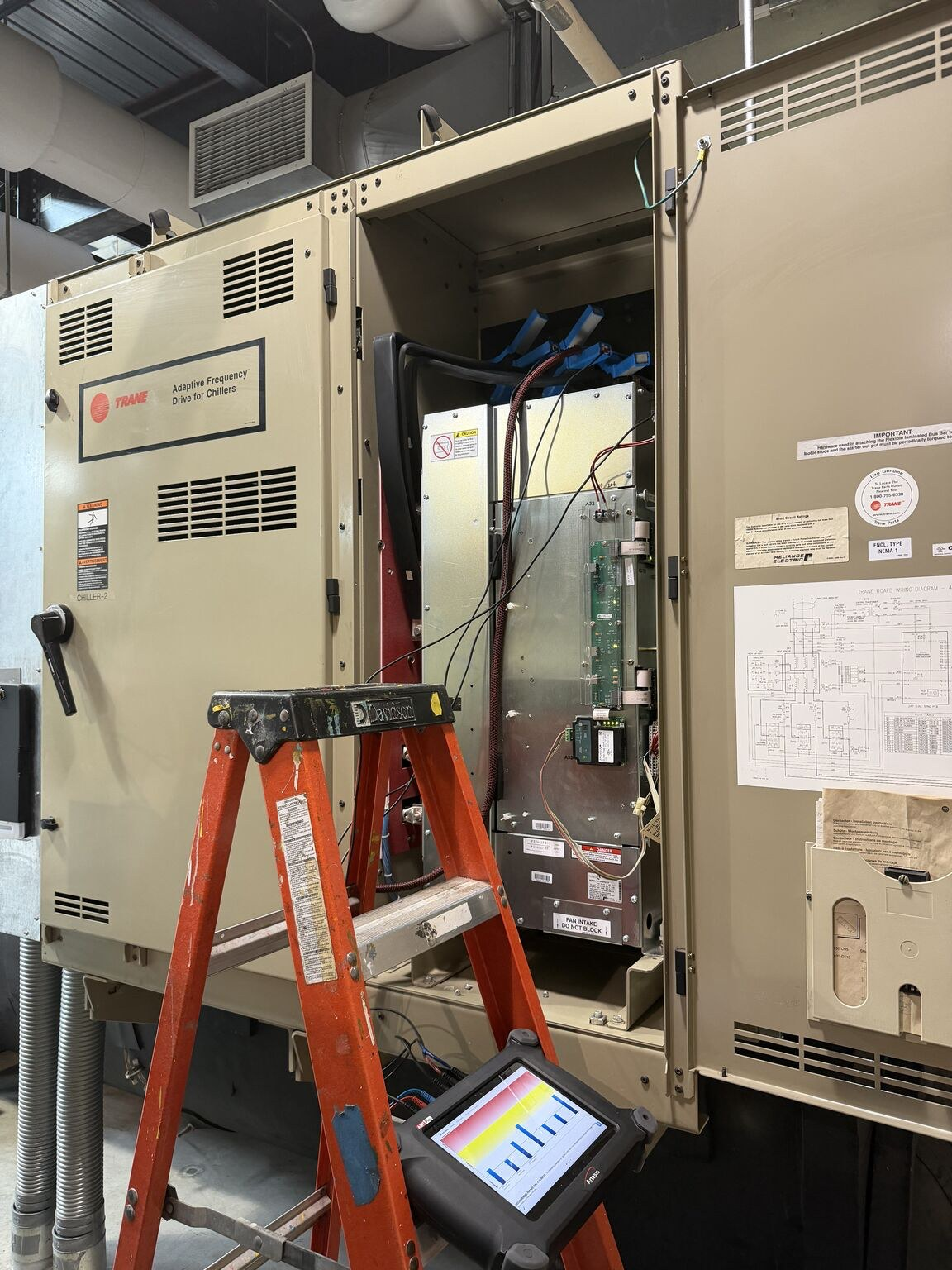
Connect at the cabinet.
Three-phase current and voltage. Direct connection up to 690 V line to line, through PTs above that. With the AR-Plug, connect while the motor keeps running.

WATCH A FULL TEST

HOW IT WORKS
Current and voltage carry information about the motor and the load it drives. AMTPro captures them at the cabinet and turns them into a condition report your team can act on.
Three-phase current and voltage. Direct connection up to 690 V line to line, through PTs above that. With the AR-Plug, connect while the motor keeps running.
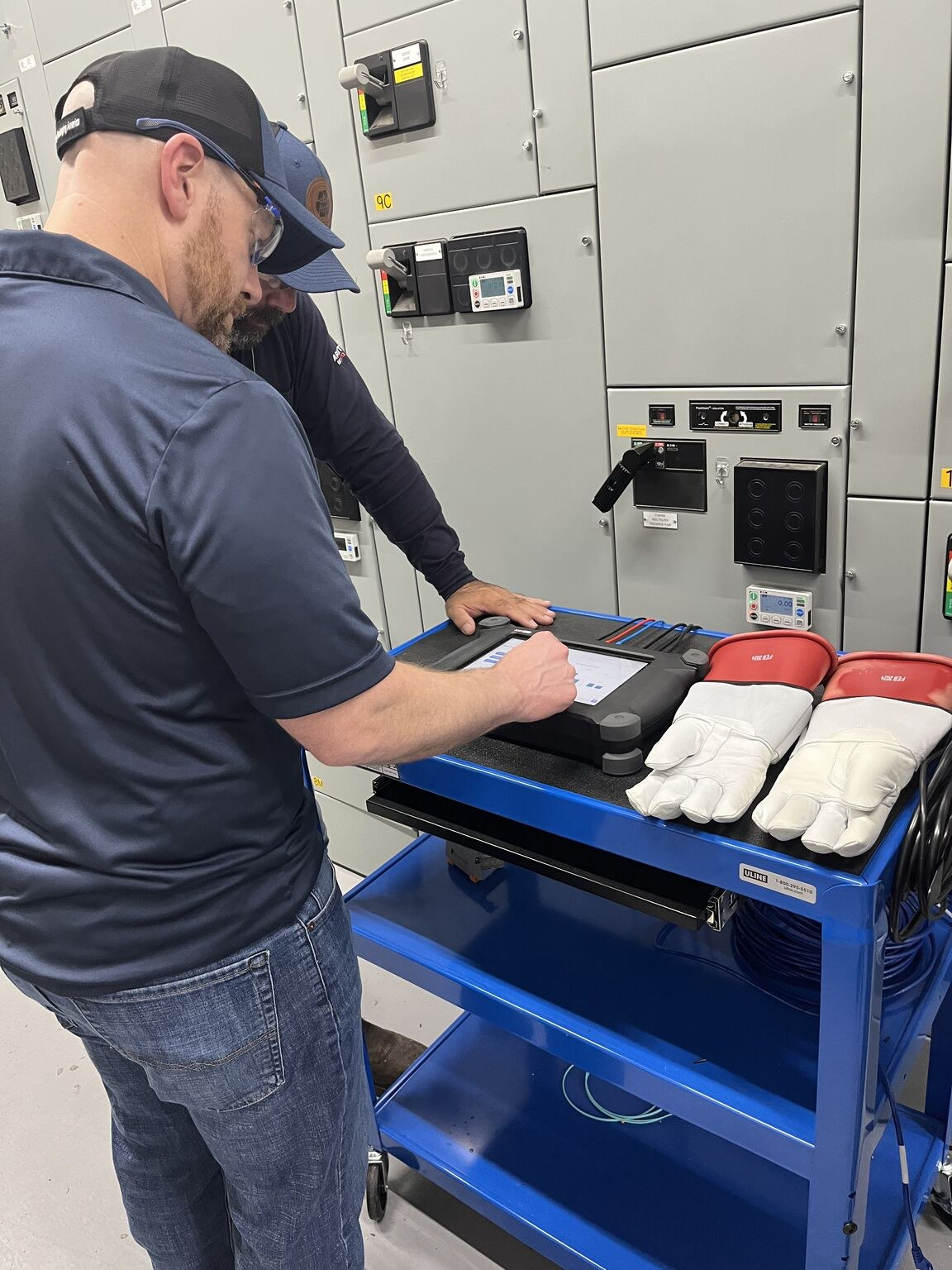
Test while speed and load are stable, not during start-up or shutdown. Enter the nameplate, and the bearing model if you want bearing-specific results.
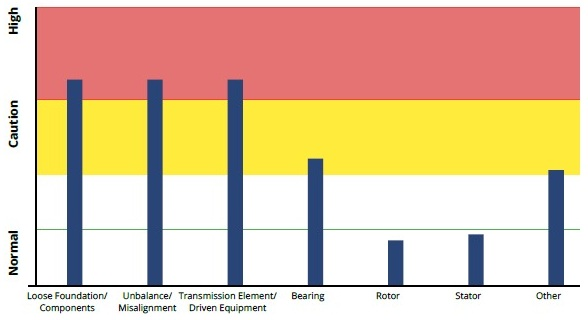
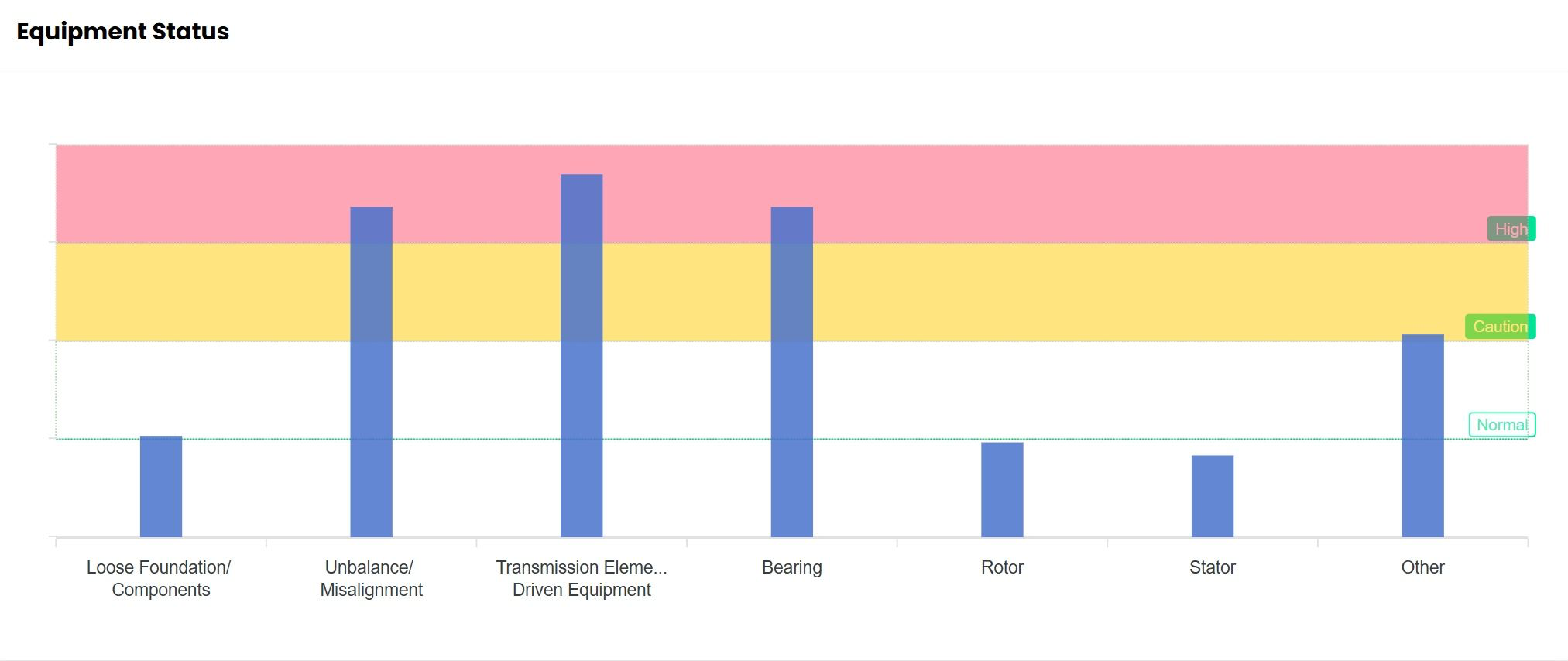
A bar graph by fault category with Normal, Caution and High zones, what to inspect, and an Artesis Insight AI write-up in plain language. Analysts can open the spectra behind it.
ARTESIS INSIGHT™ · AI DIAGNOSTICS
The AI that reads every AMTPro test and writes up what it means, in plain language.
Flagged issues and the electrical values behind them.
Findings read together, not one by one.
Prioritized actions, then a retest to confirm the fix.
Illustrative example combining two anonymized AMTPro Insight reports
Detected issues
Electrical performance
Immediate actions
Conclusion
A loose foundation is the likely primary driver and a contributing factor to the gearbox fault. The high current unbalance points to the motor itself and should be confirmed with offline testing.
IN THE FIELD
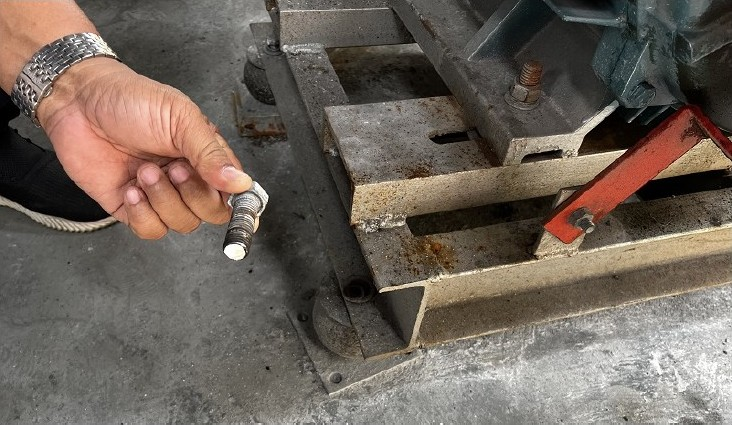
A belt-driven process blower (415 V, 95 A, on a VFD) was tested with AMTPro at its drive cabinet. The report put three categories in Caution. The site team then checked each one on the machine.
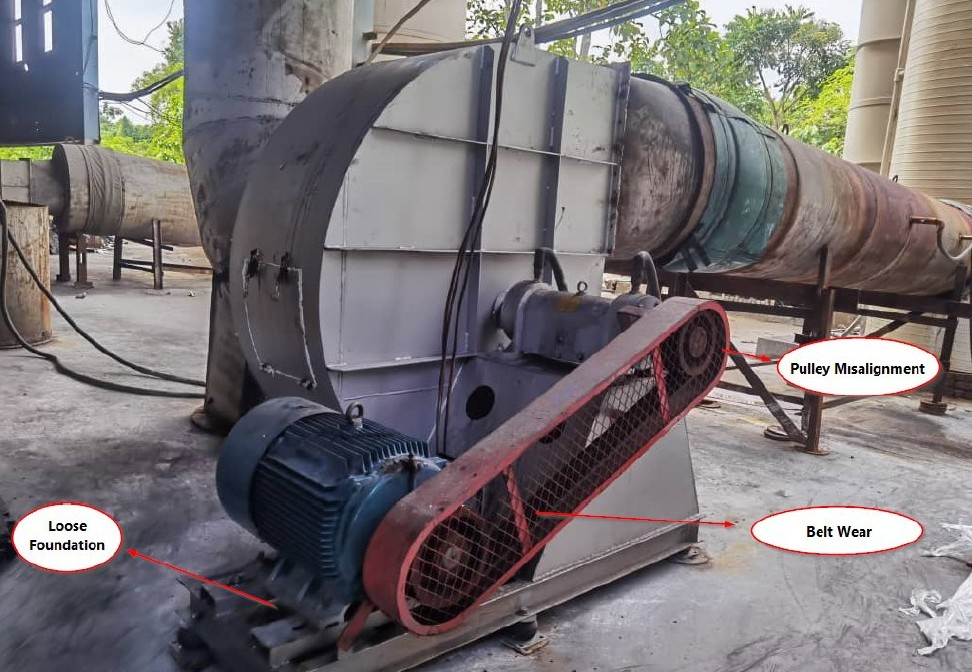
REPORT CATEGORY → FOUND ON SITE
A foundation bolt on the motor and blower base came out by hand, without a spanner.
The pulleys were out of alignment.
The belt was worn.
Bearing, rotor, stator and other stayed below Caution.
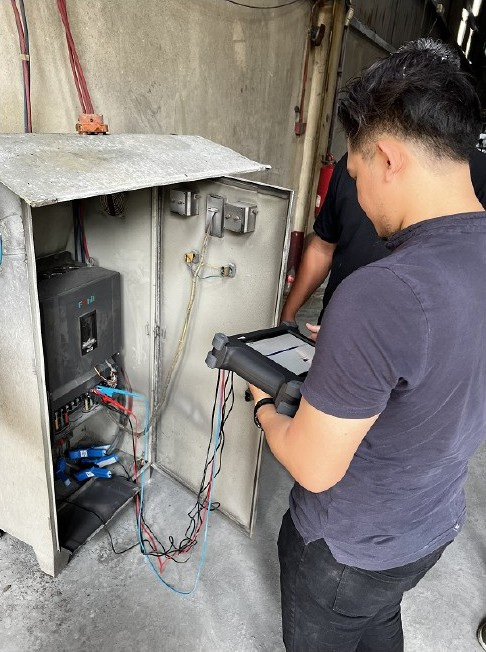
MORE FROM THE FIELD
ELECTRICAL · SUPPLY
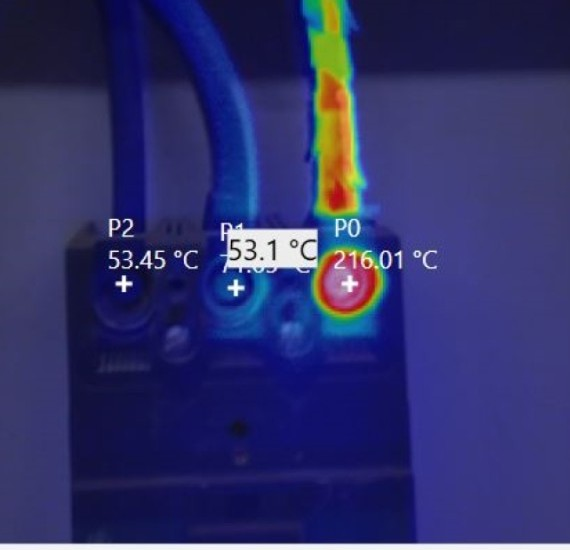
On a 250 HP blower motor (480 V), the AMTPro power page flagged phase currents above the nominal tolerance and called for a hot-spot check. The thermal scan found one phase connection at 216 °C. The neighbouring phase read 53 °C.
BEARINGS
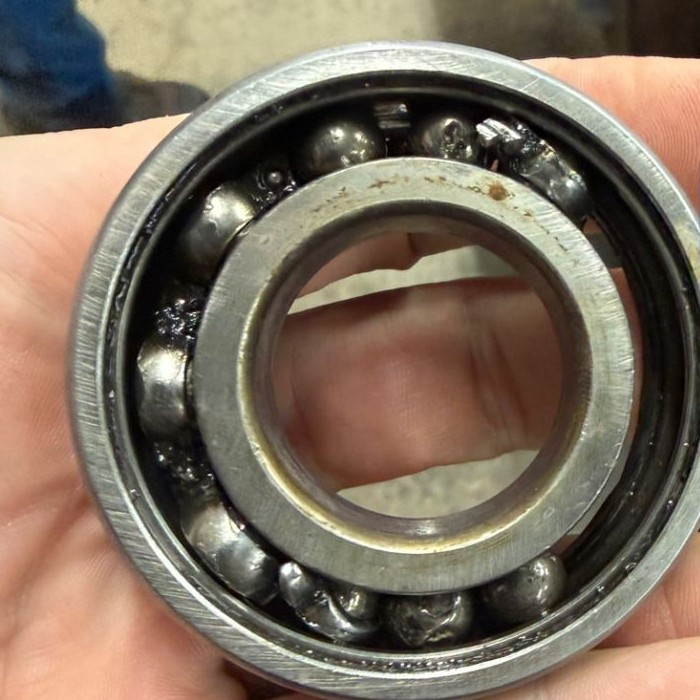
A routine AMTPro test put Bearing in the High zone, together with unbalance/misalignment and transmission element. When the equipment was opened, the bearing had failed: the balls were badly damaged.
Photos and reports from customer sites, shared by Artesis partners. Findings are shown the way the AMTPro report shows them: by category, then confirmed on the machine.
WHAT IT FINDS
The AMTPro report shows loose foundation and components, unbalance and misalignment, transmission and driven equipment, bearing, rotor, stator and other. Results are reported by category, with the check that confirms the cause.
ELECTRICAL
Stator and rotor indications at category level, plus external electrical conditions: supply and connection problems upstream of the motor. The report says what to check first, starting with terminals and supply quality.
MECHANICAL
Loose foundation or components, unbalance, misalignment and coupling condition. The report says what to check: bolts and soft foot, alignment and balance.
BEARINGS
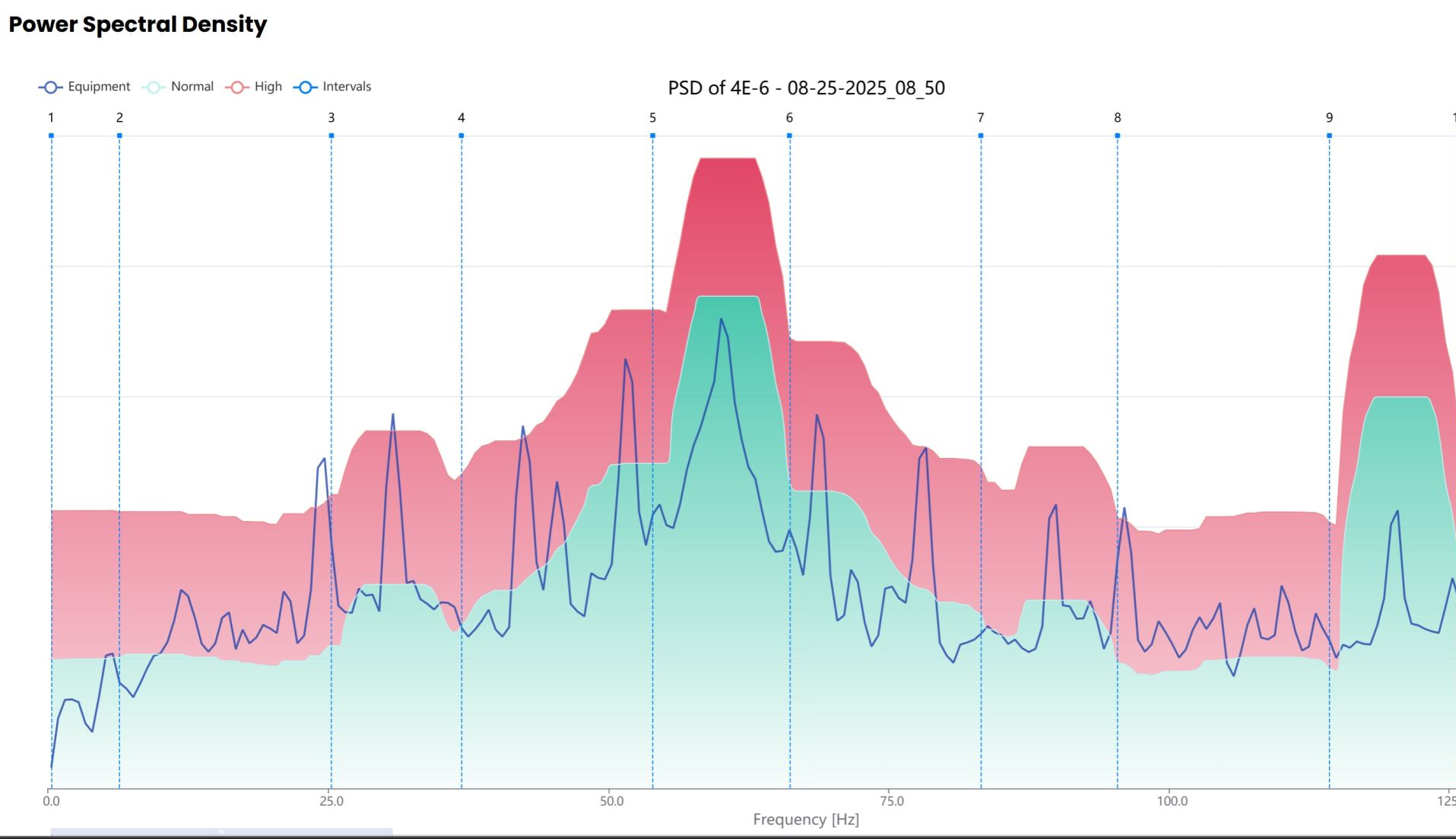
With the bearing model entered, AMTPro marks the defect frequencies of each bearing element. The Pin-Point tool puts the markers on the spectrum for the analyst.
DRIVEN EQUIPMENT
Belt condition, gear mesh and blade or vane pass on single-stage machines such as fans, pumps and conveyors. Enter the sheave, gear or vane details to use them.
POWER & ENERGY
Voltage and current imbalance, harmonic distortion, load, power factor and energy use. AMTPro also suggests the motor size and efficiency class that fit the duty.
ARTESIS INSIGHT™
Each test comes with an AI write-up in plain language: what was found, what to inspect and what to do next. See an example.
AMS · AMTPro CLOUD PORTAL
Each AMTPro test is stored in AMS, the AMTPro cloud portal, together with its report and Artesis Insight write-up. Compare results from one survey round to the next, share reports with your team, and open AMS from OmniSight.
Every tested asset, organized by site, with its full test history.
See how each fault category moves from one survey round to the next.
Open any test report and Artesis Insight write-up, or export it as PDF.
Give your team access to the sites they work on, and open AMS from OmniSight.
AR-PLUG · ONLINE TESTING
The AR-Plug extends AMTPro for online testing. It connects safely to transformers and voltage points while the motor keeps running, so critical motors can be tested on a round without a shutdown.
BEFORE YOU TEST
What a valid test needs on site, and what a portable test covers.
WHAT YOU NEED ON SITE
COVERAGE
AMTPro AND e-MCM
Use AMTPro across the plant to find where attention is needed, and e-MCM with OmniSight on the assets that need continuous watch.
AMTPro · PORTABLE TESTING
Survey rounds, troubleshooting or commissioning checks: tell us what you run and we will show you what an AMTPro test tells you about it.
Where continuous operation is crucial for maximum productivity, any failure in the smelting process can lead to substantial production delays and significant material costs. Artesis emerges as the ideal ally for the iron and steel industry, offering unparalleled condition monitoring tailored for challenging environments.
Artesis is here to support the energy sector with our advanced system for monitoring and predicting issues. In an industry where a steady power supply is crucial, our technology plays a key role in ensuring things run smoothly. Our special software is great at spotting potential problems early in rotating equipment, acting like an important early warning system. This is especially important in the energy sector, where unexpected breakdowns can lead to disruptive power outages affecting businesses, homes, and critical infrastructure. Artesis significantly contributes to the reliability of the energy sector by offering an effective predictive maintenance solution. By looking at patterns over time, our technology gives an early sign of possible issues. This helps grid operators plan ahead, taking actions to prevent power disruptions and ensuring a constant energy supply to industries and communities.
The logistic and transportation industry faces significant challenges when it comes to downtime costs, with unplanned disruptions leading to schedule delays, missed delivery dates, and additional charges. Artesis plays a crucial role in minimizing these challenges by providing continuous monitoring of asset health, offering timely insights into the need for repairs.
Artesis introduces an advanced Predictive Maintenance (PdM) solution tailored for the automotive industry. Our system, Artesis e-MCM, is designed for simplicity, requiring minimal installation efforts and offering low start-up costs. With no need for sensor installation on equipment and the ability to function in non-EX areas, Artesis e-MCM is an ideal solution for inaccessible automotive equipment.
The food and beverage industry faces unique challenges, particularly concerning hygienic standards and safety. Artesis condition monitoring products emerge as a solution, offering a distinctive advantage—no sensor installation on the equipment itself. This not only ensures uncompromised hygiene but also addresses safety concerns seamlessly.
Artesis’s condition monitoring and predictive maintenance solutions offer a comprehensive approach, encompassing failure prediction, fault diagnosis, failure-type classification, and recommendations for relevant maintenance actions. This empowers pharmaceutical equipment manufacturers, engineers, and process plant owners and operators to proactively identify and address potential issues, enhancing the efficiency of their maintenance services and improving equipment uptime.
Artesis empowers water companies with continuous monitoring of aerators, centrifugal pumps, positive displacement pumps, mixers, clarifiers, and submerged equipment, preventing potential failures and optimizing asset performance and energy consumption. In the water industry, system downtime is both disruptive and costly. Artesis’s predictive maintenance and power monitoring solutions enhance operational efficiencies, prevent unplanned downtime, and extend the economic life of critical assets.
Knowing how rotating equipment is performing, predicting failures, improving asset utilization, and finding productivity enhancements in challenging environments are particular challenge for Oil & Gas companies. Artesis helps oil and gas companies predict their rotating equipment failures and prevents the unplanned downtime where the cost of downtime is extremely high. When oil and gas operations break down, it can have a significant domino effect on energy supply – making predictive maintenance technology a key ally for companies in the sector.







 White Papers
 Case Study
 Documents
 Webinars
 Events
 ROI Calculator
 FAQ
FAQ